Krein-Adler transformations for shape-invariant potentials and pseudo virtual states
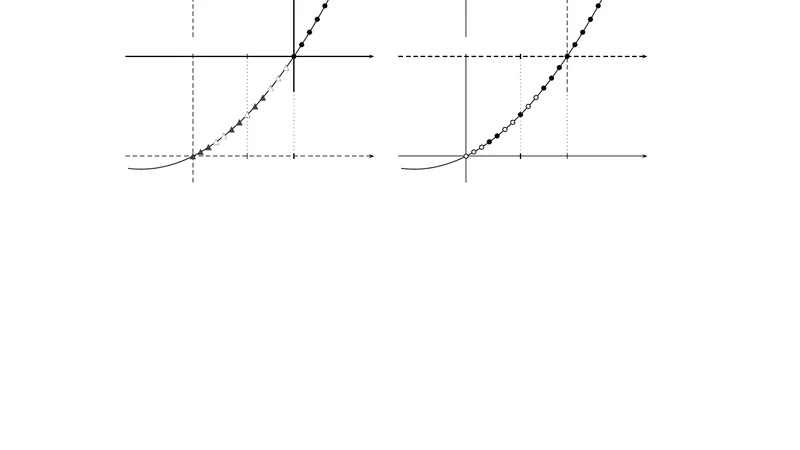
For eleven examples of one-dimensional quantum mechanics with shape-invariant potentials, the Darboux-Crum transformations in terms of multiple pseudo virtual state wavefunctions are shown to be equivalent to Krein-Adler transformations deleting multiple eigenstates with shifted parameters. These are based upon infinitely many polynomial Wronskian identities of classical orthogonal polynomials, i.e. the Hermite, Laguerre and Jacobi polynomials, which constitute the main part of the eigenfunctions of various quantum mechanical systems with shape-invariant potentials.
💡 Research Summary
This paper investigates the relationship between two powerful transformation techniques in one‑dimensional quantum mechanics—Darboux‑Crum transformations built from multiple pseudo‑virtual state wavefunctions and Krein‑Adler transformations that delete selected eigenstates—within the framework of shape‑invariant potentials. Shape‑invariant potentials are a distinguished class of exactly solvable models whose eigenfunctions are expressed in terms of classical orthogonal polynomials (Hermite, Laguerre, and Jacobi). Because of the shape‑invariance property, the Hamiltonian with parameters (\boldsymbol{\lambda}) can be factorised and related to a partner Hamiltonian with shifted parameters (\boldsymbol{\lambda}+\boldsymbol{\delta}). This structure makes it possible to generate new solvable potentials by applying supersymmetric‑type transformations.
The authors first recall that the standard Darboux‑Crum method uses a set of seed solutions—normally bound‑state eigenfunctions or genuine virtual states—to construct a Wronskian determinant, which then yields a new potential via the formula
(V^{