Forward and inverse problems in fundamental and applied magnetohydrodynamics
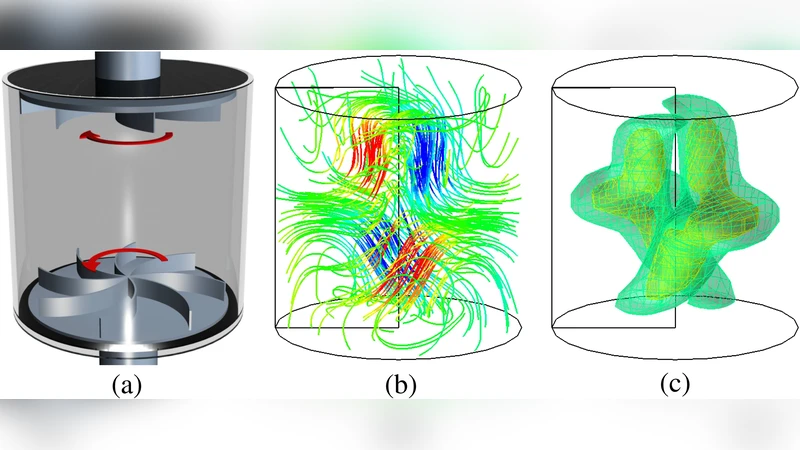
This Minireview summarizes the recent efforts to solve forward and inverse problems as they occur in different branches of fundamental and applied magnetohydrodynamics. As for the forward problem, the main focus is on the numerical treatment of induction processes, including self-excitation of magnetic fields in non-spherical domains and/or under the influence of non-homogeneous material parameters. As an important application of the developed numerical schemes, the functioning of the von-K'{a}rm'{a}n-sodium (VKS) dynamo experiment is shown to depend crucially on the presence of soft-iron impellers. As for the inverse problem, the main focus is on the mathematical background and some first practical applications of the Contactless Inductive Flow Tomography (CIFT), in which flow induced magnetic field perturbations are utilized for the reconstruction of the velocity field. The promises of CIFT for flow field monitoring in the continuous casting of steel are substantiated by results obtained at a test rig with a low melting liquid metal. While CIFT is presently restricted to flows with low magnetic Reynolds numbers, some selected problems of non-linear inverse dynamo theory, with possible application to geo- and astrophysics, are also discussed.
💡 Research Summary
The paper presents a concise yet comprehensive review of recent progress in solving forward and inverse problems in magnetohydrodynamics (MHD), with an emphasis on both fundamental physics and practical applications. In the forward direction, the authors focus on the numerical treatment of magnetic induction, especially in geometries that deviate from the ideal sphere and in media where material parameters such as electrical conductivity and magnetic permeability vary spatially. They discuss state‑of‑the‑art finite‑element and finite‑volume schemes that incorporate non‑homogeneous tensors, complex boundary conditions, and moving solid components. A central case study is the von‑Kármán‑Sodium (VKS) dynamo experiment, where the presence of soft‑iron impellers dramatically lowers the dynamo threshold. The review explains how the high relative permeability of the iron concentrates magnetic flux near the impeller blades, thereby enhancing the effective α‑effect and facilitating self‑excitation. Numerical simulations that faithfully reproduce the experimentally observed reduction in critical rotation rate are presented, highlighting the importance of accurately modeling material heterogeneity.
On the inverse side, the paper turns to Contactless Inductive Flow Tomography (CIFT), a technique that reconstructs the velocity field of an electrically conducting fluid from the perturbations it induces in an externally applied magnetic field. The authors lay out the mathematical foundation of CIFT, emphasizing that for low magnetic Reynolds numbers (Rm ≪ 1) the problem remains linear: the induced magnetic perturbation δB can be expressed as a linear functional of the velocity u, allowing the use of regularized least‑squares or Tikhonov methods. Experimental validation is provided using a low‑melting liquid metal (gallium) test rig equipped with multiple magnetic sensors. The reconstructed three‑dimensional flow patterns agree well with independent velocity measurements, confirming the feasibility of CIFT for real‑time monitoring.
The review also acknowledges the current limitation of CIFT to low‑Rm flows and sketches possible extensions to the nonlinear inverse dynamo problem, which is relevant for geophysical and astrophysical contexts where Rm is large. It mentions Bayesian inference, ensemble Kalman filtering, and other data‑assimilation strategies as promising avenues for tackling the inherent non‑uniqueness and instability of the high‑Rm inverse problem.
Finally, the authors discuss the industrial relevance of CIFT, particularly for continuous steel casting. In such processes, conventional intrusive probes cannot survive the harsh environment, whereas CIFT offers a non‑contact, non‑intrusive alternative capable of detecting flow asymmetries, vortex shedding, and changes induced by temperature gradients. Results from a pilot casting rig demonstrate that CIFT can capture relevant flow dynamics with sufficient signal‑to‑noise ratio, paving the way for integration into process‑control loops.
In summary, the paper bridges theoretical MHD modeling, advanced numerical simulation, and experimental flow diagnostics. It underscores (i) the necessity of incorporating realistic geometry and material heterogeneity in forward dynamo simulations, (ii) the critical role of soft‑iron components in lowering dynamo thresholds, (iii) the viability of CIFT for linear inverse problems at low magnetic Reynolds numbers, (iv) emerging strategies for nonlinear inverse dynamo reconstruction, and (v) the practical potential of CIFT for monitoring industrial liquid‑metal flows. This integrated perspective provides a valuable roadmap for researchers aiming to design next‑generation dynamo experiments and to implement contactless flow monitoring in demanding metallurgical environments.