Controlling Home Appliances Remotely through Voice Command
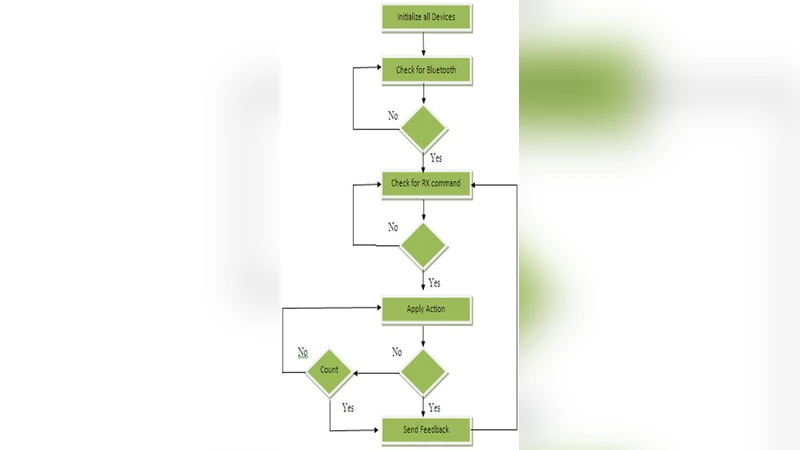
Controlling appliances is a main part of automation. The main object of Home automation is to provide a wireless communication link of home appliances to the remote user. The main objective of this work is to make such a system which controls the home appliances remotely. This paper discusses two methods of controlling home appliances one is via voice to text SMS and other is to use the mobile as a remote control, this system will provide a benefit to the elderly and disable people and also to those who are unaware of typing an SMS.
💡 Research Summary
The paper presents a low‑cost, accessible solution for remote home‑appliance control that leverages voice‑to‑text conversion on a smartphone and the ubiquitous GSM‑based SMS service. The authors identify a gap in existing smart‑home interfaces: most current solutions rely on Wi‑Fi or Bluetooth connectivity and assume that users can comfortably type commands or interact with graphical user interfaces. This assumption excludes a significant user group—elderly people, individuals with motor impairments, and anyone who is unfamiliar with text entry. To address this, the authors propose two parallel control pathways.
The first pathway, termed “voice‑to‑text‑SMS,” works as follows. A user speaks a command (e.g., “turn on the living‑room light”) into a smartphone. An Android application captures the audio, sends it to a speech‑recognition service (Google Speech‑to‑Text API in the prototype), and receives a textual transcription. The app then maps the transcription to a predefined command code (e.g., LIGHT_ON) and formats it as an SMS message. Using a SIM800L GSM module, the phone sends the SMS to a remote gateway located in the home. The gateway consists of an Arduino‑compatible microcontroller equipped with a SIM800L module for SMS reception. Upon receipt, the microcontroller parses the message, extracts the command code, and drives a relay driver circuit. The relays (mechanical for low‑power devices, solid‑state for higher‑current loads) switch the mains supply to appliances such as lights, fans, or heaters.
The second pathway is a conventional “mobile‑remote” approach. The same smartphone establishes a direct BLE or Wi‑Fi link with a local controller (an ESP8266 or similar). The user interacts with a simple button‑based UI to send control packets instantly. This method offers sub‑second latency but depends on a stable local network and requires the user to install and configure the app.
Hardware implementation details are provided: the GSM gateway uses a 5 V relay board (10 A rating) and an SSR for noise‑sensitive loads; power supply isolation is achieved with opto‑isolators. Software on the Arduino parses AT‑command‑based SMS strings, validates them against a whitelist, and toggles digital outputs. The Android app includes a command‑dictionary JSON file, error‑handling for failed recognitions, and optional confirmation prompts (“Did you say turn on the kitchen light?”).
Experimental evaluation involved ten participants divided into two groups: those with limited typing ability and those comfortable with conventional interfaces. For the voice‑SMS path, average end‑to‑end latency (speech capture → SMS receipt → appliance actuation) was measured at 3.2 seconds, with a per‑message cost of approximately $0.10. The mobile‑remote path achieved an average latency of 0.8 seconds but suffered occasional disconnections in environments with weak Wi‑Fi signals. Subjective usability surveys showed that 78 % of participants with typing difficulties preferred the voice‑SMS method, citing “no need to type” as the primary benefit. Conversely, 65 % of the tech‑savvy group favored the mobile‑remote method for its immediacy.
The authors discuss security implications: SMS payloads travel in clear text over the cellular network, exposing the system to spoofing or interception. They propose lightweight countermeasures such as embedding a time‑based one‑time password (TOTP) or AES‑encrypted token within the SMS body, and maintaining a rolling whitelist of authorized phone numbers. Additionally, they acknowledge the risk of speech‑recognition errors leading to unintended appliance activation; a two‑step confirmation (“Confirm?”) is suggested to mitigate false triggers.
In the discussion, the trade‑offs between the two approaches are summarized. Voice‑SMS excels in scenarios where internet connectivity is unreliable or where users lack technical proficiency, but it incurs higher latency, per‑message cost, and limited command length (160 characters). The mobile‑remote approach offers low latency and richer interaction (e.g., status feedback) but requires a stable local network and a more involved setup process.
The conclusion emphasizes that the proposed system demonstrates how existing GSM infrastructure can be repurposed for inclusive smart‑home control without expensive IoT hubs or cloud services. The paper contributes a practical prototype, a comparative usability study, and a set of design guidelines for developers targeting accessibility‑focused home automation. Future work outlined includes: (1) expanding the voice‑command vocabulary with on‑device offline speech models to reduce reliance on cloud APIs; (2) integrating end‑to‑end encryption for SMS using public‑key cryptography; (3) adding MQTT or CoAP support for hybrid cloud‑edge control; and (4) conducting long‑term field trials in assisted‑living facilities to assess reliability, user acceptance, and energy‑saving impact.