The Driver of Coronal Mass Ejections in the Low Corona: A Flux Rope
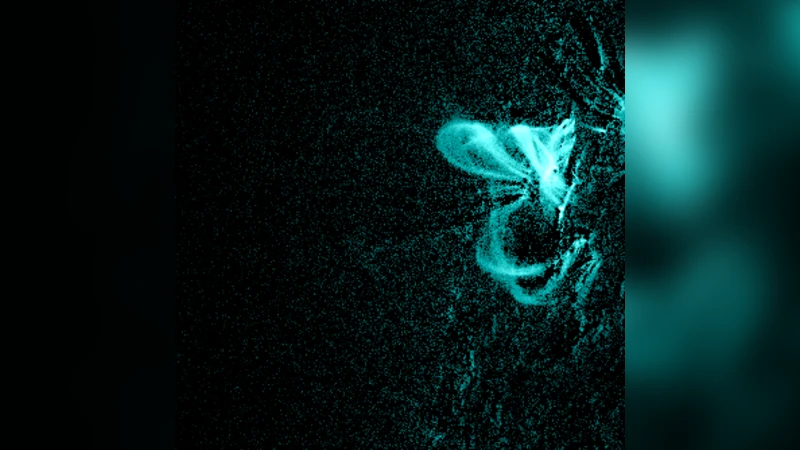
Recent Solar Dynamic Observatory observations reveal that coronal mass ejections (CMEs) consist of a multi-temperature structure: a hot flux rope and a cool leading front (LF). The flux rope first appears as a twisted hot channel in the Atmospheric Imaging Assembly 94 A and 131 A passbands. The twisted hot channel initially lies along the polarity inversion line and then rises and develops into the semi-circular flux rope-like structure during the impulsive acceleration phase of CMEs. In the meantime, the rising hot channel compresses the surrounding magnetic field and plasma, which successively stack into the CME LF. In this paper, we study in detail two well-observed CMEs occurred on 2011 March 7 and 2011 March 8, respectively. Each of them is associated with an M-class flare. Through a kinematic analysis we find that: (1) the hot channel rises earlier than the first appearance of the CME LF and the onset of the associated flare; (2) the speed of the hot channel is always faster than that of the LF, at least in the field of view of AIA. Thus, the hot channel acts as a continuous driver of the CME formation and eruption in the early acceleration phase. Subsequently, the two CMEs in white-light images can be well reproduced by the graduated cylindrical shell flux rope model. These results suggest that the pre-existing flux rope plays a key role in CME initiation and formation.
💡 Research Summary
The paper presents a detailed observational study of two well‑documented coronal mass ejections (CMEs) that occurred on 7 March 2011 and 8 March 2011, each associated with an M‑class flare. Using the Atmospheric Imaging Assembly (AIA) on board the Solar Dynamics Observatory (SDO), the authors focus on the high‑temperature passbands 94 Å and 131 Å, which reveal a “hot channel” that they identify as a twisted flux rope. Initially, this hot channel lies along the polarity inversion line (PIL) as a thin, elongated structure. During the impulsive acceleration phase of the CME, the channel rises rapidly, expands, and transforms into a semi‑circular, rope‑like configuration.
Simultaneously, the rising flux rope compresses the surrounding coronal plasma and magnetic field. The compressed material piles up ahead of the rope, forming the cooler leading front (LF) that is visible in lower‑temperature AIA channels and later in white‑light coronagraph images. By constructing height–time (H‑T) plots for both the hot channel and the LF, the authors demonstrate quantitatively that the hot channel always moves faster—by at least ~30 %—than the LF throughout the AIA field of view. Moreover, the onset of the hot channel’s ascent precedes both the first appearance of the LF and the onset of the associated flare, indicating that the flux rope is the primary driver of the CME’s early dynamics, while the flare is a secondary, possibly consequential, phenomenon.
To verify that the low‑coronal hot channel corresponds to the large‑scale flux rope seen in coronagraph data, the authors fit the white‑light CME observations from the COR2 coronagraphs with the Graduated Cylindrical Shell (GCS) model. The fitted geometric parameters (e.g., tilt, apex height, angular width) match closely with the dimensions measured for the hot channel in the AIA images, confirming a one‑to‑one correspondence between the low‑coronal hot flux rope and the high‑altitude flux rope structure traditionally used to model CMEs.
These results address a long‑standing debate in solar physics concerning whether a pre‑existing flux rope or the flare reconnection process initiates a CME. The evidence presented here supports the “pre‑existing flux rope” scenario: a twisted magnetic structure already present in the low corona becomes unstable, rises, and drives the eruption. The compression of ambient fields by this rising rope naturally explains the formation of the multi‑temperature CME structure—a hot core (the rope) and a cooler leading front—without invoking separate mechanisms for each component.
In summary, the study provides three major insights: (1) the hot flux rope acts as a continuous driver of CME formation and early acceleration; (2) the rope’s ascent precedes both the LF appearance and the flare onset, establishing a clear temporal hierarchy; and (3) the low‑coronal hot channel observed in AIA is geometrically and dynamically consistent with the large‑scale flux rope modeled in white‑light coronagraph data. By demonstrating that the flux rope’s early dynamics can be directly observed in high‑temperature EUV channels, the work offers a concrete observational foundation for incorporating flux‑rope instability and early kinematics into CME prediction models, potentially improving forecasts of CME launch times, speeds, and geo‑effectiveness.
Comments & Academic Discussion
Loading comments...
Leave a Comment