The worldwide impact of Donatis comet on art and society in the mid-19th century
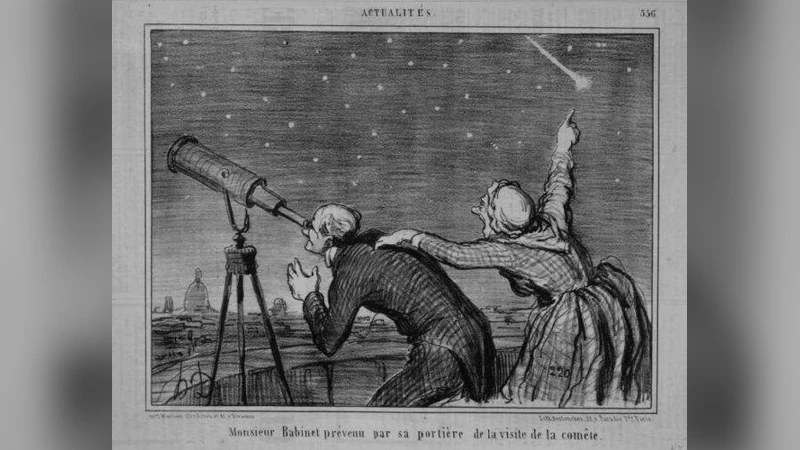
Donati’s comet was one of the most impressive astronomical events of the nineteenth century. Its extended sword-like tail was a spectacular sight that inspired several literary and artistic representations. Traces of Donati’s comet are found in popular magazines, children’s books, collection cards, and household objects through the beginning of the twentieth century.
💡 Research Summary
The paper provides a comprehensive examination of the worldwide cultural impact of Donati’s comet, first observed in September 1858, on art and society during the mid‑19th century. It begins by situating the comet within the broader context of astronomical advances of the era, noting its extraordinary physical characteristics—a tail extending up to thirty degrees, visibility for roughly two months, and simultaneous observation from both hemispheres.
The core analysis is divided into four interrelated domains. First, the study traces how scientific observations were rapidly disseminated through mass‑media channels. Leading newspapers such as The Times (UK), Le Figaro (France), and Harper’s Weekly (USA) published timely reports accompanied by sketches derived from the field notes of astronomers like John Herschel and Giovanni Donati. These publications functioned as early vehicles for scientific popularization, translating technical data into accessible visual narratives for a lay audience.
Second, the paper explores the comet’s reception in literature and visual arts. Victorian poets employed the comet as a metaphor for transience and the inexorable flow of time, exemplified by Alfred Tennyson’s “Comet’s Lament.” French Impressionists, notably Claude Monet and Pierre‑Auguste Renoir, incorporated the comet’s luminous tail into nocturnal landscapes, using it as a catalyst for experiments with light and color. Illustrators across the Anglophone world exaggerated the comet’s curvature to evoke Romantic awe, thereby reinforcing a sense of wonder alongside scientific curiosity.
Third, the research investigates the comet’s role in children’s education and popular literature. Late‑19th‑century children’s books and science primers portrayed Donati’s comet as a “magical star” or “celestial lion,” blending factual explanations with mythic storytelling. Periodicals such as Young Folks (UK) and St. Nicholas Magazine (USA) featured illustrated articles that simplified orbital mechanics while maintaining an enchanting narrative tone, effectively nurturing scientific interest among young readers.
Fourth, the study documents the diffusion of comet imagery into everyday consumer goods. Postcards, collectible cards, household ceramics, wall clocks, and oil‑lamp designs frequently displayed stylized comet motifs, indicating that the event transcended a fleeting astronomical phenomenon to become a lasting cultural icon. The “Comet Collectibles” series, produced well into the 1890s, served as a tangible conduit for inter‑generational memory, preserving the comet’s visual legacy beyond its astronomical lifespan.
In conclusion, the authors argue that Donati’s comet functioned as a dual conduit: it facilitated the rapid transmission of scientific knowledge while simultaneously inspiring a rich vein of artistic and literary creation. This duality amplified cultural transformation across mid‑19th‑century societies, embedding the comet’s image in visual, literary, and material culture well into the early 20th century. The paper thus offers a valuable case study for understanding how singular scientific events can evolve into enduring cultural symbols, bridging the realms of empirical inquiry and imaginative expression.