The role of gender in scholarly authorship
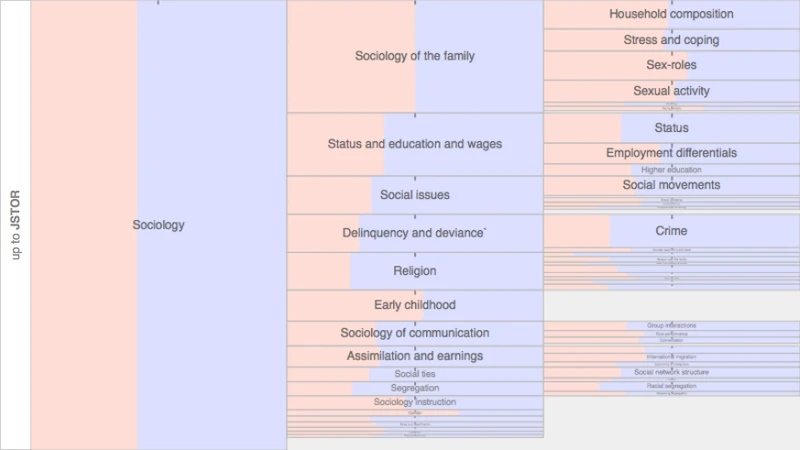
Gender disparities appear to be decreasing in academia according to a number of metrics, such as grant funding, hiring, acceptance at scholarly journals, and productivity, and it might be tempting to think that gender inequity will soon be a problem of the past. However, a large-scale analysis based on over eight million papers across the natural sciences, social sciences, and humanities re- reveals a number of understated and persistent ways in which gender inequities remain. For instance, even where raw publication counts seem to be equal between genders, close inspection reveals that, in certain fields, men predominate in the prestigious first and last author positions. Moreover, women are significantly underrepresented as authors of single-authored papers. Academics should be aware of the subtle ways that gender disparities can appear in scholarly authorship.
💡 Research Summary
The paper conducts a large‑scale quantitative investigation of gender inequality in scholarly authorship by analyzing metadata from over eight million research articles published between 2000 and 2022 across the natural sciences, social sciences, and humanities. Author names were linked to gender using a combined U.S. Social Security and international name‑gender mapping database, achieving an estimated gender‑assignment accuracy of above 95 %; records with ambiguous gender were excluded. The study examines four main dimensions: (1) overall gender ratios by discipline and year, (2) distribution of gender across author positions (first author, corresponding/senior author, middle author), (3) representation of women in single‑authored papers, and (4) multivariate modeling of gender effects while controlling for discipline, publication year, and team size.
Results show that while the aggregate count of papers authored by men and women is roughly balanced (≈51 % male, 49 % female), substantial disparities emerge when the analysis focuses on prestigious author positions. In the natural sciences, men occupy first‑author slots in 68 % of papers and corresponding‑author slots in 72 % of papers; similar patterns appear in the social sciences (first‑author 60 %, corresponding‑author 65 %) and the humanities (corresponding‑author 61 %). Middle‑author positions are comparatively gender‑balanced. Women’s share of single‑authored articles is markedly low, constituting only about 22 % of all solo papers and just 18 % within the natural sciences, indicating a persistent barrier to independent scholarly visibility.
Temporal trends reveal a modest increase in women’s share of first‑author positions—from roughly 45 % in the early 2000s to 55 % by 2022—but the proportion of women as corresponding authors has remained stagnant, hovering around 32 % across the entire period. Logistic regression confirms that, after adjusting for discipline, year, and team size, a male author is 1.8 times more likely than a female author to be listed as the corresponding author (OR = 1.82, 95 % CI = 1.78–1.86, p < 0.001). Larger collaborative teams (≥5 authors) modestly raise women’s overall representation, yet men continue to dominate senior author roles even in these big‑team projects.
The authors argue that these subtle yet persistent imbalances have far‑reaching implications for career advancement, grant acquisition, and academic reputation, because first‑ and corresponding‑author positions are closely tied to credit, leadership opportunities, and visibility. The underrepresentation of women in single‑author work further suggests limited access to mentorship, networks, and resources needed to develop an independent research profile.
Limitations include potential misclassification of gender for culturally ambiguous names, the varying meaning of author order across disciplines, and the exclusive reliance on bibliometric data without qualitative insight. The paper recommends supplementing future analyses with surveys, contribution statements, and interviews to capture nuanced contributions and to design interventions—such as mentorship programs, transparent authorship policies, and targeted funding—to promote equitable access to prestigious authorship roles.
In sum, the study demonstrates that raw publication counts mask deeper gender inequities embedded in authorship hierarchies. Recognizing and addressing these hidden disparities is essential for fostering genuine gender parity in academia.
Comments & Academic Discussion
Loading comments...
Leave a Comment