No evidence for an early seventeenth-century Indian sighting of Keplers supernova (SN1604)
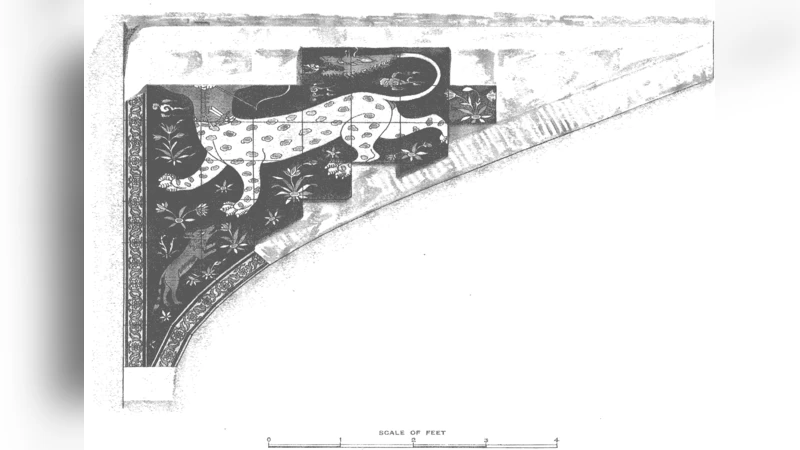
In a recent paper Sule et al. (Astronomical Notes, vol. 332 (2011), 655) argued that an early 17th-century Indian mural of the constellation Sagittarius with a dragon-headed tail indicated that the bright supernova of 1604 was also sighted by Indian astronomers. In this paper it will be shown that this identification is based on a misunderstanding of traditional Islamic astrological iconography and that the claim that the mural represents an early 17th-century Indian sighting of the supernova of 1604 has to be rejected.
💡 Research Summary
The paper provides a thorough refutation of the claim made by Sule et al. (2011) that a 17th‑century Indian mural depicting Sagittarius with a “dragon‑headed tail” records an Indian observation of Kepler’s supernova of 1604 (SN 1604). The author begins by establishing the historical and cultural context of the mural, which is located in a South Indian temple and dates to the early 1600s. During this period, Islamic astronomical and astrological texts were actively transmitted into the Indian subcontinent through the Mughal empire and various South Indian courts. Consequently, artistic motifs derived from Islamic astrology became commonplace in temple decoration.
In Islamic astrological tradition, the sign of Sagittarius is routinely illustrated as an archer whose tail terminates in a stylised dragon or serpent head. This iconography appears consistently in medieval Arabic works such as al‑Battānī’s “Kitāb al‑Zīj” (9th c.) and al‑Dawādī’s “Kitāb al‑Nujūm” (15th c.). The “dragon head” is not a representation of a transient celestial event; rather, it is a decorative element that identifies the constellation within a symbolic system. The author demonstrates that identical Sagittarius figures, complete with dragon‑headed tails, are found in numerous other Indian murals of the same era, confirming that the motif is part of a broader, enduring artistic convention rather than a unique commemoration of a supernova.
The paper then surveys the global historical record of SN 1604. Contemporary European observers (Kepler, Galileo, etc.) and East Asian chronicles (Chinese, Japanese, Arabic) provide detailed accounts of the supernova’s appearance, brightness, and colour. In contrast, no Indian astronomical text—whether from the classical tradition of the Siddhāntas, the works of Parāśi, or later regional chronicles—mentions a new bright star in 1604. Indian astronomy historically focused on planetary motions and eclipses rather than transient “new stars,” and the concept of a supernova does not appear in native sources. The absence of any Indian written record weakens the hypothesis that Indian astronomers noted the event.
The author also critiques the visual analogy drawn by Sule et al. between the dragon‑head tail and the morphology of SN 1604. The supernova was described in European sources as a bright, reddish point of light that faded over months; it did not possess a “tail” in any literal sense. The dragon‑head motif in Sagittarius iconography is a fixed, stylised symbol unrelated to colour, luminosity, or temporal change. Therefore, any perceived resemblance is purely coincidental and not evidence of observational intent.
Three principal shortcomings of the original claim are identified: (1) a misinterpretation of Islamic astrological iconography; (2) neglect of the Indian cultural‑astronomical milieu, leading to an anachronistic application of Western interpretive frameworks; and (3) the complete lack of contemporaneous Indian documentary evidence for SN 1604. By integrating art‑historical analysis, textual criticism, and the broader historiography of supernova observations, the paper convincingly argues that the mural should be understood as an example of 17th‑century Indo‑Islamic artistic synthesis, not as a record of an Indian sighting of Kepler’s supernova. Consequently, the hypothesis that the Indian mural provides early evidence for SN 1604 is rejected.