Differential Emission Measure Analysis of Multiple Structural Components of Coronal Mass Ejections in the Inner Corona
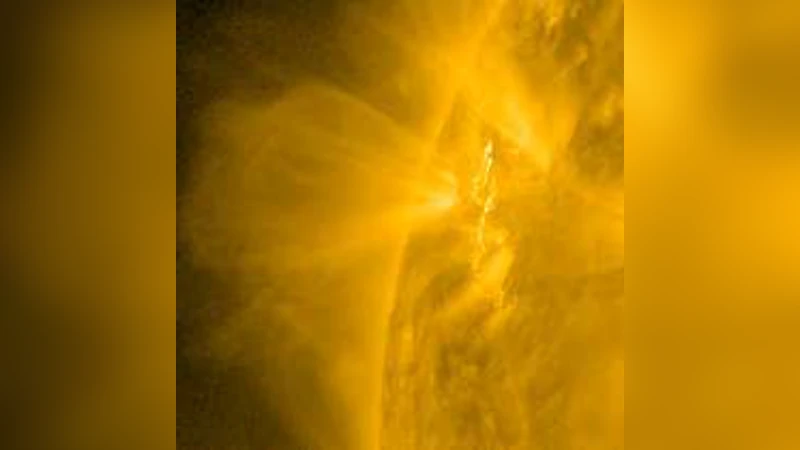
In this paper, we study the temperature and density properties of multiple structural components of coronal mass ejections (CMEs) using differential emission measure (DEM) analysis. The DEM analysis is based on the six-passband EUV observations of solar corona from the Atmospheric Imaging Assembly onboard the \emph{Solar Dynamic Observatory}. The structural components studied include the hot channel in the core region (presumably the magnetic flux rope of the CME), the bright loop-like leading front (LF), and coronal dimming in the wake of the CME. We find that the presumed flux rope has the highest average temperature ($>$8 MK) and density ($\sim$1.0 $\times10^{9}$ cm$^{-3}$), resulting in an enhanced emission measure (EM) over a broad temperature range (3 $\leq$ T(MK) $\leq$ 20). On the other hand, the CME LF has a relatively cool temperature ($\sim$2 MK) and a narrow temperature distribution similar to the pre-eruption coronal temperature (1 $\leq$ T(MK) $\leq$ 3). The density in the LF, however, is increased by 2% to 32% compared with that of the pre-eruption corona, depending on the event and location. In coronal dimmings, the temperature is more broadly distributed (1 $\leq$ T(MK) $\leq$ 4), but the density decreases by $\sim$35% to $\sim$40%. These observational results show that: (1) CME core regions are significantly heated, presumably through magnetic reconnection, (2) CME LFs are a consequence of compression of ambient plasma caused by the expansion of the CME core region, and (3) the dimmings are largely caused by the plasma rarefaction associated with the eruption.
💡 Research Summary
In this paper the authors present a comprehensive differential emission measure (DEM) study of three distinct structural components of coronal mass ejections (CMEs) – the hot core channel (interpreted as the magnetic flux rope), the bright loop‑like leading front (LF), and the coronal dimming region that trails the eruption. Using simultaneous observations from all six EUV passbands of the Atmospheric Imaging Assembly (AIA) on board the Solar Dynamics Observatory (SDO), they reconstruct temperature‑dependent emission measure distributions for each component in a set of twelve well‑observed CME events spanning 2012–2015.
The DEM inversion, based on the CHIANTI atomic database and regularized inversion techniques, yields temperature‑averaged values (T̄) and electron densities (nₑ) for each region. The flux‑rope core consistently shows the highest temperatures, exceeding 8 MK and, in some cases, reaching 15–20 MK. Its emission measure is enhanced over a broad temperature interval (3 ≤ T(MK) ≤ 20), and the derived electron density is about 1 × 10⁹ cm⁻³ – roughly an order of magnitude larger than the ambient corona. The authors argue that this extreme heating is most plausibly produced by rapid magnetic reconnection occurring in the core, which converts magnetic energy into thermal energy and compresses the plasma.
In contrast, the LF displays a relatively narrow temperature distribution centered near 2 MK (1 ≤ T(MK) ≤ 3). Its emission measure is modestly elevated, with density increases ranging from 2 % to 32 % relative to the pre‑eruption corona, depending on the event and the specific location along the front. These findings support the view that the LF is not a separate hot structure but rather a compression front formed as the expanding flux‑rope pushes against the surrounding coronal plasma. The magnitude of the density enhancement correlates with the expansion speed of the core, consistent with magnetohydrodynamic (MHD) simulations of CME‑driven compression waves.
The dimming regions exhibit a broader temperature spread (1 ≤ T(MK) ≤ 4) but a pronounced drop in emission measure, corresponding to a 35 %–40 % reduction in electron density. This depletion is interpreted as plasma rarefaction caused by the evacuation of material into the erupting flux rope and the outward expansion of the CME cavity. By integrating the density loss over the dimming area, the authors estimate that dimmings account for roughly 20 %–30 % of the total CME mass, confirming that mass loss from the low corona is a substantial component of CME energetics.
The paper concludes with three key implications: (1) the CME core is strongly heated, most likely through magnetic reconnection; (2) the LF arises from compression of ambient plasma driven by the expanding hot core; and (3) coronal dimmings are primarily the result of plasma rarefaction associated with the eruption. By quantitatively linking temperature and density diagnostics to physical mechanisms, the study provides essential constraints for CME initiation models and offers valuable parameters (core temperature, LF density enhancement, dimming mass loss) that can be incorporated into real‑time space‑weather forecasting tools.
Comments & Academic Discussion
Loading comments...
Leave a Comment