Uncovering wind turbine properties through two-dimensional stochastic modeling of wind dynamics
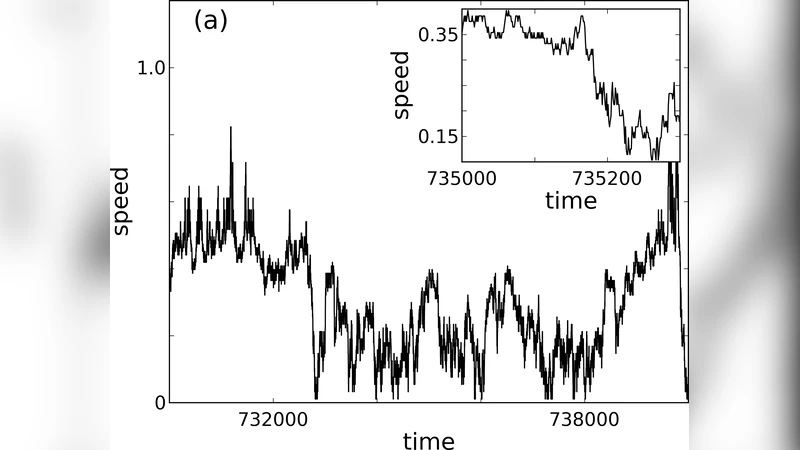
Using a method for stochastic data analysis, borrowed from statistical physics, we analyze synthetic data from a Markov chain model that reproduces measurements of wind speed and power production in a wind park in Portugal. We first show that our analysis retrieves indeed the power performance curve, which yields the relationship between wind speed and power production and we discuss how this procedure can be extended for extracting unknown functional relationships between pairs of physical variables in general. Second, we show how specific features, such as the rated speed of the wind turbine or the descriptive wind speed statistics, can be related with the equations describing the evolution of power production and wind speed at single wind turbines.
💡 Research Summary
The paper presents a data‑driven methodology that leverages stochastic analysis techniques from statistical physics to uncover intrinsic properties of wind turbines. The authors begin by constructing a discrete‑time Markov chain that reproduces the joint dynamics of wind speed (v) and power output (P) observed at a wind park in Portugal. By discretising the measured time series into bins of 0.5 m s⁻¹ for wind speed and 10 kW for power, they estimate the transition probability matrix for a sampling interval of Δt = 10 minutes. Using this matrix they generate long synthetic trajectories that faithfully replicate the marginal and conditional statistics of the original data, thereby validating the Markov model as a realistic surrogate for the real‑world system.
With the synthetic data in hand, the authors apply a two‑dimensional Kramers‑Moyal expansion to estimate the first and second conditional moments, i.e., the drift vector A_i(v,P) = lim_{Δt→0}⟨ΔX_i⟩/Δt and the diffusion tensor B_{ij}(v,P) = lim_{Δt→0}⟨ΔX_iΔX_j⟩/Δt, where X₁ = v and X₂ = P. The drift component for wind speed, A_v(v,P), exhibits a linear restoring term toward the mean wind speed together with a weak nonlinear correction that captures the tendency of wind to revert to typical values. More importantly, the drift for power, A_P(v,P), is found to follow the simple functional form A_P(v,P) ≈ f(v) − P. The function f(v) recovered from the data coincides with the conventional turbine power curve (the deterministic relationship between wind speed and rated power). Thus, the stochastic analysis automatically extracts the deterministic performance curve without any a priori knowledge of the turbine’s design.
The diffusion tensor provides a quantitative description of fluctuations. B_{vv}(v) grows with wind speed, reflecting increased turbulence at higher velocities. B_{PP}(v) remains small for sub‑rated speeds but rises sharply near the rated speed, mirroring the activation of turbine control systems that introduce additional variability in power output. The off‑diagonal term B_{vP}=B_{Pv} is positive, indicating that wind‑speed fluctuations and power‑output fluctuations are positively correlated—a physically intuitive result.
Having obtained A_i and B_{ij}, the authors formulate the corresponding Fokker‑Planck equation for the joint probability density p(v,P,t). By solving for the stationary distribution (∂p/∂t = 0) they derive the marginal wind‑speed distribution p(v) and the conditional power distribution p(P|v). The stationary solutions match the empirical histograms remarkably well. In the sub‑rated regime p(P|v) is narrowly centred around f(v) with a Gaussian‑like shape, whereas beyond the rated speed the distribution widens and becomes asymmetric, reflecting the influence of control actions and increased turbulence.
Crucially, the locations where the drift and diffusion functions change their character correspond to key turbine design parameters. The rated wind speed v_rated appears as the point where A_P(v,P) transitions from a strongly negative slope (power increasing with speed) to a near‑zero slope (power saturation), and simultaneously B_{PP}(v) exhibits a pronounced increase. The cut‑in and cut‑out speeds are identified by sharp drops in the wind‑speed marginal density p(v) and by changes in the sign of A_v(v,P). Consequently, the method enables the inference of turbine specifications directly from operational data, bypassing the need for manufacturer specifications or dedicated laboratory tests.
Beyond the specific wind‑turbine application, the authors argue that the two‑dimensional stochastic framework is a generic tool for uncovering unknown functional relationships between any pair of physical variables that evolve jointly. By estimating drift and diffusion fields from data, one can reconstruct deterministic couplings (the drift) and quantify stochastic influences (the diffusion) without imposing a parametric model. This opens avenues for analyzing complex environmental systems, such as wind‑speed–temperature, pressure–power, or even multi‑variable climate indices, where hidden dependencies are often masked by noise.
The paper concludes with several outlook points: extending the approach to non‑Markovian dynamics (e.g., incorporating memory kernels), scaling to higher dimensions to capture additional meteorological variables, and developing online algorithms for real‑time parameter estimation that could be integrated into turbine control and condition‑monitoring systems. Overall, the work demonstrates that stochastic data analysis, when combined with a well‑constructed Markov surrogate, provides a powerful, model‑free pathway to retrieve both deterministic performance curves and stochastic characteristics of wind turbines, and it holds promise for broader applications in renewable‑energy diagnostics and environmental physics.
Comments & Academic Discussion
Loading comments...
Leave a Comment