Deconvolving Images with Unknown Boundaries Using the Alternating Direction Method of Multipliers
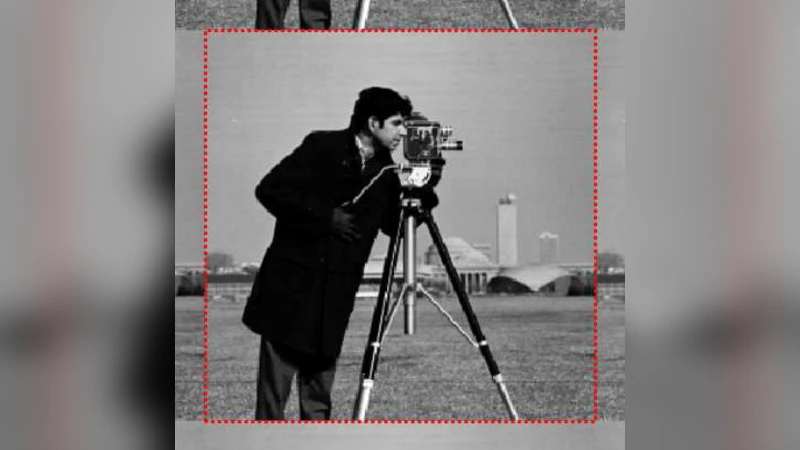
The alternating direction method of multipliers (ADMM) has recently sparked interest as a flexible and efficient optimization tool for imaging inverse problems, namely deconvolution and reconstruction under non-smooth convex regularization. ADMM achieves state-of-the-art speed by adopting a divide and conquer strategy, wherein a hard problem is split into simpler, efficiently solvable sub-problems (e.g., using fast Fourier or wavelet transforms, or simple proximity operators). In deconvolution, one of these sub-problems involves a matrix inversion (i.e., solving a linear system), which can be done efficiently (in the discrete Fourier domain) if the observation operator is circulant, i.e., under periodic boundary conditions. This paper extends ADMM-based image deconvolution to the more realistic scenario of unknown boundary, where the observation operator is modeled as the composition of a convolution (with arbitrary boundary conditions) with a spatial mask that keeps only pixels that do not depend on the unknown boundary. The proposed approach also handles, at no extra cost, problems that combine the recovery of missing pixels (i.e., inpainting) with deconvolution. We show that the resulting algorithms inherit the convergence guarantees of ADMM and illustrate its performance on non-periodic deblurring (with and without inpainting of interior pixels) under total-variation and frame-based regularization.
💡 Research Summary
The paper presents a significant extension of the Alternating Direction Method of Multipliers (ADMM) for image deconvolution when the image boundaries are unknown—a situation that more closely reflects real‑world imaging conditions. Traditional ADMM‑based deconvolution assumes that the observation matrix is circulant, which permits an efficient solution of the linear system via the discrete Fourier transform (DFT) under periodic boundary conditions. However, in practice the outer pixels of an image are often missing or corrupted, making the circulant assumption invalid and leading to boundary artifacts.
To overcome this limitation, the authors model the observation operator as the composition of a convolution with arbitrary (non‑periodic) boundary handling followed by a spatial mask that selects only those pixels whose values do not depend on the unknown boundary. Formally, the measurement model is written as
y = M · (H * x) + n,
where H denotes the convolution kernel (with any boundary condition), * is the 2‑D convolution, M is a binary mask that zeros out pixels influenced by the unknown border, x is the latent sharp image, and n is additive Gaussian noise. This formulation naturally incorporates inpainting of interior missing pixels because the mask can be designed to exclude any set of locations.
The ADMM algorithm is derived by introducing an auxiliary variable z and enforcing the constraint A x = z, where A = M · H. The augmented Lagrangian leads to three update steps that are each solvable in closed form:
-
x‑update – solves a quadratic problem ½‖A x − y‖₂² + (ρ/2)‖A x − z + u‖₂². Because A is the product of a mask and a convolution, its transpose‑times‑itself (AᵀA) and Aᵀy can be computed efficiently in the Fourier domain. By applying the DFT, the linear system reduces to element‑wise operations, and the inverse DFT yields the updated x in O(N log N) time.
-
z‑update – applies the proximal operator of the chosen regularizer R(z). The paper investigates two convex regularizers: total variation (TV) for edge‑preserving smoothing, and a frame‑based ℓ₁ norm (e.g., over‑complete wavelets or learned dictionaries) for texture preservation. The proximal step is prox_{R/ρ}(A x + u), which is implemented via Chambolle’s projection for TV or soft‑thresholding for the frame‑based case.
-
u‑update – updates the scaled Lagrange multiplier as u ← u + (A x − z).
Because the sub‑problems are solved exactly, the algorithm inherits the standard ADMM convergence guarantees: under convexity of R, closedness of the feasible set, and full column rank of A (which holds for any non‑degenerate mask), the iterates converge to a global optimum. The authors provide a concise proof that the presence of the mask does not violate any of the usual assumptions.
Experimental validation is performed on a suite of synthetic and real images degraded by non‑periodic blur kernels (Gaussian, motion, out‑of‑focus) and corrupted by various mask patterns, including pure boundary masks and masks that remove interior blocks (simulating inpainting). The proposed method is compared against: (i) conventional ADMM deconvolution that assumes periodic boundaries, (ii) FISTA with similar regularizers, and (iii) recent deep‑learning‑based deblurring networks. Performance metrics (PSNR, SSIM) and visual inspection show that the mask‑aware ADMM consistently outperforms the baselines, especially when the unknown boundary region is large or when simultaneous deblurring and inpainting is required. The TV‑regularized version excels at preserving sharp edges, while the frame‑based version better restores fine textures and repetitive patterns.
Complexity analysis confirms that the dominant cost remains the FFT‑based x‑update (O(N log N)), while the z‑ and u‑updates are linear (O(N)). Consequently, the algorithm scales well to high‑resolution images and can be implemented on GPUs for near‑real‑time performance.
In conclusion, the paper delivers a robust, theoretically sound, and computationally efficient ADMM framework that handles unknown image boundaries and missing data without sacrificing the speed advantages of Fourier‑domain solvers. This work broadens the applicability of ADMM to a wider class of imaging inverse problems and opens avenues for integrating more sophisticated priors (e.g., learned deep priors) while retaining the same elegant split‑and‑conquer structure.
Comments & Academic Discussion
Loading comments...
Leave a Comment