A Phase Field Crystal Model of Phase and Microstructural Stability in Driven Nanocrystalline Systems
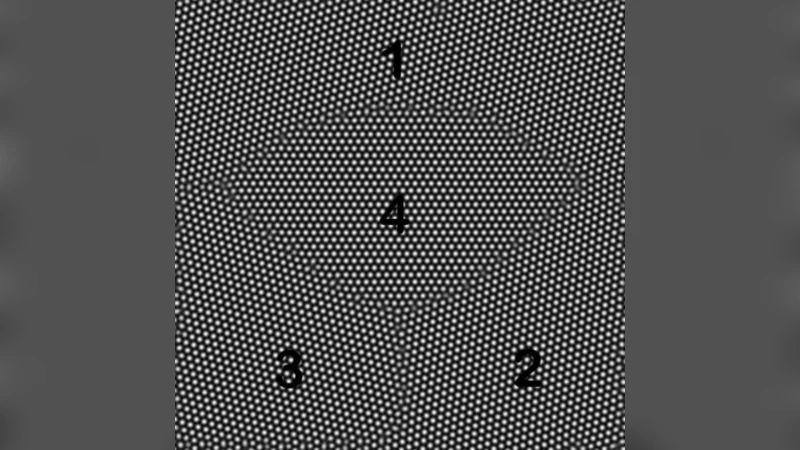
We present a phase field crystal model for driven systems which describes competing effects between thermally activated diffusional processes and those driven by externally imposed ballistic events. The model demonstrates how the mesoscopic Enrique and Bellon [Phys. Rev. Lett. 84, 2885 (2000)] model of externally induced ballistic mixing can be incorporated into the atomistic phase field crystal formalism. The combination of the two approaches results in a model capable of describing the microstructural and compositional evolution of a driven system, while incorporating elasto-plastic effects. The model is applied to the study of grain growth in nanocrystalline materials subjected to an external driving.
💡 Research Summary
The paper introduces a novel phase‑field‑crystal (PFC) framework that explicitly incorporates externally driven ballistic mixing, thereby enabling simultaneous treatment of thermally activated diffusion and non‑thermal, impact‑induced atomic rearrangements in nanocrystalline materials. Building on the Enrique‑Bellon ballistic mixing model, the authors add a non‑local ballistic term to the conventional PFC free‑energy functional. This term is characterized by a mixing coefficient (M) (the strength of the ballistic flux) and a range parameter (R) (the spatial extent over which a single ballistic event redistributes atoms). The resulting evolution equation for the dimensionless density field (\psi(\mathbf{r},t)) reads
\