Chandra and HST Observations of the Supersoft ULX in NGC 247: Candidate for Standard Disk Emission
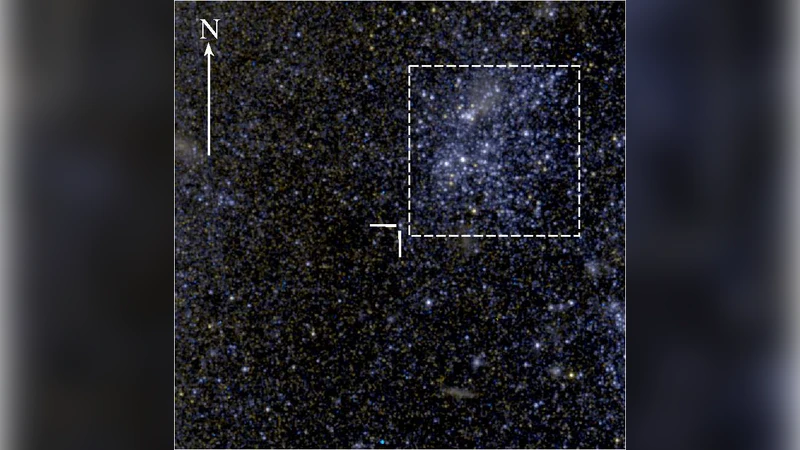
We report on multiwavelength observations of the supersoft ultraluminous X-ray source (ULX) in NGC 247 made with the Chandra X-ray Observatory and Hubble Space Telescope (HST). We aligned the X-ray and optical images using three objects present on both and identified a unique, point-like optical counterpart to the ULX. The X-ray to optical spectrum is well fitted with an irradiated disk model if the extinction measured for Cepheids in NGC 247 is used. Assuming only Galactic extinction, then the spectrum can be modeled as a standard thin accretion disk. Either result leads to the conclusion that a disk interpretation of the X-ray spectrum is valid, thus the source may be in the X-ray thermal state and contain an intermediate mass black hole of at least 600 solar masses. In contrast to other supersoft ULXs which are transient and exhibit a luminosity temperature relation inconsistent with a disk interpretation of the X-ray emission, the NGC 247 ULX has a relatively steady flux and all available X-ray data are consistent with emission from a disk in the thermal state.
💡 Research Summary
The paper presents a comprehensive multi‑wavelength study of the supersoft ultraluminous X‑ray source (ULX) in the nearby galaxy NGC 247, using deep observations from the Chandra X‑ray Observatory and the Hubble Space Telescope (HST). The authors first performed a precise astrometric alignment between the X‑ray and optical images by matching three common objects (two stars and one compact source) visible in both datasets. This alignment reduced the positional uncertainty to better than 0.1 arcseconds, allowing the identification of a unique, point‑like optical counterpart coincident with the X‑ray source. The counterpart is detected in the HST ACS/F606W and F814W filters with magnitudes of ≈23.1 mag and 22.9 mag respectively, yielding a modestly red (V–I)≈0.2 mag colour that is consistent with either a mildly reddened stellar object or optical emission from an irradiated accretion disk.
The X‑ray spectrum, compiled from multiple Chandra, XMM‑Newton, and Swift observations spanning more than a decade, is dominated by a very soft component (0.1–2 keV). Spectral fitting indicates a Galactic line‑of‑sight hydrogen column density of N_H≈2×10^21 cm⁻² and little or no additional intrinsic absorption. Two extinction scenarios were explored: (i) the line‑of‑sight Galactic extinction alone (E(B–V)=0.02 mag) and (ii) the higher extinction measured from Cepheid variables in NGC 247 (E(B–V)=0.18 mag). Under the Cepheid‑based extinction, the combined X‑ray‑optical spectral energy distribution (SED) is well reproduced by an irradiated disk model, in which the outer disk is heated by the central X‑ray flux and re‑radiates in the optical/UV bands. The best‑fit parameters for this model are an inner disk temperature kT_in≈0.09 keV, an apparent inner radius R_in≈1.2×10^4 km, and an irradiation efficiency of order 10 %. When only Galactic extinction is applied, the SED can be fitted with a standard thin accretion disk (multicolor disk blackbody) without invoking irradiation. In this case the inner temperature is slightly higher (kT_in≈0.11 keV) and the inferred inner radius is R_in≈9×10^3 km. Both models imply a black hole mass of at least ≈600 M_⊙ when the standard relation R_in≈6 GM/c² is used, placing the object firmly in the intermediate‑mass black hole (IMBH) regime.
A key result of the study is the long‑term stability of the source. The 0.3–2 keV luminosity has remained in the narrow range 1–2×10^39 erg s⁻¹ over the 15‑year observational baseline, and the luminosity–temperature relationship follows L∝T⁴, as expected for a geometrically thin, optically thick accretion disk in the thermal (high/soft) state. This behaviour contrasts sharply with other known supersoft ULXs (e.g., M101 ULX‑1, NGC 4631 ULX), which are highly variable, often transient, and display L–T relations inconsistent with a simple disk interpretation. The steadiness of NGC 247 ULX, together with its soft spectrum and the successful disk fits, strongly supports the hypothesis that the source is observed in the canonical thermal state rather than in a super‑Eddington, wind‑dominated regime.
The authors conclude that the NGC 247 supersoft ULX provides compelling evidence for a disk‑dominated emission mechanism and likely harbours an IMBH of several hundred solar masses. They emphasize that the identification of a unique optical counterpart, the consistency of the multi‑band SED with standard or irradiated disk models, and the long‑term spectral stability together make this source a benchmark object for studying the accretion physics of intermediate‑mass black holes. Future work is suggested to include high‑resolution X‑ray spectroscopy (to search for disk reflection or wind signatures) and continued optical monitoring (to refine the counterpart’s nature and possible orbital modulation), which could further constrain the black hole mass and the geometry of the accretion flow.