Dipolar versus multipolar dynamos: the influence of the background density stratification
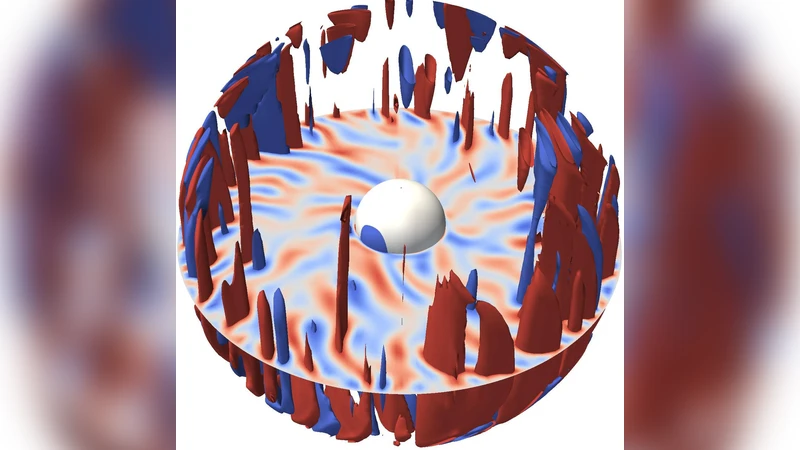
Context: dynamo action in giant planets and rapidly rotating stars leads to a broad variety of magnetic field geometries including small scale multipolar and large scale dipole-dominated topologies. Previous dynamo models suggest that solutions become multipolar once inertia becomes influential. Being tailored for terrestrial planets, most of these models neglected the background density stratification. Aims: we investigate the influence of the density stratification on convection-driven dynamo models. Methods: three-dimensional nonlinear simulations of rapidly rotating spherical shells are employed using the anelastic approximation to incorporate density stratification. A systematic parametric study for various density stratifications and Rayleigh numbers allows to explore the dependence of the magnetic field topology on these parameters. Results: anelastic dynamo models tend to produce a broad range of magnetic field geometries that fall on two distinct branches with either strong dipole-dominated or weak multipolar fields. As long as inertia is weak, both branches can coexist but the dipolar branch vanishes once inertia becomes influential. The dipolar branch also vanishes for stronger density stratifications. The reason is the concentration of the convective columns in a narrow region close to the outer boundary equator, a configuration that favors non-axisymmetric solutions. In multipolar solutions, zonal flows can become significant and participate in the toroidal field generation. Parker dynamo waves may then play an important role close to onset of dynamo action leading to a cyclic magnetic field behavior. Conclusion: Our simulations also suggest that the fact that late M dwarfs have dipolar or multipolar magnetic fields can be explained in two ways. They may differ either by the relative influence of inertia or fall into the regime where both types of solutions coexist.
💡 Research Summary
The authors address a long‑standing gap in planetary and stellar dynamo theory: the role of background density stratification in rapidly rotating, convection‑driven dynamos. While most previous models have employed the Boussinesq approximation—appropriate for terrestrial planets—they neglect the strong compressibility that characterises gas giants and low‑mass, fast‑rotating stars. To remedy this, the study adopts the anelastic approximation, which retains the essential effects of a radially varying density while filtering out sound waves, thereby allowing stable, long‑time integrations of three‑dimensional magnetohydrodynamic (MHD) equations in a spherical shell.
A systematic parameter sweep is performed. The shell geometry is fixed (inner‑to‑outer radius ratio 0.35) and the Ekman number is set to 10⁻⁴, with Prandtl and magnetic Prandtl numbers of 1 and 2 respectively. The key control parameters are the Rayleigh number (Ra), which is varied from just above the convective onset to roughly ten times critical, and the density contrast Nρ, defined as the natural logarithm of the ratio of bottom to top density, which is stepped from 0 (homogeneous) to 5 (strongly stratified). For each (Ra, Nρ) pair the authors compute the Rossby number Ro = U/(2ΩL) to quantify the relative importance of inertia versus Coriolis forces.
Two distinct magnetic regimes emerge across the entire dataset. The first, termed the “dipolar branch”, exhibits a high dipolarity (≥ 0.5), a dominant axisymmetric poloidal field, and relatively weak zonal flows. Convective columns (Taylor columns) are tall, span the full shell depth, and are only modestly tilted, reflecting strong rotational constraint (low Ro). The second, the “multipolar branch”, is characterised by low dipolarity (≤ 0.2), a predominance of non‑axisymmetric modes, and vigorous equatorial zonal jets. In this regime the convective motions are confined to a thin equatorial belt near the outer boundary, a direct consequence of either high Ro (inertia‑dominated flow) or large Nρ (density‑stratification‑induced column concentration).
The transition between the branches is governed primarily by inertia. When Ro exceeds roughly 0.1, the Coriolis force can no longer suppress the development of non‑axisymmetric shear, and the dipolar solution collapses, leaving only the multipolar state. Importantly, the authors find that a strong density stratification (Nρ ≥ 3) can trigger the same collapse even at modest Ro, because the stratification forces the convective columns to shrink radially and concentrate near the outer shell, thereby enhancing the non‑axisymmetric α‑effect. Consequently, the dipolar branch disappears for sufficiently stratified models irrespective of the exact value of Ro.
In the multipolar regime, the authors observe substantial zonal flows that act as a powerful Ω‑effect, converting poloidal field into toroidal field. Coupled with a robust α‑effect generated by the narrow, non‑axisymmetric convection, this configuration supports travelling Parker dynamo waves. Near the dynamo onset (Ra just above critical), these waves produce cyclic magnetic reversals with periods ranging from half to several rotation cycles, depending on Nρ and Ro. The presence of such waves offers a natural explanation for observed magnetic cycles in fully convective M‑dwarfs and possibly in the outer layers of gas giants.
The paper’s implications for astrophysical objects are twofold. First, the coexistence of dipolar and multipolar solutions at low inertia suggests a multistability that could account for sudden magnetic polarity switches without any change in external parameters. Second, the authors propose that the observed dichotomy among late‑type M dwarfs—some displaying strong, stable dipoles while others show weaker, more variable multipolar fields—may arise either from differences in the Rossby number (i.e., the relative strength of inertia) or from variations in internal density stratification. In practice, both effects are likely at play, and the study provides a framework for interpreting magnetic observations in terms of underlying dynamical regimes.
In conclusion, the work demonstrates that background density stratification is not a peripheral detail but a decisive factor shaping dynamo morphology in rapidly rotating, compressible interiors. By integrating anelastic dynamics with a broad parametric survey, the authors reveal how inertia and stratification jointly dictate whether a system settles into a strong dipole‑dominated state or a weak, multipolar, wave‑driven regime. The findings bridge the gap between terrestrial‑planet dynamo theory and the magnetic behaviour of gas giants and low‑mass stars, and they set the stage for future investigations that will incorporate variable magnetic Prandtl numbers, more realistic boundary conditions, and direct comparisons with observational data.
Comments & Academic Discussion
Loading comments...
Leave a Comment