Present-Day Star Formation: Protostellar Outflows and Clustered Star Formation
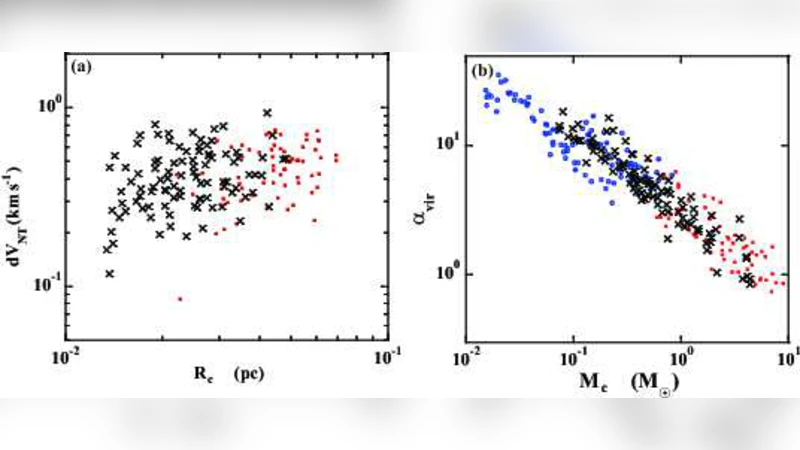
Stars form predominantly in clusters inside dense clumps of turbulent, magnetized molecular clouds. The typical size and mass of the cluster-forming clumps are \sim 1 pc and \sim 10^2 - 10^3 M_\odot, respectively. Here, we discuss some recent progress on theoretical and observational studies of clustered star formation in such parsec-scale clumps with emphasis on the role of protostellar outflow feedback. Recent simulations indicate that protostellar outflow feedback can maintain supersonic turbulence in a cluster-forming clump, and the clump can keep a virial equilibrium long after the initial turbulence has decayed away. In the clumps, star formation proceeds relatively slowly; it continues for at least several global free-fall times of the parent dense clump (t_{ff}\sim a few x 10^5 yr). The most massive star in the clump is formed at the bottom of the clump gravitational potential well at later times through the filamentary mass accretion streams that are broken up by the outflows from low-mass cluster members. Observations of molecular outflows in nearby cluster-forming clumps appear to support the outflow-regulated cluster formation model.
💡 Research Summary
**
The paper addresses how stars form in dense, turbulent, magnetized clumps that are the birthplaces of stellar clusters. Typical cluster‑forming clumps have radii of order one parsec and masses of 10²–10³ M⊙. The authors focus on the feedback from protostellar outflows (jets and winds launched by low‑mass protostars) as the dominant regulator of the internal dynamics and star‑formation efficiency (SFE) within such clumps.
Using three‑dimensional magnetohydrodynamic (MHD) simulations, the authors initialize a clump with a realistic density profile (ρ∝r⁻¹·⁵), supersonic turbulence (Mach ≈ 5), and a moderate magnetic field (10–30 µG). When a sink particle reaches 0.1 M⊙ it begins to launch an outflow whose momentum, mass‑loss rate, and opening angle follow observed scaling relations (L∝M_*^1.5). The outflows inject kinetic energy on scales of a few thousand AU, driving shocks that cascade to smaller scales and continuously replenish the turbulent cascade that would otherwise decay within ≈ 0.5 t_ff.
The simulations reveal several key outcomes. First, the outflow‑driven turbulence maintains a roughly Kolmogorov‑like power spectrum and supplies ≈ 5–10 % of the clump’s total kinetic energy at any given time. Because this energy input balances gravitational contraction, the clump’s virial parameter α = 2 T/|W| remains close to unity for several global free‑fall times (t_ff ≈ 3 × 10⁵ yr). Consequently, the clump stays in a quasi‑virial equilibrium long after the initial turbulence has vanished. Second, the star formation rate (SFR) is strongly suppressed: the SFE per free‑fall time is only 0.1–0.2, yielding an overall SFE of 2–4 % after a few t_ff, consistent with observations of nearby clusters.
Massive star formation proceeds differently from the classic monolithic core collapse picture. The most massive star (up to ≈ 20 M⊙ in the models) forms at the deepest part of the gravitational potential well, where several filamentary streams converge. These filaments are continually fragmented by the outflows of numerous low‑mass members, but the fragments are re‑accreted by the central potential, providing a sustained mass supply. Thus, the massive star grows late in the cluster’s history through “filamentary accretion” rather than from a pre‑existing massive core.
Observational support comes from surveys of nearby cluster‑forming clumps (e.g., NGC 1333, Ophiuchus L1688, Orion A). CO (2–1), SiO (5–4), and HCO⁺ (1–0) maps reveal multiple outflows whose combined momentum flux corresponds to ≈ 5–12 % of the clump’s internal pressure. Regions lacking strong outflows show higher turbulent dissipation rates and elevated local SFRs, reinforcing the causal link between outflow activity and turbulence maintenance.
The authors discuss limitations: (1) the initial magnetic field geometry is idealized; (2) radiative feedback, ionization, and detailed chemistry are omitted, which could modify the turbulence decay and heating balance; (3) current observations are biased toward low‑density tracers, potentially missing the densest accretion filaments. They propose future work combining high‑resolution ALMA and JWST observations with full‑physics simulations that include radiation, chemistry, and more realistic magnetic field configurations.
In summary, protostellar outflows act as an efficient, self‑regulating feedback mechanism that sustains supersonic turbulence, keeps the parent clump near virial equilibrium, and slows down star formation to the observed low efficiencies. This “outflow‑regulated cluster formation” model naturally explains the prolonged star‑forming epoch (several t_ff), the low overall SFE, and the late emergence of massive stars via fragmented filamentary accretion. The paper thus positions outflow feedback as a cornerstone of modern theories of clustered star formation.