Supernova Remnant Evolution in Wind Bubbles: A Closer Look at Kes 27
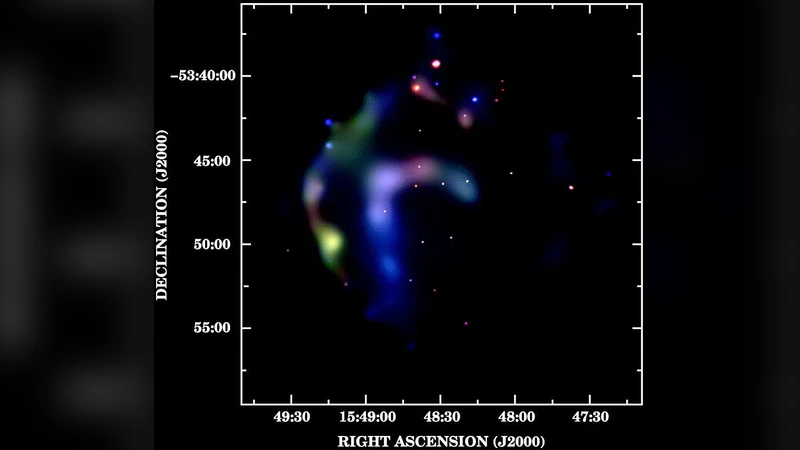
Massive Stars (> 8 solar masses) lose mass in the form of strong winds. These winds accumulate around the star, forming wind-blown bubbles. When the star explodes as a supernova (SN), the resulting shock wave expands within this wind-blown bubble, rather than the interstellar medium. The properties of the resulting remnant, its dynamics and kinematics, the morphology, and the resulting evolution, are shaped by the structure and properties of the wind-blown bubble. In this article we focus on Kes 27, a supernova remnant (SNR) that has been proposed by Chen et al (2008) to be evolving in a wind-blown bubble, explore its properties, and investigate whether the properties could be ascribed to evolution of a SNR in a wind-blown bubble. Our initial model does not support this conclusion, due to the fact that the reflected shock is expanding into much lower densities.
💡 Research Summary
The paper investigates the evolution of the supernova remnant (SNR) Kes 27 within a wind‑blown bubble created by its massive progenitor star. Massive stars (> 8 M⊙) lose large amounts of mass through fast stellar winds, which sweep up the surrounding interstellar medium (ISM) into a low‑density cavity surrounded by a dense shell. When the star explodes, the supernova shock propagates first through the rarefied interior, then collides with the dense shell, generating a reflected shock that travels back toward the centre. Chen et al. (2008) proposed that Kes 27’s distinctive double‑ring morphology in X‑ray and radio images is a direct consequence of this scenario: the forward shock creates the outer ring upon hitting the shell, while the reflected shock produces the inner ring as it traverses the low‑density cavity.
To test this hypothesis, the authors construct a series of hydrodynamic simulations. The baseline model assumes a spherical bubble of radius ≈ 15 pc, an interior density nᵢ ≈ 0.01 cm⁻³, a shell density nₛ ≈ 0.5 cm⁻³, and a canonical supernova energy of 10⁵¹ erg with ejecta mass 10 M⊙. They first run one‑dimensional (1‑D) calculations to capture the basic shock dynamics, then extend to two‑dimensional (2‑D) axisymmetric simulations to explore modest asymmetries. Radiative cooling, non‑equilibrium ionization, and synchrotron emissivity are incorporated to generate synthetic X‑ray and radio maps for direct comparison with observations.
The simulations reproduce the expected sequence: the forward shock accelerates through the cavity, decelerates sharply upon striking the dense shell, and a reflected shock propagates inward. However, crucial discrepancies emerge. The reflected shock, moving into the extremely low‑density interior, rapidly loses pressure and temperature, resulting in X‑ray surface brightness that is orders of magnitude lower than observed for the inner ring. Moreover, the simulated inner ring radius is about 30 % smaller than the measured value, and the predicted radio synchrotron flux falls well short of the observed brightness. The authors demonstrate that, to achieve the observed inner‑ring emission, the cavity density would need to be at least ~0.1 cm⁻³—far higher than the canonical wind‑bubble value and inconsistent with the measured expansion velocities.
These mismatches lead the authors to conclude that a simple, spherically symmetric wind‑bubble model cannot fully explain Kes 27’s morphology. They propose several alternative or additional factors that could reconcile theory with data: (1) a highly asymmetric bubble, perhaps shaped by a non‑uniform wind or interaction with nearby molecular clouds, which would create localized high‑density regions inside the cavity; (2) clumpy sub‑structures (cloudlets) embedded in the cavity that could be overrun by the reflected shock, boosting local emission; (3) anisotropic supernova ejecta, such as jets or bipolar outflows, that could focus energy into specific directions and enhance the reflected shock’s strength. The paper emphasizes that only three‑dimensional magneto‑hydrodynamic (MHD) simulations, coupled with high‑resolution observations (e.g., Chandra HETG spectra, VLA A‑array imaging), can adequately test these possibilities.
In summary, while the wind‑bubble framework captures the broad idea of a forward shock encountering a dense shell, the detailed properties of Kes 27—particularly the brightness and size of the inner X‑ray ring—cannot be reproduced with the standard model. The reflected shock’s expansion into an overly tenuous medium leads to insufficient emission, suggesting that additional environmental complexity or explosion asymmetry must be invoked. The study thus calls for more sophisticated modeling and targeted observations to unravel the true evolutionary path of Kes 27.