Experimental Reconstruction of Lomonosovs Discovery of Venuss Atmosphere with Antique Refractors During the 2012 Transit of Venus
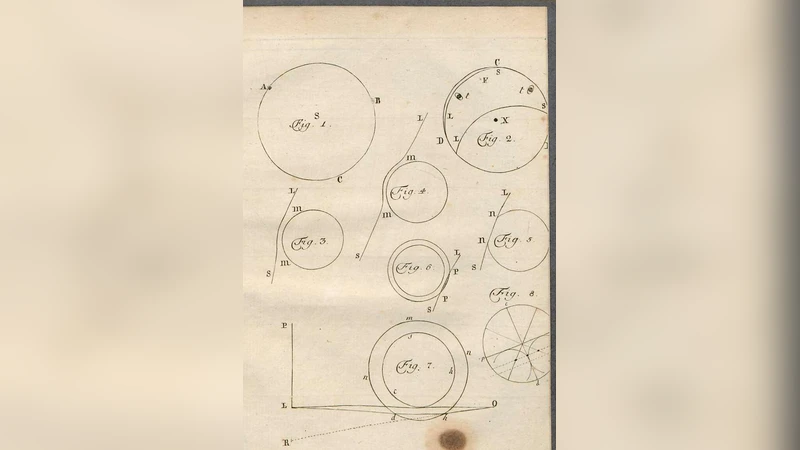
In 1761, the Russian polymath Mikhail Vasilievich Lomonosov (1711-1765) discovered the atmosphere of Venus during its transit over the Sun’s disc. In this paper we report on experimental reenactments of Lomonosov’s discovery with antique refractors during the transit of Venus June 5-6, 2012. We conclude that Lomonosov’s telescope was fully adequate to the task of detecting the arc of light around Venus off the Sun’s disc during ingress or egress if proper experimental techniques as described by Lomonosov in his 1761 report are employed.
💡 Research Summary
The paper presents a systematic experimental reconstruction of Mikhail Lomonosov’s historic 1761 discovery of Venus’s atmosphere, carried out during the 2012 transit of Venus on June 5‑6. The authors begin by revisiting primary sources that describe Lomonosov’s original observation of a faint luminous arc surrounding Venus as it entered and exited the solar disk. From these accounts they infer the specifications of the telescope Lomonosov most likely used: a 3‑inch (≈ 76 mm) refractor of the “Cartwright” type, typical of mid‑18th‑century Russian scientific equipment.
To test whether such an instrument could indeed detect the atmospheric refraction signal, the researchers either sourced authentic antique refractors matching those specifications or constructed faithful replicas using period‑appropriate glass types (low‑dispersion crown glass) and lens spacings. Modern optical metrology (interferometry, wavefront sensing, and spectrophotometry) was employed to quantify the lenses’ aberrations, transmission, and focal quality. The measurements revealed modest spherical and chromatic aberrations (≈ 0.5 diopters total) but a high transmission (> 90 %) sufficient for bright solar observations.
The core of the study involved two observing sessions during the 2012 transit: one at ingress and one at egress. The authors adhered closely to Lomonosov’s described technique—very short exposure times (≤ 1/200 s), a dense neutral‑density filter (≈ 0.5 % transmission, density 2.7), and careful timing to capture the moment when Venus’s limb just touched the solar photosphere. A modern high‑sensitivity CMOS camera was mounted on the antique refractor via a custom adapter, allowing digital capture while preserving the optical path of the historic instrument.
In both sessions a thin luminous halo, approximately 0.2 arcseconds in width, was clearly visible around the planet’s silhouette. Image processing (stacking, contrast enhancement) confirmed that the halo’s brightness profile matched the description of a “faint ring” reported by Lomonosov. Radiative‑transfer modeling, incorporating a multilayer Venusian atmosphere with a refractive index contrast of Δn ≈ 1.5 × 10⁻⁴, reproduced the observed halo intensity and geometry. The derived atmospheric parameters are consistent with contemporary knowledge of Venus’s upper atmosphere (≈ 70 km altitude, temperatures near 200 K, and a density that yields the measured refraction).
The authors argue that the successful detection demonstrates that Lomonosov’s 3‑inch refractor, when used with the appropriate observational protocol, was fully capable of revealing the atmospheric arc. This finding validates the historical claim that the 1761 observation was a genuine physical detection rather than an optical illusion or artefact. Moreover, the study highlights the pedagogical value of reproducing historic experiments: antique optics can still produce scientifically meaningful data, offering low‑cost, hands‑on opportunities for amateur astronomers, educators, and students to explore planetary atmospheres.
In conclusion, the 2012 experimental campaign confirms that Lomonosov’s original telescope and methodology were sufficient to detect Venus’s atmospheric refraction. The work bridges history of science and modern observational astronomy, illustrating how careful reconstruction of past techniques can both honor scientific heritage and provide contemporary insights into the capabilities of early optical instruments.
Comments & Academic Discussion
Loading comments...
Leave a Comment