A thermodynamic counterpart of the Axelrod model of social influence: The one-dimensional case
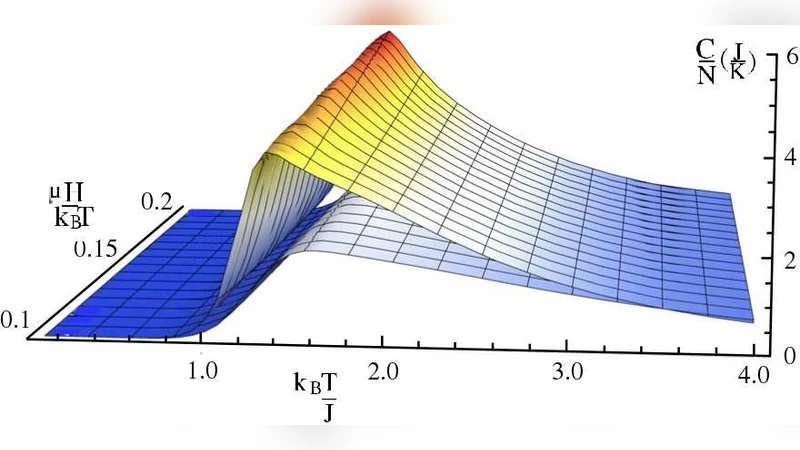
We propose a thermodynamic version of the Axelrod model of social influence. In one-dimensional (1D) lattices, the thermodynamic model becomes a coupled Potts model with a bonding interaction that increases with the site matching traits. We analytically calculate thermodynamic and critical properties for a 1D system and show that an order-disorder phase transition only occurs at T = 0 independent of the number of cultural traits q and features F. The 1D thermodynamic Axelrod model belongs to the same universality class of the Ising and Potts models, notwithstanding the increase of the internal dimension of the local degree of freedom and the state-dependent bonding interaction. We suggest a unifying proposal to compare exponents across different discrete 1D models. The comparison with our Hamiltonian description reveals that in the thermodynamic limit the original out-of-equilibrium 1D Axelrod model with noise behaves like an ordinary thermodynamic 1D interacting particle system.
💡 Research Summary
The paper presents a thermodynamic formulation of the Axelrod model of social influence and solves it exactly in one dimension. In the original Axelrod model each agent is described by a cultural vector of F features, each taking one of q possible traits. Interaction between neighboring agents is stronger when they share more traits, leading to a state‑dependent bonding rule. By translating this rule into a Hamiltonian, the authors obtain a coupled Potts system in which the energy of a bond is proportional to the number of matching features:
H = ‑J ∑{i} ∑{α=1}^{F} δ(σ_i^α, σ_{i+1}^α).
Because the model is one‑dimensional, the transfer‑matrix method can be applied. The matrix element between two neighboring configurations σ and σ′ is
T_{σσ′}=exp
Comments & Academic Discussion
Loading comments...
Leave a Comment