Pulsed high energy gamma-rays from thermal populations in the current sheets of pulsar winds
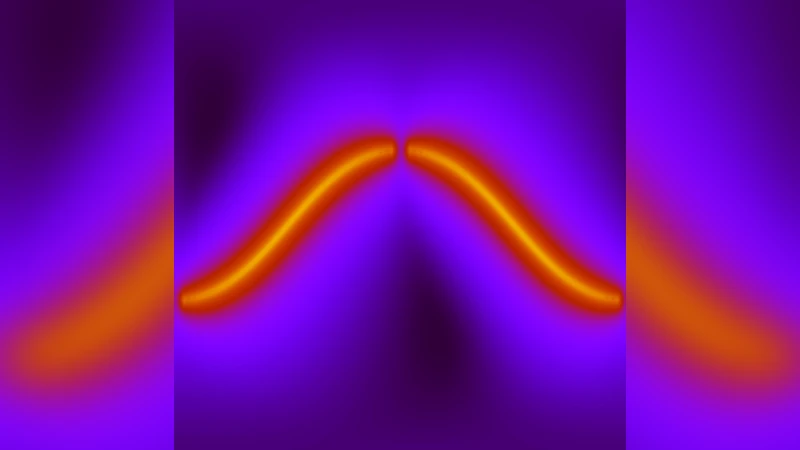
Context. More than one hundred GeV pulsars have been detected up to now by the LAT telescope on the Fermi gamma-ray observatory, showing peak energies around a few GeV. Current modelling proposes that the high energy emission comes from outer magnetospheric gaps, however radiation from the equatorial current sheet which separates the two magnetic hemispheres outside the light cylinder has also been investigated. Aims. In this paper we discuss the region right outside the light cylinder, or “near wind” zone. We investigate the possibility that synchrotron radiation emitted by thermal populations in the equatorial current sheet of the pulsar wind in this region can explain the lightcurves and spectra observed by Fermi/LAT. Methods. We use analytical estimates as well as detailed numerical computation to calculate the gamma-ray luminosities, lightcurves and spectra of gamma-ray pulsars. Results. Many of the characteristics of the gamma-ray pulsars observed by Fermi/LAT can be reproduced by our model, most notably the position of these objects in the P - Pdot diagram, and the range of gamma-ray luminosities. A testable result is a sub-exponential cutoff with an index b = 0.35. We also predict the existence of a population of pulsars with cutoff energies in the MeV range. These have systematically lower spindown luminosities than the Fermi/LAT detected pulsars. Conclusions. It is possible for relativistic populations of electrons and positrons in the current sheet of a pulsar’s wind right outside the light cylinder to emit synchrotron radiation that peaks in the sub-GeV to GeV regime, with gamma-ray efficiencies similar to those observed for the Fermi/LAT pulsars.
💡 Research Summary
The paper investigates whether synchrotron radiation from thermal electron‑positron populations in the equatorial current sheet of a pulsar wind, located just outside the light‑cylinder (the “near‑wind” zone), can account for the γ‑ray light curves and spectra observed by the Fermi/LAT instrument. The authors begin by describing the geometry of the current sheet: a thin, equatorial layer that separates the two magnetic hemispheres and expands rapidly once it passes the light‑cylinder radius (R_{\rm LC}=c/\Omega). In this region the magnetic field declines roughly as (B\propto R^{-1}) and the plasma density is a multiple (\kappa) of the Goldreich‑Julian density. They assume that magnetic reconnection heats the plasma to a relativistic Maxwell‑Jüttner distribution with an average Lorentz factor (\bar\gamma\sim10^{3-4}).
Using standard synchrotron formulas, the characteristic photon energy is estimated as
\