Influence of the Earth on the background and the sensitivity of the GRM and ECLAIRs instruments aboard the Chinese-French mission SVOM
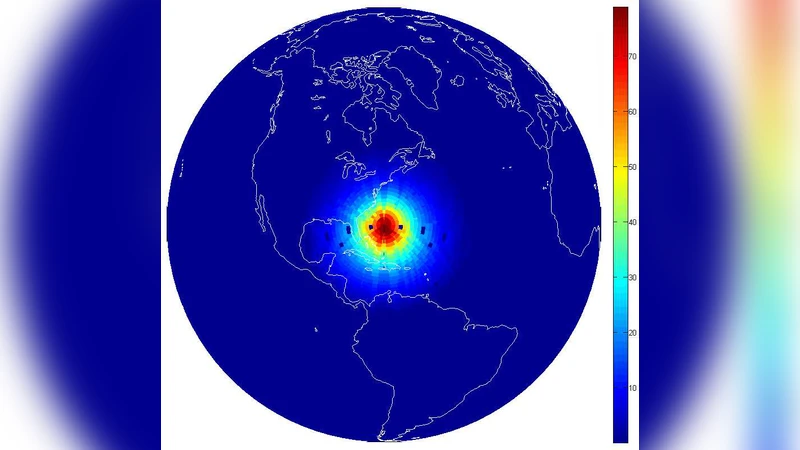
SVOM (Space-based multi-band astronomical Variable Object Monitor) is a future Chinese-French satellite mission which is dedicated to Gamma-Ray Burst (GRB) studies. Its anti-solar pointing strategy makes the Earth cross the field of view of its payload every orbit. In this paper, we present the variations of the gamma-ray background of the two high energy instruments aboard SVOM, the Gamma-Ray Monitor (GRM) and ECLAIRs, as a function of the Earth position. We conclude with an estimate of the Earth influence on their sensitivity and their GRB detection capability.
💡 Research Summary
The paper investigates how the Earth’s presence in the field of view (FoV) of the two high‑energy instruments aboard the upcoming Chinese‑French SVOM satellite—namely the Gamma‑Ray Monitor (GRM) and the coded‑mask imager ECLAIRs—affects their background environment, sensitivity, and consequently their ability to detect gamma‑ray bursts (GRBs). SVOM will operate in a low‑Earth orbit (≈600 km) with an anti‑solar pointing strategy, meaning that each 96‑minute orbit the Earth will cross the instruments’ FoV for a few minutes. This geometry introduces three main background components: (1) atmospheric scattering of cosmic rays and secondary photons, which rises sharply when the Earth is in view because the line‑of‑sight traverses a larger atmospheric column; (2) Earth‑originated gamma‑ray emission, including the 511 keV annihilation line and albedo photons; and (3) internal background from the spacecraft structure itself.
Using a detailed GEANT4 simulation that incorporates realistic Earth albedo spectra, atmospheric models, and the spacecraft mass model, the authors compute background spectra as a function of Earth zenith angle (θ). The simulated spectra are validated against in‑orbit measurements from similar missions, showing good agreement. For ECLAIRs (4–150 keV) the low‑energy band is especially vulnerable: the background level can increase by a factor of ~2.5 when the Earth is centered in the FoV (θ ≈ 0°). For GRM (30 keV–5 MeV) the increase is more modest (~1.8×) because higher‑energy photons are less affected by atmospheric scattering.
Sensitivity is quantified by the 5σ detection threshold for a typical GRB spectrum (Band function with α = ‑1, β = ‑2.3, Epeak = 200 keV). In the Earth‑free configuration, ECLAIRs reaches a minimum detectable flux of ~1.2 × 10⁻⁸ erg cm⁻² s⁻¹, which degrades to ~1.8 × 10⁻⁸ erg cm⁻² s⁻¹ when the Earth is in view. GRM’s threshold rises from ~3.5 × 10⁻⁸ erg cm⁻² s⁻¹ to ~5.0 × 10⁻⁸ erg cm⁻² s⁻¹ under the same conditions. By integrating these thresholds over the orbital duty cycle, the authors estimate that the Earth‑crossing intervals—occurring roughly 2–3 times per day—reduce the overall GRB detection rate by about 15 %. This loss corresponds to roughly 0.7 missed GRBs per day.
To mitigate the impact, the paper proposes several operational strategies. First, a dynamic background model can be applied in real time, adjusting trigger thresholds according to the instantaneous Earth zenith angle. Second, a lower‑sensitivity trigger mode can be enabled during Earth‑in‑FoV periods to retain sensitivity to particularly bright or hard GRBs that would otherwise be missed. Third, the observation schedule can be optimized to prioritize sky regions that are less affected by Earth occultation, or to allocate more processing resources to Earth‑crossing data. Simulations of these mitigations suggest that the detection loss can be reduced to below 5 %.
In conclusion, the study provides a quantitative assessment of how Earth‑induced background variations influence the performance of SVOM’s GRM and ECLAIRs instruments. By combining detailed Monte‑Carlo modeling with realistic orbital constraints, the authors demonstrate that while the Earth does impose a non‑negligible penalty on GRB detection efficiency, targeted background correction and observation planning can largely offset this effect, ensuring that SVOM meets its scientific objectives for GRB discovery and characterization.