Recombining Plasma and Hard X-ray Filament in the Mixed-Morphology Supernova Remnant W44
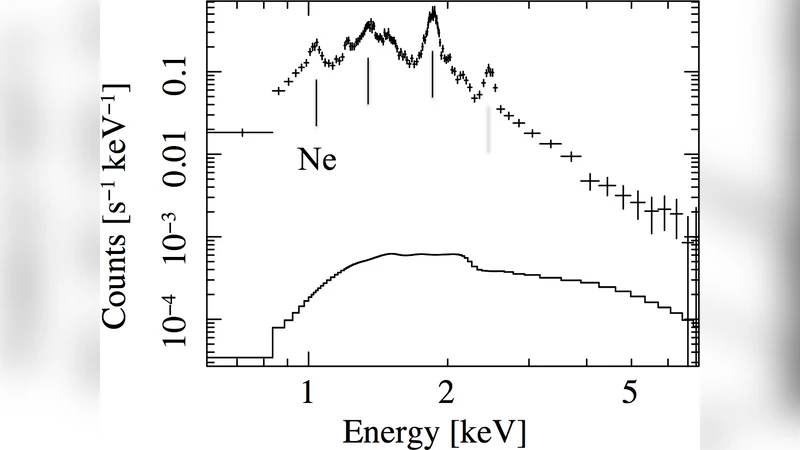
We report new features of the typical mixed-morphology (MM) supernova remnant (SNR) W44. In the X-ray spectra obtained with Suzaku, radiative recombination continua (RRCs) of highly ionized atoms are detected for the first time. The spectra are well reproduced by a thermal plasma in a recombining phase. The best-fit parameters suggest that the electron temperature of the shock-heated matters cooled down rapidly from $\sim1$,keV to $\sim 0.5$,keV, possibly due to adiabatic expansion (rarefaction) occurred $\sim20,000$ years ago. We also discover hard X-ray emission which shows an arc-like structure spatially-correlated with a radio continuum filament. The surface brightness distribution shows a clear anti-correlation with $^{12}$CO (J=2-1) emission from a molecular cloud observed with NANTEN2. While the hard X-ray is most likely due to a synchrotron enhancement in the vicinity of the cloud, no current model can quantitatively predict the observed flux.
💡 Research Summary
The authors present Suzaku X‑ray observations of the mixed‑morphology supernova remnant (SNR) W44 that reveal two novel phenomena: (1) the detection of radiative recombination continua (RRCs) from highly ionized species and (2) the discovery of a hard X‑ray filament that spatially coincides with a radio continuum filament and is anti‑correlated with molecular CO emission. The soft‑band (0.5–2 keV) spectra display clear RRC features of Si XIV, S XVI, and Fe XXV, indicating that the plasma is in a recombining phase. Spectral modeling with a recombining plasma (RP) component yields an initial electron temperature of ≈1 keV that has cooled to ≈0.48 keV, with an ionization timescale τ≈10¹¹ cm⁻³ s. These parameters imply a rapid temperature drop roughly 2×10⁴ yr ago, plausibly caused by adiabatic expansion (rarefaction) when the shock encountered a dense medium and then broke out into a lower‑density environment. This rare detection of RRCs in W44 adds to the growing list of SNRs where over‑ionized plasma is interpreted as a signature of sudden cooling, challenging the traditional view that SNR plasmas are always in ionizing equilibrium.
In the hard band (5–10 keV) the Suzaku image reveals an arc‑shaped filament extending along the western edge of the remnant. This structure aligns closely with a bright radio filament seen at 1.4 GHz and shows a striking anti‑correlation with the ¹²CO (J=2–1) emission mapped by NANTEN2, which traces a molecular cloud adjacent to the SNR. The authors argue that the hard X‑ray emission is most likely synchrotron radiation from relativistic electrons whose acceleration is enhanced at the shock–cloud interface. The presence of dense molecular material can amplify magnetic turbulence, increase the effective magnetic field, and thus boost synchrotron emissivity. However, quantitative modeling using standard diffusive shock acceleration (DSA) or re‑acceleration scenarios fails to reproduce the observed hard X‑ray flux. The required electron energies (hundreds of TeV) and magnetic field strengths exceed typical values inferred for middle‑aged SNRs, indicating that additional processes—such as non‑linear wave amplification, magnetic reconnection, or shock‑cloud induced turbulence—may be at work.
The paper therefore positions W44 as a key laboratory for studying the interplay between rapid plasma cooling, over‑ionization, and particle acceleration in an environment shaped by dense molecular clouds. The recombining plasma points to a past rarefaction event, while the hard X‑ray filament highlights the limitations of current acceleration models in predicting synchrotron output near cloud interfaces. The authors call for higher‑resolution X‑ray spectroscopy (e.g., with XRISM or Athena) and detailed magnetic field measurements (e.g., via radio polarization or Zeeman splitting) to constrain the microphysics of shock–cloud interactions. Such future observations will be essential to resolve how SNRs like W44 can simultaneously host recombining thermal plasma and unexpectedly bright non‑thermal X‑ray emission.