A Common Thread: the pairing interaction for the unconventional superconductors
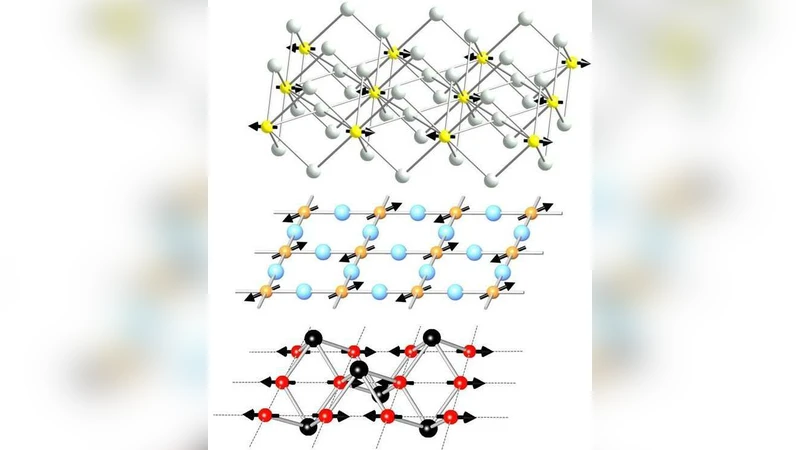
The structures, the phase diagrams, and the appearance of a neutron resonance signaling an unconventional superconducting state provide phenomenological evidence relating the cuprates, the Fe-pnictides/chalcogenides as well as some heavy fermion and actinide materials. Single- and multi-band Hubbard models have been found to describe a number of the observed properties of these materials so that it is reasonable to examine the origin of the pairing interaction in these models. In this review, based on the experimental phenomenology and studies of the pairing interaction for Hubbard-like models, it is proposed that spin-fluctuation mediated pairing is the common thread linking a broad class of superconducting materials.
💡 Research Summary
The paper presents a comprehensive review that unifies the pairing mechanism across a broad class of unconventional superconductors, including cuprates, iron‑based pnictides and chalcogenides, as well as selected heavy‑fermion and actinide compounds. The authors begin by highlighting three experimental hallmarks that recur in these disparate families: (1) a characteristic phase diagram in which superconductivity emerges as a dome upon doping, pressure, or chemical substitution; (2) the appearance of a magnetic neutron‑scattering resonance at a wave‑vector that connects nested portions of the Fermi surface; and (3) a superconducting gap symmetry that changes sign across different Fermi‑surface sheets (d‑wave in cuprates, s±‑wave in iron‑based systems, and more complex sign‑changing forms in heavy‑fermion/actinide materials).
To explain these commonalities, the authors turn to Hubbard‑type models. For cuprates a single‑band Hubbard model with a large on‑site repulsion U captures the antiferromagnetic spin fluctuations that dominate the low‑energy spectrum. For iron‑based superconductors a multi‑band extension, incorporating both electron and hole pockets, reproduces the inter‑pocket nesting that generates strong spin fluctuations at the (π,0) or (π,π) wave‑vectors. Heavy‑fermion and actinide systems are modeled with a periodic Anderson or Kondo‑lattice Hamiltonian, where the hybridization between localized f‑electrons and conduction electrons produces a narrow quasiparticle band that is also susceptible to spin‑fluctuation exchange.
Using a combination of dynamical mean‑field theory (DMFT), variational cluster approximations, and functional renormalization‑group (fRG) calculations, the authors evaluate the effective pairing interaction V(k,k′) mediated by spin fluctuations. The calculations reveal that as U (or the effective exchange J) increases, the spin‑susceptibility χ(q,ω) sharpens at the nesting vector, leading to an attractive interaction in the sign‑changing channels. In the cuprates this yields a d‑wave order parameter, while in the iron‑based materials the same mechanism produces an s± gap that changes sign between electron and hole pockets. For heavy‑fermion compounds the same spin‑fluctuation exchange can stabilize d‑wave or even more exotic f‑wave symmetries, depending on the detailed Fermi‑surface topology.
A key insight is that the neutron resonance observed experimentally can be interpreted as a spin‑exciton that appears only below Tc when the superconducting gap changes sign across the nesting vector. The resonance energy scales roughly with the superconducting gap, providing a direct spectroscopic fingerprint of spin‑fluctuation‑mediated pairing. Moreover, the authors discuss how external parameters—carrier concentration, pressure, or isovalent substitution—tune the nesting conditions and thus the strength of the spin fluctuations, explaining the ubiquitous dome‑shaped Tc versus doping curves.
The review also addresses the interplay between spin fluctuations and phonons. While phonon‑mediated pairing cannot account for the high transition temperatures and sign‑changing gap structures, the authors acknowledge that low‑energy phonons may provide a secondary contribution that can enhance or suppress Tc depending on their coupling to the spin channel. This nuanced view reconciles the presence of observable electron‑phonon signatures in some spectroscopies with the dominant role of magnetic fluctuations.
Finally, the authors propose a unifying “common thread”: spin‑fluctuation exchange is the primary glue that binds electrons into Cooper pairs across all the examined families. Material‑specific details—such as the number of active bands, the degree of electronic correlation, and the precise nesting geometry—modulate the quantitative aspects of the pairing interaction but do not alter its fundamental magnetic origin. The paper concludes by suggesting future directions, including high‑resolution resonant inelastic X‑ray scattering (RIXS) to map spin dynamics, large‑scale multi‑band DMFT/fRG studies to predict new high‑Tc candidates, and engineered heterostructures or strain‑tuned systems designed to amplify the relevant spin fluctuations. In sum, the review offers a compelling synthesis that positions spin‑fluctuation‑mediated pairing as the central paradigm for understanding and discovering unconventional superconductors.