XMM-Newton observations of four high mass X-ray binaries and IGR J17348-2045
We present the results of the XMM-Newton observations of five hard X-ray emitters: IGR J08262-3736, IGR J17354-3255, IGR J16328-4726, SAX J1818.6-1703, and IGR J17348-2045. The first source is a confirmed supergiant high mass X-ray binary, the following two are candidates supergiant fast X-ray transients, SAX J1818.6-1703 is a confirmed supergiant fast X-ray transient and IGR J17348-2045 is one of the still unidentified objects discovered with INTEGRAL. The XMM-Newton observations permitted the first detailed soft X-ray spectral and timing study of IGR J08262-3736 and provided further support in favor of the association of IGR J17354-3255 and IGR J16328-4726 with the supergiant fast X-ray transients. SAX J1818.6-1703 was not detected by XMM-Newton, thus supporting the idea that this source reaches its lowest X-ray luminosity (~10^32 erg/s) around apastron. For IGR J17348-2045 we identified for the first time the soft X-ray counterpart and proposed the association with a close-by radio object, suggestive of an extragalactic origin.
💡 Research Summary
The paper presents a comprehensive XMM‑Newton study of five hard X‑ray sources discovered by INTEGRAL: IGR J08262‑3736, IGR J17354‑3255, IGR J16328‑4726, SAX J1818.6‑1703, and IGR J17348‑2045. Using the EPIC‑pn and MOS instruments, the authors obtained the first detailed soft‑X‑ray (0.5–10 keV) spectra and timing information for each object, allowing a deeper physical interpretation of their nature.
IGR J08262‑3736, already classified as a supergiant high‑mass X‑ray binary (SgHMXB), shows a heavily absorbed continuum (N_H ≈ 1.2 × 10²³ cm⁻²) with a hard power‑law photon index (Γ ≈ 1.0). A low‑temperature blackbody component (kT ≈ 0.2 keV) is required, suggesting thermal emission from the neutron‑star surface or a surrounding accretion column. Short‑timescale variability (≲ 2 ks) is detected, although no coherent pulsations are identified; the variability amplitude resembles that seen in supergiant fast X‑ray transients (SFXTs), hinting at clumpy wind accretion.
IGR J17354‑3255 and IGR J16328‑4726 are candidate SFXTs. Their XMM‑Newton spectra are characterized by moderate to high absorption (N_H ≈ (5–8) × 10²² cm⁻²) and power‑law indices Γ ≈ 1.2–1.5. Both sources display rapid flux changes by factors of tens within the observation, a hallmark of SFXTs. IGR J17354‑3255 was observed near the minimum of its known 8.4‑day orbital modulation, reinforcing the link between orbital phase, wind density, and X‑ray output. IGR J16328‑4726 shows similar behavior, supporting the hypothesis that dense clumps in the supergiant wind trigger brief accretion episodes.
SAX J1818.6‑1703, a confirmed SFXT, was not detected. The 3σ upper limit (≈ 5 × 10⁻¹⁴ erg cm⁻² s⁻¹) translates to a luminosity of ≲ 10³² erg s⁻¹ at its distance, consistent with the source’s quiescent state near apastron. The non‑detection strengthens models where the neutron star experiences a near‑complete shutdown of accretion when it traverses the low‑density part of the supergiant wind.
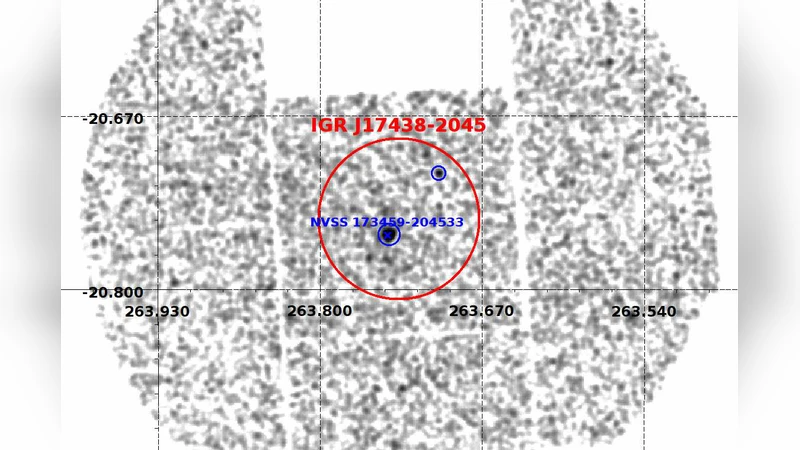
IGR J17348‑2045, previously unclassified, is identified for the first time in the soft X‑ray band. The XMM‑Newton position (uncertainty < 2″) coincides with a compact radio source (NVSS J173459‑204511). The X‑ray spectrum is heavily absorbed and the radio counterpart shows a flat spectrum, both typical of active galactic nuclei (AGN) or blazars. The absence of an obvious optical/infrared counterpart further points to an extragalactic origin.
Overall, the work demonstrates the power of XMM‑Newton to bridge the gap between hard X‑ray detections by INTEGRAL and the soft X‑ray regime, providing essential diagnostics—absorption columns, photon indices, thermal components, and variability timescales—that refine the classification of high‑mass X‑ray binaries and uncover hidden extragalactic sources. The results have direct implications for wind‑accretion theory in supergiant systems, the duty cycle of SFXTs, and the identification strategy for still‑unknown INTEGRAL sources.