Polarization studies with NuSTAR
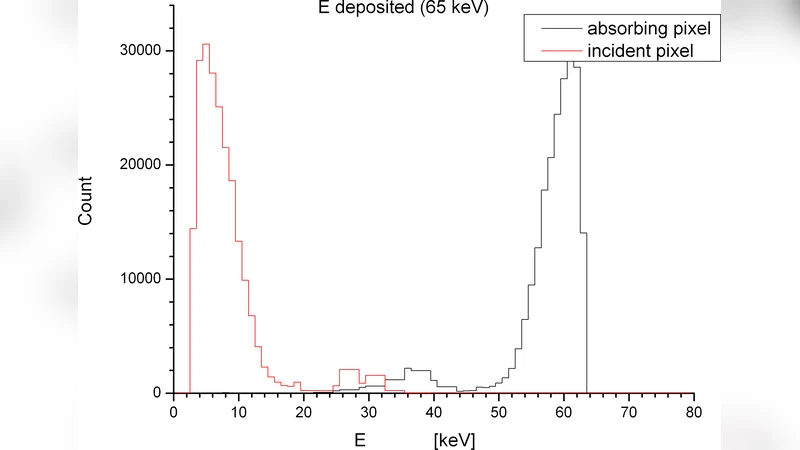
The capability of NuSTAR to detect polarization in the Compton scattering regime (>50 keV) has been investigated. The NuSTAR mission, flown on June 2012 a Low Earth Orbit (LEO), provides a unique possibility to confirm the findings of INTEGRAL on the polarization of cosmic sources in the hard X-rays. Each of the two focal plane detectors are high resolution pixellated CZT arrays, sensitive in the energy range ~ 3 - 80 keV. These units have intrinsic polarization capabilities when the proper information on the double events is transmitted on ground. In this case it will be possible to detect polarization from bright sources on timescales of the order of 10^5s
💡 Research Summary
The paper investigates the capability of the NuSTAR (Nuclear Spectroscopic Telescope Array) mission to measure X‑ray polarization in the Compton scattering regime above 50 keV. NuSTAR, launched in June 2012 into a low‑Earth orbit, carries two focal‑plane modules (FPMs) each composed of a 32 × 32 pixellated CdZnTe (CZT) detector array with 0.6 mm pixel pitch and 2 mm thickness. While the primary scientific goal of NuSTAR is high‑resolution spectroscopy and imaging in the 3–80 keV band, the geometry of the CZT pixels makes it intrinsically sensitive to double‑event interactions: a high‑energy photon first Compton‑scatters in one pixel and then is photo‑absorbed in a second pixel. The azimuthal distribution of these double events carries the imprint of the incident photon’s polarization because the Compton scattering cross‑section depends on the angle between the electric field vector and the scattering plane.
To quantify this potential, the authors performed detailed Monte‑Carlo simulations using GEANT4. The simulations modelled realistic source spectra, a range of polarization fractions (0–100 %), and the full spacecraft environment, including Earth albedo, cosmic‑ray induced background, and material scattering. They derived the modulation factor μ as a function of energy (μ≈0.30 at 50 keV, 0.38 at 60 keV, and 0.45 at 70 keV) and evaluated the fraction of events that produce usable double‑hits (≈3 % of all recorded events, with ~70 % correctly localized in two distinct pixels). By applying a standard Stokes‑parameter reconstruction algorithm to the simulated event lists, the authors demonstrated that a bright source such as the Crab Nebula (≈1 Crab flux) observed for 10⁵ seconds would yield a detectable polarization signal at the 3σ level for a polarization degree as low as 10 %. For even brighter or harder sources like Cygnus X‑1, a 5 × 10⁴ s exposure could detect a 5 % polarization fraction.
A critical operational issue highlighted is the handling of double‑event telemetry. In the current NuSTAR data pipeline, double‑event information is compressed to reduce downlink volume, which would discard the precise pixel‑by‑pixel energy and timing data required for polarization analysis. The authors argue that preserving the raw double‑event packets—or at least a minimally processed version containing pixel coordinates, deposited energies, and timestamps—would enable ground‑based polarization reconstruction without compromising the primary science goals.
The paper also compares NuSTAR’s prospective performance with that of the INTEGRAL instruments (IBIS and SPI), which have reported hard‑X‑ray polarization but suffer from higher background and lower angular resolution. NuSTAR’s superior energy resolution (~1 keV), finer pixel scale, and low‑background orbit translate into a higher signal‑to‑noise ratio for polarization measurements, especially in the 50–80 keV band where the modulation factor is maximal.
In conclusion, the authors find that NuSTAR possesses an inherent, though under‑exploited, capability to measure hard X‑ray polarization. With modest changes to the data handling strategy and the implementation of a dedicated polarization analysis pipeline, NuSTAR could independently confirm INTEGRAL’s results and open a new window on the geometry and magnetic fields of bright cosmic X‑ray sources. Future work suggested includes a pilot analysis of existing archival data (if double‑event information can be recovered), refined background modeling, and the development of on‑board event‑selection algorithms to maximize the double‑event yield while keeping telemetry within limits.