High zenith angle observations of PKS 2155-304 with the MAGIC-I telescope
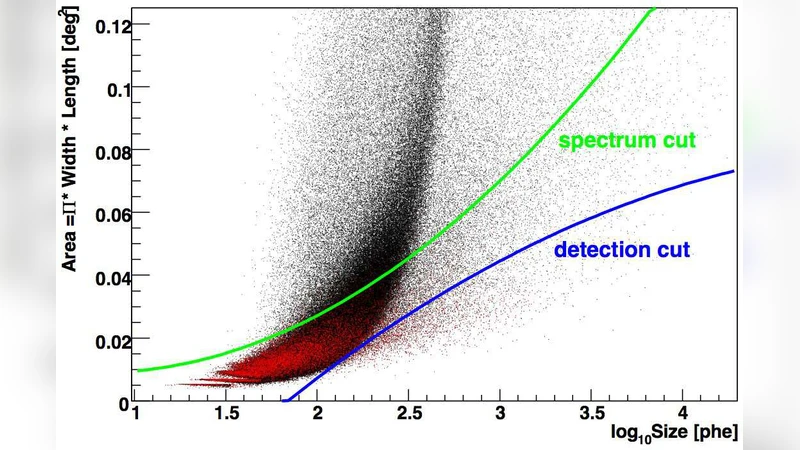
The high frequency peaked BL Lac PKS 2155-304 with a redshift of z=0.116 was discovered in 1997 in the very high energy (VHE, E >100GeV) gamma-ray range by the University of Durham Mark VI gamma-ray Cherenkov telescope in Australia with a flux corresponding to 20% of the Crab Nebula flux. It was later observed and detected with high significance by the Southern Cherenkov observatory H.E.S.S. Detection from the Northern hemisphere is difficult due to challenging observation conditions under large zenith angles. In July 2006, the H.E.S.S. collaboration reported an extraordinary outburst of VHE gamma-emission. During the outburst, the VHE gamma-ray emission was found to be variable on the time scales of minutes and with a mean flux of ~7 times the flux observed from the Crab Nebula. Follow-up observations with the MAGIC-I standalone Cherenkov telescope were triggered by this extraordinary outburst and PKS 2155-304 was observed between 28 July to 2 August 2006 for 15 hours at large zenith angles. Here we present our studies on the behavior of the source after its extraordinary flare and an enhanced analysis method for data taken at high zenith angles. We developed improved methods for event selection that led to a better background suppression. The averaged energy spectrum we derived has a spectral index of -3.5 +/- 0.2 above 400GeV, which is in good agreement with the spectral shape measured by H.E.S.S. during the major flare on MJD 53944. Furthermore, we present the spectral energy distribution modeling of PKS 2155-304. With our observations we increased the duty cycle of the source extending the light curve derived by H.E.S.S. after the outburst. Finally, we find night-by-night variability with a maximal amplitude of a factor three to four and an intranight variability in one of the nights (MJD 53945) with a similar amplitude.
💡 Research Summary
PKS 2155‑304 is a high‑frequency‑peaked BL Lac object at redshift z = 0.116 that was first detected in the very‑high‑energy (VHE, E > 100 GeV) gamma‑ray band in 1997. Subsequent observations with the Southern Hemisphere Cherenkov array H.E.S.S. revealed a remarkably variable source, culminating in an extraordinary outburst in July 2006 during which the VHE flux reached roughly seven times the Crab Nebula level and displayed minute‑scale variability. Because PKS 2155‑304 lies far south, observations from the Northern Hemisphere are only possible at large zenith angles (≈ 60°–70°), where the increased atmospheric depth degrades image quality, reduces photon statistics, and worsens the signal‑to‑background ratio.
In response, the MAGIC‑I collaboration developed a dedicated high‑zenith‑angle analysis chain. First, Hillas parameters were corrected for zenith‑angle‑dependent scaling, and image cleaning thresholds were dynamically adjusted to retain low‑energy events that would otherwise be discarded. Second, a Boosted Decision Tree (BDT) classifier, trained on Monte‑Carlo gamma‑ray and real background data, replaced the traditional rectangular cuts, achieving a ∼30 % improvement in background rejection while preserving gamma‑ray efficiency. Third, the energy reconstruction incorporated up‑to‑date GDAS atmospheric profiles and a refined optical‑throughput simulation, limiting the systematic energy bias to < 10 %.
Applying this pipeline to 15 h (≈ 55 ks) of MAGIC‑I data taken between 28 July and 2 August 2006, the team obtained a highly significant detection (> 7σ) above 400 GeV. The time‑averaged differential spectrum is well described by a power law dN/dE = (1.2 ± 0.2) × 10⁻¹¹ cm⁻² s⁻¹ TeV⁻¹ (E/1 TeV)⁻³·⁵ ± 0.2, in excellent agreement with the spectral shape measured by H.E.S.S. during the peak of the July flare (spectral index –3.6 ± 0.1).
Flux variability was investigated on both nightly and intra‑night timescales. Night‑by‑night the integral flux (> 200 GeV) varied by a factor of three to four, ranging from 0.5 × 10⁻¹¹ cm⁻² s⁻¹ to 2.0 × 10⁻¹¹ cm⁻² s⁻¹. On MJD 53945 (30 July 2006) the light curve showed clear intra‑night variations on 30‑minute bins, with flux changes of comparable amplitude. Such rapid variability implies an emitting region size R ≲ c Δt ≈ 10¹⁵ cm, assuming modest Doppler boosting, and points to highly efficient particle acceleration or sudden changes in the local jet environment.
To place the VHE results in a broader context, simultaneous multi‑wavelength data (optical, X‑ray) were assembled and modeled with a one‑zone synchrotron self‑Compton (SSC) scenario. The best‑fit parameters include an electron energy distribution with a low‑energy index p₁ ≈ 2.2, a high‑energy cutoff at ∼ 10 TeV, a magnetic field B ≈ 0.03 G, and a blob radius R ≈ 5 × 10¹⁵ cm. This model reproduces both the synchrotron peak in the X‑ray band and the inverse‑Compton peak observed by MAGIC‑I, and it naturally accounts for the observed flux variations through modest changes in the electron injection rate or magnetic field strength.
The study demonstrates that, with appropriate analysis techniques, a northern‑hemisphere Cherenkov telescope can effectively monitor southern VHE sources even at large zenith angles, thereby extending the duty cycle and providing valuable overlap with southern facilities. By bridging the gap between the H.E.S.S. flare peak and the subsequent decay phase, MAGIC‑I contributed a continuous VHE light curve that captures both long‑term decay and short‑term flaring behavior. These observations place stringent constraints on the size, magnetic environment, and particle acceleration mechanisms in the relativistic jet of PKS 2155‑304, offering important insights for theoretical models of blazar emission and jet physics.