Soliton surfaces associated with sigma models; differential and algebraic aspect
In this paper, we consider both differential and algebraic properties of surfaces associated with sigma models. It is shown that surfaces defined by the generalized Weierstrass formula for immersion f
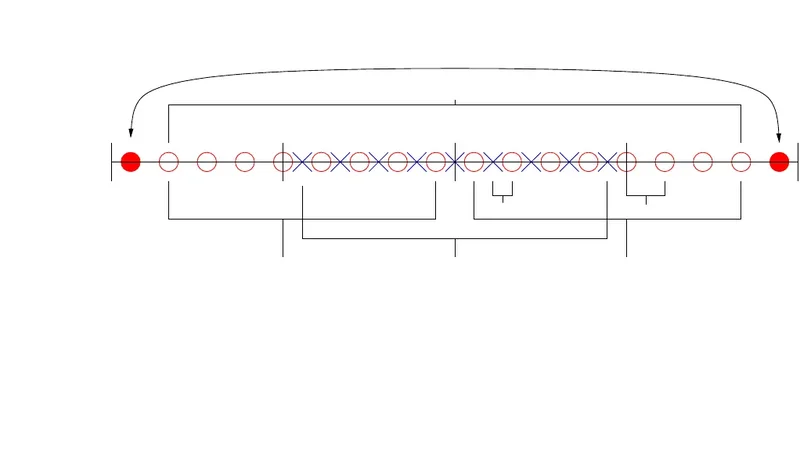
In this paper, we consider both differential and algebraic properties of surfaces associated with sigma models. It is shown that surfaces defined by the generalized Weierstrass formula for immersion for solutions of the CP^{N-1} sigma model with finite action, defined in the Riemann sphere, are themselves solutions of the Euler-Lagrange equations for sigma models. On the other hand, we show that the Euler-Lagrange equations for surfaces immersed in the Lie algebra su(N), with conformal coordinates, that are extremals of the area functional subject to a fixed polynomial identity are exactly the Euler-Lagrange equations for sigma models. In addition to these differential constraints, the algebraic constraints, in the form of eigenvalues of the immersion functions, are treated systematically. The spectrum of the immersion functions, for different dimensions of the model, as well as its symmetry properties and its transformation under the action of the ladder operators are discussed. Another approach to the dynamics is given, i.e. description in terms of the unitary matrix which diagonalizes both the immersion functions and the projectors constituting the model.
💡 Research Summary
The paper investigates the differential and algebraic properties of two‑dimensional surfaces that are associated with the CP^{N‑1} sigma model. The authors start by employing the generalized Weierstrass formula for immersion (GWFI) to construct an immersion map X(z, \bar z) taking values in the Lie algebra su(N). This map is expressed as a linear combination of the rank‑one projectors P_k(z, \bar z) that solve the CP^{N‑1} model on the Riemann sphere. By differentiating X and using the projector identities, they derive the equation D_\mu(∂^\mu X)=0, where D_\mu denotes the covariant derivative on the sphere. This equation coincides exactly with the Euler‑Lagrange equations of the sigma model, D_\mu(∂^\mu P)=0, showing that any surface obtained from a finite‑action solution of the CP^{N‑1} model is itself a solution of the sigma‑model field equations.
In the second part the authors reverse the logic. They consider a surface immersed in su(N) with conformal coordinates and impose two constraints: (i) the surface must be an extremum of the area functional A
📜 Original Paper Content
🚀 Synchronizing high-quality layout from 1TB storage...