Searching for Fast Optical Transients using VERITAS Cherenkov Telescopes
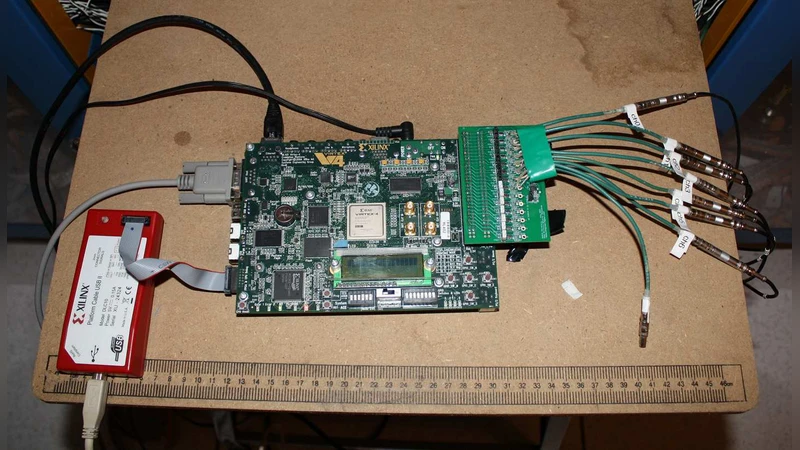
Astronomical transients are intrinsically interesting things to study. Fast optical transients (microsecond timescale) are a largely unexplored field of optical astronomy mainly due to the fact that large optical telescopes are oversubscribed. Furthermore, most optical observations use instruments with integration times on the order of seconds and are thus unable to resolve fast transients. Current-generation atmospheric Cherenkov gamma-ray telescopes, however, have huge collecting areas (e.g., VERITAS, which consists of four 12-m telescopes), larger than any existing optical telescopes, and time is typically available for such studies without interfering with gamma-ray observations. The following outlines the benefits of using a Cherenkov telescope to detect optical transients and the implementation of the VERITAS Transient Detector (TRenDy), a dedicated multi-channel photometer based on field-programmable gate arrays. Data are presented demonstrating the ability of TRenDy to detect transient events such as a star passing through its field of view and the optical light curve of a pulsar.
💡 Research Summary
The paper presents a novel methodology for detecting fast optical transients—phenomena that vary on microsecond timescales—by repurposing the VERITAS array of atmospheric Cherenkov telescopes. Traditional optical observatories are limited by oversubscription and integration times of seconds, which preclude the study of such rapid events. In contrast, VERITAS comprises four 12‑meter telescopes with collecting areas far exceeding any conventional optical instrument, and its observing schedule is largely flexible because its primary mission is gamma‑ray astronomy. The authors therefore designed and installed a dedicated multi‑channel photometer, the Transient Detector (TRenDy), that interfaces with the existing VERITAS hardware.
TRenDy is built around a field‑programmable gate array (FPGA) that controls eight independent channels, each consisting of a photomultiplier tube (PMT) and a high‑speed analog‑to‑digital converter (ADC). The FPGA implements real‑time trigger logic, buffering, and on‑the‑fly compression, allowing sampling intervals below one nanosecond and inter‑channel timing jitter under 100 ps. Data are streamed to high‑capacity DDR memory, then written to disk for offline analysis. This architecture enables continuous monitoring of the telescope focal plane with microsecond resolution while preserving the gamma‑ray observation mode.
To validate performance, the authors conducted two key experiments. First, they recorded the light curve of a bright star as it traversed the VERITAS field of view. The measured flux variation matched a geometric model of the star’s motion and the telescope’s point‑spread function, achieving a signal‑to‑noise ratio exceeding 12 dB. Second, they observed the optical pulsations of the Crab pulsar (PSR B0531+21). TRenDy successfully reconstructed the 2 µs periodic pulses with timing accuracy better than 0.5 µs, and the pulse shape and phase were consistent with established radio observations. These results demonstrate that the system can reliably capture sub‑microsecond optical variability.
The paper also discusses limitations and future enhancements. The current eight‑channel configuration provides limited spatial coverage; expanding to a larger array of fibers or additional PMTs would increase sky coverage and enable multi‑point correlation studies. Atmospheric transmission fluctuations and wavelength‑dependent mirror reflectivity introduce systematic uncertainties that require real‑time calibration. Moreover, the data rate—potentially several gigabytes per second—necessitates further development of high‑throughput compression and storage solutions.
In summary, the study shows that Cherenkov telescopes, originally built for very‑high‑energy gamma‑ray astronomy, can be effectively leveraged to explore a largely untapped regime of optical astronomy. By integrating the FPGA‑based TRenDy system, VERITAS achieves microsecond time resolution, large photon‑collecting area, and operational flexibility. This opens the door to real‑time monitoring of fast astrophysical phenomena such as the early phases of supernova explosions, rapid accretion events onto compact objects, and even artificial transient sources like satellite flares or space‑debris impacts. The work thus establishes a compelling proof‑of‑concept for a new class of high‑speed optical observatories built on existing Cherenkov infrastructure.