Telescope Bibliographies: an Essential Component of Archival Data Management and Operations
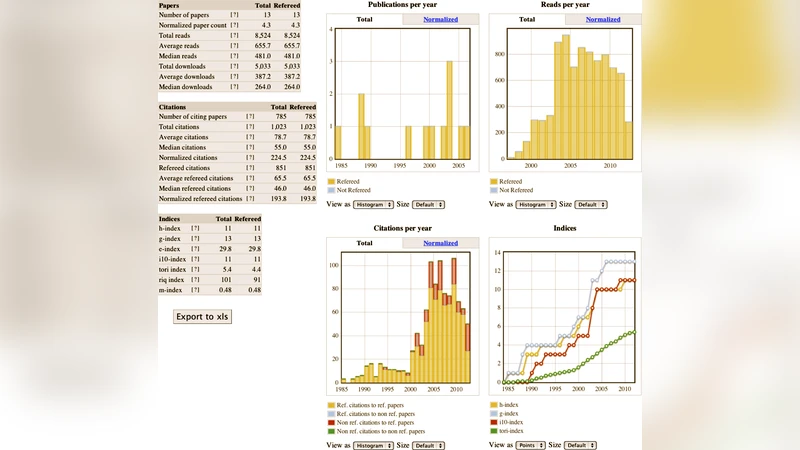
Assessing the impact of astronomical facilities rests upon an evaluation of the scientific discoveries which their data have enabled. Telescope bibliographies, which link data products with the literature, provide a way to use bibliometrics as an impact measure for the underlying data. In this paper we argue that the creation and maintenance of telescope bibliographies should be considered an integral part of an observatory’s operations. We review the existing tools, services, and workflows which support these curation activities, giving an estimate of the effort and expertise required to maintain an archive-based telescope bibliography.
💡 Research Summary
The paper makes the case that telescope bibliographies—systems that explicitly link archived data products to the scholarly articles that use them—should be treated as a core component of any modern observatory’s operations. It begins by noting that the scientific impact of an astronomical facility is no longer adequately captured by traditional metrics such as nights allocated, instrument uptime, or raw data volume. Instead, the true measure of a facility’s contribution lies in how often its data enable new discoveries, which can be quantified only by tracing data usage in the literature.
To that end, the authors review the current landscape of tools and services that support bibliography creation. They discuss the European Southern Observatory’s Telbib platform, NASA’s ADS Bibliographic Services, and a variety of custom pipelines that individual archives have built. Each system offers a different balance of automation, coverage, and integration with external databases. Telbib, for example, excels at automatically matching observation identifiers to papers, while ADS provides a universal bibliographic backbone that spans the entire astrophysics literature. However, none of these solutions fully match the idiosyncratic metadata schemas used by every observatory, so a layer of custom mapping logic is usually required.
The core of the paper describes a typical workflow for building and maintaining a telescope bibliography. The process starts with the ingestion of observation logs and product metadata (FITS headers, calibration files, etc.). Natural‑language‑processing techniques are then applied to the full text, abstracts, and keywords of newly published papers to detect mentions of observatory identifiers, target names, dates, and instrument settings. An automated matching engine proposes candidate links between data sets and papers, using multiple criteria to reduce false positives. Human curators—often a half‑to‑one full‑time equivalent (FTE) specialist—review these suggestions, resolve ambiguous cases, and enter the final associations into a relational database that is exposed via APIs to other services (e.g., institutional dashboards, funding agency reports).
The authors quantify the resources needed for a sustainable bibliography program. Initial development typically requires three to six months of effort from a data engineer and a bibliographic specialist to design the schema, implement API connections, and ingest historical literature. Ongoing maintenance involves periodic (monthly or quarterly) scans of new publications, curator verification, and updates to the mapping rules as instruments evolve. The paper estimates that a mid‑size observatory can operate a robust bibliography with roughly 0.5–1 FTE of dedicated staff, supplemented by occasional support from software developers.
Beyond operational details, the paper highlights the scientific and administrative value of a well‑curated bibliography. By aggregating citation counts for specific instruments, observing programs, or data releases, observatories can produce impact reports that are directly comparable across facilities. Funding agencies can use these metrics to assess return on investment, while internal management can prioritize upgrades or new observing strategies based on demonstrated data reuse. The authors also point out that participation in international standards (IVOA, FITS conventions) and collaboration with services like ADS reduces duplication of effort and improves data provenance.
In conclusion, the authors argue that telescope bibliographies are not an optional add‑on but an essential data‑centric metric that should be embedded in the daily workflow of any archive. They recommend formal budget allocation for bibliography staff, the adoption of standardized metadata policies that require observers to supply persistent identifiers, and a hybrid automation‑human verification model that balances efficiency with accuracy. By institutionalizing these practices, observatories can provide transparent, quantitative evidence of their scientific impact, thereby strengthening their case for continued support and fostering a more sustainable research ecosystem.
Comments & Academic Discussion
Loading comments...
Leave a Comment