Managing Distributed Software Development in the Virtual Astronomical Observatory
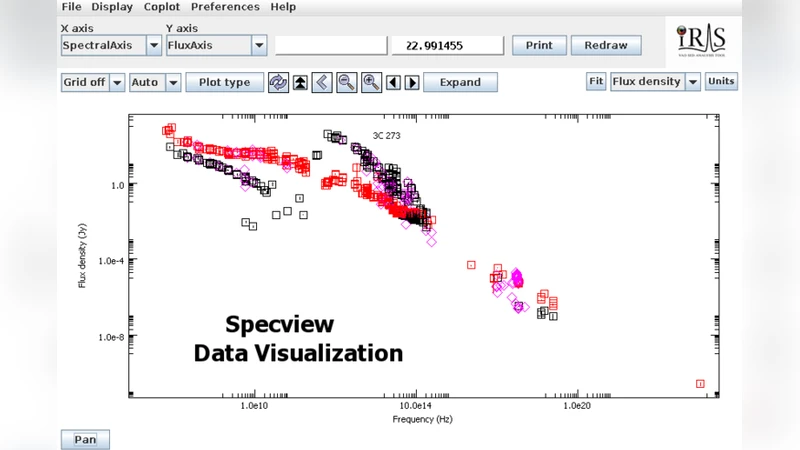
The U.S. Virtual Astronomical Observatory (VAO) is a product-driven organization that provides new scientific research capabilities to the astronomical community. Software development for the VAO follows a lightweight framework that guides development of science applications and infrastructure. Challenges to be overcome include distributed development teams, part-time efforts, and highly constrained schedules. We describe the process we followed to conquer these challenges while developing Iris, the VAO application for analysis of 1-D astronomical spectral energy distributions (SEDs). Iris was successfully built and released in less than a year with a team distributed across four institutions. The project followed existing International Virtual Observatory Alliance inter-operability standards for spectral data and contributed a SED library as a by-product of the project. We emphasize lessons learned that will be folded into future development efforts. In our experience, a well-defined process that provides guidelines to ensure the project is cohesive and stays on track is key to success. Internal product deliveries with a planned test and feedback loop are critical. Release candidates are measured against use cases established early in the process, and provide the opportunity to assess priorities and make course corrections during development. Also key is the participation of a stakeholder such as a lead scientist who manages the technical questions, advises on priorities, and is actively involved as a lead tester. Finally, frequent scheduled communications (for example a bi-weekly tele-conference) assure issues are resolved quickly and the team is working toward a common vision
💡 Research Summary
The paper presents a case study of how the U.S. Virtual Astronomical Observatory (VAO) successfully managed a distributed software development effort to deliver the Iris application, a tool for analyzing one‑dimensional astronomical spectral energy distributions (SEDs). VAO operates as a product‑driven organization that builds scientific capabilities on top of the International Virtual Observatory Alliance (IVOA) interoperability standards. The authors describe a lightweight development framework that replaces heavyweight waterfall or full‑scale agile processes with a minimal set of defined phases—requirements, design, implementation, testing, and release—each supported by concise documentation. By anchoring the entire project to IVOA standards for data formats, metadata, and service interfaces, the team ensured that individual modules could be developed independently across four institutions while guaranteeing seamless integration at the end.
A central pillar of the effort was the involvement of a dedicated stakeholder, the lead scientist, who translated scientific objectives into concrete use cases, answered technical questions throughout the lifecycle, and acted as the primary tester for release candidates. This role enabled rapid prioritization adjustments and ensured that the final product met real research needs. The development process incorporated regular internal product deliveries: every two weeks a new build was produced, automatically tested, and manually validated against the pre‑defined use cases. This continuous feedback loop allowed early detection of regressions and missing functionality, keeping the schedule on track despite part‑time contributions from most developers.
Communication was formalized through bi‑weekly teleconferences, with meeting minutes and action items recorded and shared. This routine kept the geographically dispersed team aligned on goals, facilitated quick issue resolution, and built trust among participants. In addition to delivering Iris, the project generated a reusable SED library that conforms to IVOA standards, providing a valuable by‑product for future VAO applications.
The authors distill five key lessons: (1) a well‑defined, lightweight process provides the structure needed for distributed teams; (2) early definition of scientific use cases guides design and prioritization; (3) a lead scientist stakeholder bridges the gap between research requirements and technical implementation; (4) frequent internal releases with systematic testing create a robust feedback mechanism; and (5) scheduled, documented communication ensures that all members work toward a common vision. By applying these principles, the VAO team built and released Iris in under a year, demonstrating that high‑quality scientific software can be produced efficiently even when resources are limited and contributors are part‑time. The paper argues that this approach is broadly applicable to other scientific collaborations seeking to balance rapid delivery with rigorous standards and interoperability.
Comments & Academic Discussion
Loading comments...
Leave a Comment