The Spectral and Temporal Properties of Transient Sources in Early-Type Galaxies
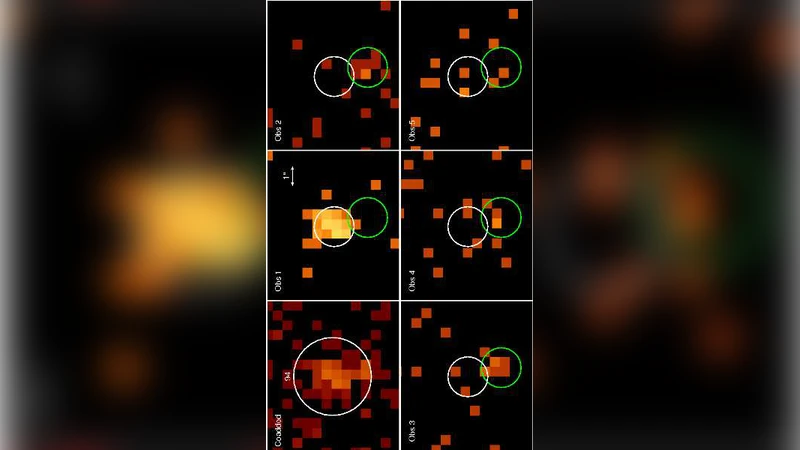
We report the spectral and temporal variability properties of 18 candidate transient and potential transient (TC and PTC) sources detected in deep multi-epoch Chandra observation of the nearby elliptical galaxies, NGC 3379, NGC 4278 and NGC 4697. Only one source can be identified with a background counterpart, leaving 17 TCs + PTCs in the galaxies. Of these, 14 are in the galaxy field, supporting the theoretical picture that the majority of field X-ray binaries (XRBs) will exhibit transient accretion for >75% of their lifetime. Three sources are coincident with globular clusters (GCs), including two high-luminosity candidate black hole (BH) XRBs, with Lx=5.4E38 erg/s, and Lx=2.8E39 erg/s, respectively. The spectra, luminosities and temporal behavior of these 17 sources suggest that the transient population is heterogeneous, including neutron star (NS) and BH XRBs in both normal and high-rate accretion modes, and super soft sources containing white dwarf binaries. Our TC and PTC detections are noticeably fewer that the number expected from the populations synthesis (PS) models of Fragos et al. (2009), tailored to our new Chandra pointings of NGC 4278. We attribute this discrepancy to the PS assumption that the transient population is composed of NS XRBs, as well as differences between the statistical analysis and error estimates used in the model and our observations.
💡 Research Summary
This paper presents a systematic study of transient and candidate‑transient (TC and PTC) X‑ray sources in three nearby early‑type (elliptical) galaxies—NGC 3379, NGC 4278, and NGC 4697—using deep, multi‑epoch observations with the Chandra X‑ray Observatory. A total of 18 variable sources were initially identified; after removing a single background counterpart, 17 sources remain as genuine members of the galaxies. Fourteen of these lie in the field, while three are coincident with globular clusters (GCs). The authors classify a source as a TC when its luminosity changes by >3σ between epochs, and as a PTC when the change is between 2σ and 3σ, employing wavdetect and CIAO tools for source detection and careful astrometric cross‑matching with HST imaging to confirm GC associations.
Spectral analysis was performed using absorbed power‑law and thermal (blackbody or disk‑blackbody) models. Most field transients exhibit power‑law photon indices Γ≈1.5–2.2, consistent with typical neutron‑star (NS) or black‑hole (BH) X‑ray binaries (XRBs). Two GC sources stand out with high luminosities (L_X = 5.4 × 10^38 erg s⁻¹ and 2.8 × 10^39 erg s⁻¹) and spectral parameters suggestive of BH accretors (e.g., relatively soft spectra, disk temperatures ≈0.8 keV). A subset of the sample shows very soft, supersoft source (SSS) characteristics (kT≈50–100 eV), indicating white‑dwarf binaries undergoing nuclear burning.
Temporal behavior reveals that the field transients vary on timescales of weeks to months, with duty cycles of roughly 30 % during the observing window, supporting theoretical expectations that most field XRBs spend >75 % of their lifetimes in a transient accretion state. GC transients, by contrast, display fewer outbursts and longer high‑state durations, consistent with dynamical formation scenarios.
The authors compare their observational results with the population‑synthesis (PS) models of Fragos et al. (2009), which were specifically tuned for the Chandra pointings of NGC 4278. The PS models predict a larger number of transients, assuming the transient population is dominated by NS systems and using fixed variability thresholds based on χ² statistics. In reality, the observed transient count is roughly half of the model prediction, and the sample includes BH candidates and SSSs that the PS framework does not account for. Moreover, the statistical treatment differs: the present study employs Bayesian Poisson methods and epoch‑by‑epoch background estimation, leading to more conservative transient identification.
These discrepancies have several implications. First, the transient XRB population in early‑type galaxies is heterogeneous, comprising NS, BH, and white‑dwarf binaries, each with distinct accretion physics. Second, the detection of high‑luminosity BH candidates within GCs challenges the conventional view that GCs primarily host NS XRBs, suggesting that dynamical exchange interactions can capture BHs. Third, population‑synthesis models need to incorporate a broader range of transient types and adopt variability criteria that reflect the low‑count regime typical of extragalactic X‑ray surveys.
In conclusion, the paper provides the first comprehensive spectral and temporal characterization of transient X‑ray sources in these three elliptical galaxies, highlighting a clear mismatch with existing theoretical predictions. The authors advocate for deeper Chandra observations, multi‑wavelength follow‑up (optical spectroscopy, radio monitoring), and refined modeling that includes BH and white‑dwarf transients. Such efforts will improve our understanding of X‑ray binary evolution, duty cycles, and the role of dynamical processes in globular clusters.