Energy Distribution of Nanoflares in Three-Dimensional Simulations of Coronal Heating
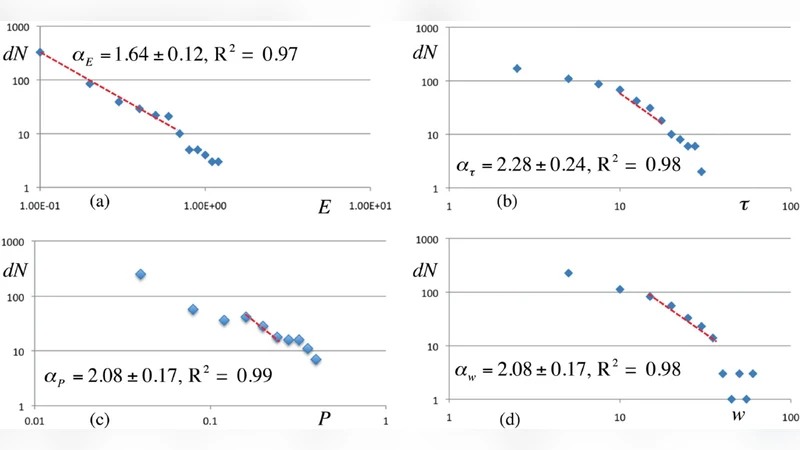
In a recent computational campaign [Ng et al., Astrophys. J. 747, 109, 2012] to investigate a three-dimensional model of coronal heating using reduced magnetohydrodynamics (RMHD), we have obtained scaling results of heating rate versus Lundquist number based on a series of runs in which random photospheric motions are imposed for hundreds to thousands of Alfv'en time in order to obtain converged statistical values. Using this collection of numerical data, we have performed additional statistical analysis related to the formation of current sheets and heating events, or nanoflares [Parker, Astrophys. J. 330, 474, 1988]. While there have been many observations of the energy distribution of solar flares, there have not been many results based on large-scale three-dimensional direct simulations due to obvious numerical difficulties. We will present energy distributions and other statistics based on our simulations, calculated using a method employed in [Dmitruk & G'omez, Astrophys. J., 484, L83, 1997]. We will also make comparisons of our results with observations.
💡 Research Summary
The paper presents a comprehensive numerical investigation of coronal heating using three‑dimensional reduced magnetohydrodynamics (RMHD). Building on the earlier campaign by Ng et al. (2012), the authors drive the lower boundary with random, statistically stationary photospheric motions that mimic solar granulation. These motions are applied for several hundred to a few thousand Alfvén crossing times, allowing the system to reach a statistically steady turbulent state and to accumulate sufficient data for robust statistical analysis.
The simulations are performed on a uniform Cartesian grid with periodic lateral boundaries and line‑tied conditions at the top and bottom. A strong guide field is imposed, and the plasma beta is kept low, reproducing the magnetically dominated corona. Lundquist numbers (S) are varied from roughly 10³ to 10⁵ by adjusting the resistivity, thereby exploring a wide range of magnetic Reynolds numbers relevant to the solar corona.
A key focus of the study is the formation, evolution, and eventual disruption of thin current sheets that develop as a consequence of the imposed random footpoint motions. The authors monitor the current density, sheet thickness, and reconnection events throughout the runs. When a current sheet becomes sufficiently thin, it undergoes magnetic reconnection, releasing magnetic energy in localized bursts. These bursts are identified as “nanoflares” in the sense of Parker (1988).
To quantify the nanoflare population, the authors adopt the event‑detection algorithm introduced by Dmitruk & Gómez (1997). The algorithm scans the time series of Ohmic heating, isolates peaks that exceed a prescribed threshold, and groups temporally adjacent peaks into single events to avoid double‑counting. For each event the total released energy E is computed by integrating the Ohmic heating over the event’s duration and volume.
The resulting energy distribution follows a power‑law form N(>E) ∝ E^–α, where N(>E) is the cumulative number of events with energy greater than E. The measured exponent α lies in the range 1.8–2.0 across the different Lundquist numbers, remarkably close to the values derived from observational studies of micro‑ and nanoflares (typically α≈1.8–2.2). At the low‑energy end a slight flattening of the distribution is observed, reminiscent of the “break” reported in solar flare statistics. This suggests that the simulation captures both the scaling regime and the transition to a regime where detection limits or physical cut‑offs become important.
In addition to the energy statistics, the authors examine the scaling of the mean heating rate Q with Lundquist number. They find Q ∝ S^–β with β≈0.5–0.7, indicating that higher magnetic Reynolds numbers (thinner current sheets) lead to more efficient conversion of magnetic energy into heat. This scaling is consistent with theoretical expectations that reconnection rates increase as current sheets become thinner, enhancing overall coronal heating.
The paper also compares the simulated nanoflare statistics with satellite observations from RHESSI, SDO/AIA, and other instruments. The agreement in power‑law slopes and in the range of energies (10²⁴–10²⁷ erg) supports the hypothesis that a multitude of unresolved nanoflares can supply the bulk of the coronal heating budget.
Finally, the authors discuss limitations of their approach. The numerical resolution, while sufficient to resolve current sheets down to a few grid points, still imposes an artificial lower bound on sheet thickness and thus on the smallest possible nanoflare energy. The boundary driving is idealized as Gaussian white noise, lacking the full spectral richness of real photospheric convection. Moreover, the RMHD framework neglects compressibility and kinetic effects that may become important at the smallest scales. The authors propose future work that includes higher‑resolution simulations, more realistic footpoint driving derived from observational flow fields, and extensions to full MHD or kinetic models to capture electron heating and particle acceleration.
Overall, the study provides one of the most extensive three‑dimensional direct numerical simulations of nanoflare generation to date, demonstrates that the resulting energy distribution aligns with solar observations, and reinforces the view that nanoflares constitute a viable mechanism for maintaining the high temperatures of the solar corona.