GRMHD simulations of accretion onto Sgr A*: How important are radiative losses?
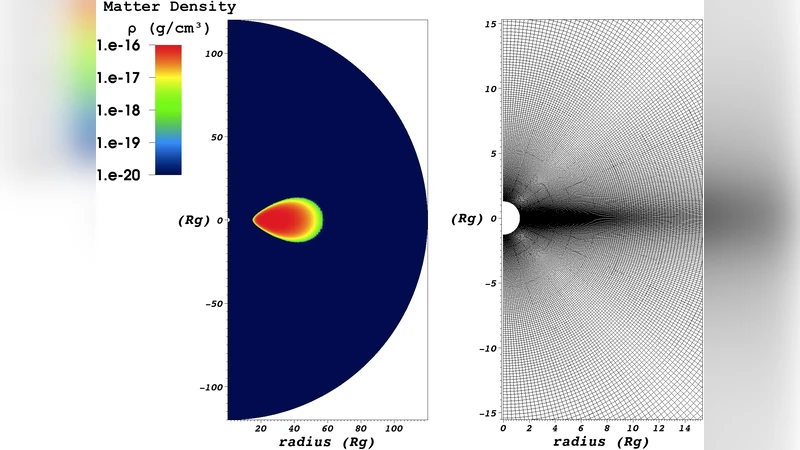
We present general relativistic magnetohydrodynamic (GRMHD) numerical simulations of the accretion flow around the supermassive black hole in the Galactic centre, Sagittarius A* (Sgr A*). The simulations include for the first time radiative cooling processes (synchrotron, bremsstrahlung, and inverse Compton) self-consistently in the dynamics, allowing us to test the common simplification of ignoring all cooling losses in the modeling of Sgr A*. We confirm that for Sgr A*, neglecting the cooling losses is a reasonable approximation if the Galactic centre is accreting below ~10^{-8} Msun/yr i.e. Mdot < 10^{-7} Mdot_Edd. But above this limit, we show that radiative losses should be taken into account as significant differences appear in the dynamics and the resulting spectra when comparing simulations with and without cooling. This limit implies that most nearby low-luminosity active galactic nuclei are in the regime where cooling should be taken into account. We further make a parameter study of axisymmetric gas accretion around the supermassive black hole at the Galactic centre. This approach allows us to investigate the physics of gas accretion in general, while confronting our results with the well studied and observed source, Sgr A*, as a test case. We confirm that the nature of the accretion flow and outflow is strongly dependent on the initial geometry of the magnetic field. For example, we find it difficult, even with very high spins, to generate powerful outflows from discs threaded with multiple, separate poloidal field loops.
💡 Research Summary
This paper presents the first general‑relativistic magnetohydrodynamic (GRMHD) simulations of the accretion flow onto the supermassive black hole at the Galactic centre, Sagittarius A* (Sgr A*), that self‑consistently incorporate radiative cooling processes—synchrotron emission, bremsstrahlung, and inverse‑Compton scattering—into the dynamical evolution. The authors construct a numerical framework in which the local cooling rate, computed from the instantaneous electron temperature and density, is fed back into the energy equation, allowing a direct comparison between “cooling‑included” and “cooling‑ignored” runs.
The simulation suite explores a range of black‑hole spins (a = 0, 0.5, 0.9), mass‑accretion rates (10⁻⁹–10⁻⁶ M⊙ yr⁻¹, i.e. ≈10⁻⁹–10⁻⁴ Ṁ_Edd), and two distinct initial magnetic‑field topologies: a single, coherent poloidal loop and a configuration of multiple, separated poloidal loops. All models start from a hydrostatic torus and are evolved in axisymmetry with high spatial resolution.
Key findings can be grouped into three themes. First, the impact of radiative cooling on the flow structure is strongly dependent on the accretion rate. For Ṁ < 10⁻⁸ M⊙ yr⁻¹ (≈10⁻⁷ Ṁ_Edd), the temperature, density, and pressure profiles of the cooling‑included simulations are virtually indistinguishable from those of the cooling‑ignored counterparts. Consequently, for Sgr A*, whose inferred Ṁ lies well below this threshold, the common practice of neglecting cooling is justified. Above this limit, however, cooling becomes dynamically important: synchrotron losses dominate at low electron energies, while inverse‑Compton scattering of synchrotron photons by high‑energy electrons removes a substantial fraction of the internal energy. The resulting electron temperature drops, the disk becomes thinner, the plasma β (ratio of gas to magnetic pressure) changes, and the emergent broadband spectrum is noticeably softer, especially in the infrared‑to‑X‑ray band.
Second, the magnetic‑field topology exerts a decisive influence on angular‑momentum transport, disk thickness, and outflow generation. A single poloidal loop efficiently seeds the magnetorotational instability (MRI), leading to vigorous turbulence, rapid angular‑momentum redistribution, and a relatively thin, high‑speed disk. In high‑spin cases (a ≈ 0.9) the strong frame‑dragging amplifies the magnetic flux threading the horizon, enabling a Blandford‑Znajek‑type jet with appreciable power. By contrast, a multi‑loop configuration produces a fragmented magnetic field that hampers coherent MRI growth, yields a thicker, more turbulent disk, and fails to generate powerful jets even for maximal spin; only weak, wind‑like outflows are observed. This demonstrates that black‑hole spin alone does not guarantee strong jet production; the large‑scale magnetic geometry is equally critical.
Third, the authors extrapolate their results to the broader class of low‑luminosity active galactic nuclei (LLAGN). Most nearby LLAGN have accretion rates comparable to or lower than Sgr A*, implying that many existing GRMHD models that omit cooling remain adequate. However, for sources with Ṁ ≳ 10⁻⁷ Ṁ_Edd—such as certain LINERs or low‑luminosity Seyferts—radiative losses must be included to obtain realistic dynamics and spectra. The study therefore provides a quantitative criterion (Ṁ ≈ 10⁻⁸ M⊙ yr⁻¹) for when cooling can be safely ignored.
In summary, this work establishes a robust, self‑consistent GRMHD+cooling methodology, quantifies the regime in which radiative cooling alters the accretion flow, and highlights the pivotal role of initial magnetic‑field topology in shaping disk structure and jet formation. These insights lay the groundwork for future three‑dimensional, two‑temperature simulations and for tighter confrontation of theoretical models with high‑resolution multiwavelength observations of Sgr A* and other LLAGN.