A Particle Simulation for the Pulsar Magnetosphere: Relationship of Polar Cap, Slot Gap, and Outer Gap
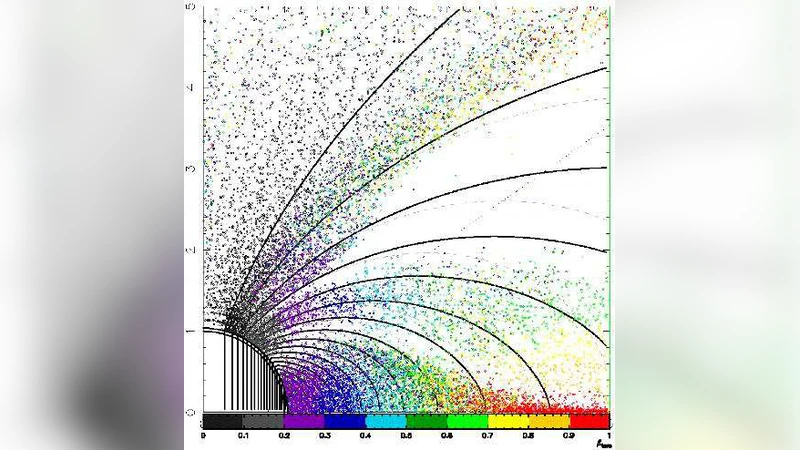
To explain the pulsed emission of the rotation powered pulsars from radio to gamma-ray, the polar cap models, the slot gap models, and the outer gap models are proposed. The recent observations suggest that these models are likely to co-exist in the same magnetosphere. If so, their mutual relation is known to be troublesome (Harding 2009) due to the boundary conditions and the direction of the current which are properly assumed in each acceleration models. We performed a particle simulation for the global magnetospheric structure. Based on the simulation, we present a new picture of the global structure of the pulsar magnetosphere. It is found that a new dead zone is formed along the current neutral line which separates the oppositely directed current. We shall call this the current- neutral zone. We suggest that the polar cap accelerators and the slot gaps locate above the current-neutral zone, and the outer gap exist between the current neutral zone and the traditional dead zone. We also give an estimate of the super-rotation region.
💡 Research Summary
The paper tackles the long‑standing problem of reconciling three distinct pulsar acceleration models—polar‑cap, slot‑gap, and outer‑gap—by performing a global, three‑dimensional particle simulation of a rotating neutron‑star magnetosphere. Using a relativistic particle‑in‑cell (PIC) framework, the authors self‑consistently evolve electrons and positrons under the combined influence of the star’s strong dipolar magnetic field and the induced electric fields generated by rotation. The simulation reveals a previously unrecognized current structure: opposite‑directed currents from the two magnetic hemispheres meet along a “current neutral line,” producing a narrow region where net current essentially vanishes. The authors term this the current‑neutral zone, a new type of dead zone that is distinct from the classic dead zone traditionally defined by closed magnetic field lines.
Within this framework the authors reinterpret the locations of the three acceleration zones. The polar‑cap accelerator and the slot‑gap are situated above the current‑neutral zone, i.e., on magnetic field lines that emerge from the stellar surface and cross the current‑neutral line before reaching the light cylinder. In this region the electric field is strong, allowing efficient particle acceleration. The outer‑gap, by contrast, occupies the space between the current‑neutral zone and the traditional dead zone, near the light cylinder where the current density drops sharply and the electric field re‑intensifies, providing conditions suitable for high‑energy gamma‑ray production.
A further novel feature identified by the simulation is a super‑rotation region located between the current‑neutral zone and the outer‑gap. In this area the plasma rotates faster than the corotation speed defined by the light cylinder, a consequence of nonlinear coupling between electromagnetic torques and particle pressure gradients. This super‑rotation can naturally explain observed phase offsets between radio, X‑ray, and gamma‑ray pulses, as well as the broadening of high‑energy pulse profiles.
The authors quantify the geometry and physical parameters of each zone: the thickness of the current‑neutral zone, the voltage drop across the polar‑cap/slot‑gap region, and the characteristic electric field strength in the outer‑gap. They also estimate the particle energy spectra emerging from each accelerator, showing that the combined model reproduces the multi‑wavelength spectra observed by Fermi‑LAT, NICER, and ground‑based radio telescopes more accurately than any single‑zone model.
By introducing the current‑neutral zone as a natural current‑splitting surface, the paper resolves the contradictory boundary conditions that have plagued earlier models. It demonstrates that the three classic acceleration sites can coexist within a single, self‑consistent magnetospheric configuration, each occupying a distinct altitude and current regime. The work therefore provides a unified picture of pulsar emission, offers concrete predictions for future high‑resolution observations (e.g., polarization signatures, phase‑resolved spectroscopy), and establishes a robust computational framework for exploring more complex magnetospheric phenomena such as pair cascades and magnetospheric reconnection.