Turbulent magnetic field amplification driven by cosmic-ray pressure gradients
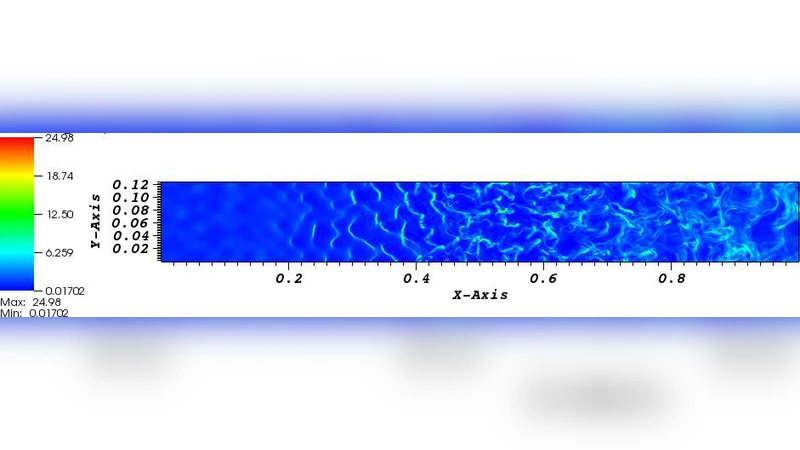
Observations of non-thermal emission from several supernova remnants suggest that magnetic fields close to the blastwave are much stronger than would be naively expected from simple shock compression of the field permeating the interstellar medium (ISM). We present a simple model which is capable of achieving sufficient magnetic field amplification to explain the observations. We propose that the cosmic-ray pressure gradient acting on the inhomogeneous ISM upstream of the supernova blastwave induces strong turbulence upstream of the supernova blastwave. The turbulence is generated through the differential acceleration of the upstream ISM which occurs as a result of density inhomogeneities in the ISM. This turbulence then amplifies the pre-existing magnetic field. Numerical simulations are presented which demonstrate that amplification factors of 20 or more are easily achievable by this mechanism when reasonable parameters for the ISM and supernova blastwave are assumed. The length scale over which this amplification occurs is that of the diffusion length of the highest energy non-thermal particles.
💡 Research Summary
The paper addresses a long‑standing problem in supernova remnant (SNR) physics: observations of thin X‑ray rims and bright radio synchrotron emission imply magnetic fields near the blast wave that are far stronger than can be accounted for by simple shock compression of the interstellar magnetic field. Traditional explanations invoke non‑linear diffusive shock acceleration (NL‑DSA) or various plasma instabilities, but these mechanisms often require fine‑tuned parameters and may not produce the required amplification on the scales relevant for the highest‑energy cosmic rays.
The authors propose a much simpler, yet physically robust, amplification process. They note that the pressure gradient of cosmic rays (CRs) ahead of the shock exerts a uniform force on the upstream plasma. Because the interstellar medium (ISM) is not perfectly homogeneous, regions of different density experience different accelerations: low‑density pockets are pushed more strongly than high‑density clumps. This differential acceleration creates shear flows that quickly become turbulent once the shear exceeds a modest fraction of the sound speed. The turbulence, in turn, stretches and folds the pre‑existing magnetic field via the induction term (\partial_t \mathbf{B} = \nabla \times (\mathbf{v}\times\mathbf{B})), leading to exponential growth of magnetic energy.
To test the idea, the authors perform three‑dimensional magnetohydrodynamic (MHD) simulations using a uniform background magnetic field of a few micro‑gauss and a turbulent density field with a Kolmogorov‑type power spectrum. The CR pressure gradient is imposed as a linear decline over a distance comparable to the diffusion length of the highest‑energy particles, (L_{\rm diff}=D/u_{\rm sh}), where (D) is the diffusion coefficient and (u_{\rm sh}) the shock speed. Typical parameters are a shock speed of (5,000) km s(^{-1}), a CR pressure fraction of 10 % of the ram pressure, and an ISM density of (\sim1) cm(^{-3}). The simulation domain is chosen to be roughly the same size as (L_{\rm diff}) (∼0.5 pc).
The results are striking. Within a few years of simulated time (corresponding to the shock moving only ∼0.05 pc), the shear generated by the CR pressure gradient drives vigorous turbulence. The turbulent cascade follows a Kolmogorov spectrum, and the magnetic field is amplified by factors of 20–30 on average, with localized peaks reaching factors of 50. The amplification is confined to the upstream region where the CR pressure gradient is strongest—typically the first 0.1–0.3 pc ahead of the shock—exactly the region that controls the diffusion of the most energetic particles. The amplified field thus provides the necessary scattering conditions for particles up to PeV energies, and it naturally explains the thin, bright X‑ray rims observed in many young SNRs.
The authors discuss several advantages of this mechanism. First, it relies only on two well‑established ingredients: a CR pressure gradient (inevitable in any efficient accelerator) and realistic ISM density inhomogeneities (observed in HI and CO surveys). Second, the amplification scale is set by the CR diffusion length, ensuring that the strongest fields are present where they are most needed for particle confinement. Third, the model is computationally inexpensive compared with full kinetic‑MHD treatments, making it easy to explore a wide parameter space (e.g., varying ISM density, CR pressure fraction, shock speed).
Nevertheless, the study has limitations. The simulations assume isotropic diffusion and a fixed CR pressure profile, whereas real SNRs may exhibit anisotropic diffusion, time‑dependent CR escape, and feedback of the amplified field on the CR distribution itself. Moreover, the model does not include the back‑reaction of the turbulence on the shock structure, nor does it treat the possible generation of additional plasma instabilities (e.g., Bell’s non‑resonant mode) that could coexist with the shear‑driven turbulence. Future work should therefore incorporate a self‑consistent CR transport equation, explore non‑ideal MHD effects, and compare the predicted magnetic field morphology with high‑resolution observations from facilities such as Chandra and the upcoming Athena X‑ray observatory.
In conclusion, the paper demonstrates that the cosmic‑ray pressure gradient acting on a clumpy upstream medium can generate strong shear‑driven turbulence, which in turn amplifies the magnetic field by an order of magnitude or more. This mechanism provides a natural, physically transparent explanation for the high magnetic fields inferred in young supernova remnants and offers a promising avenue for further theoretical and observational investigation.