Tidal acceleration of black holes and superradiance
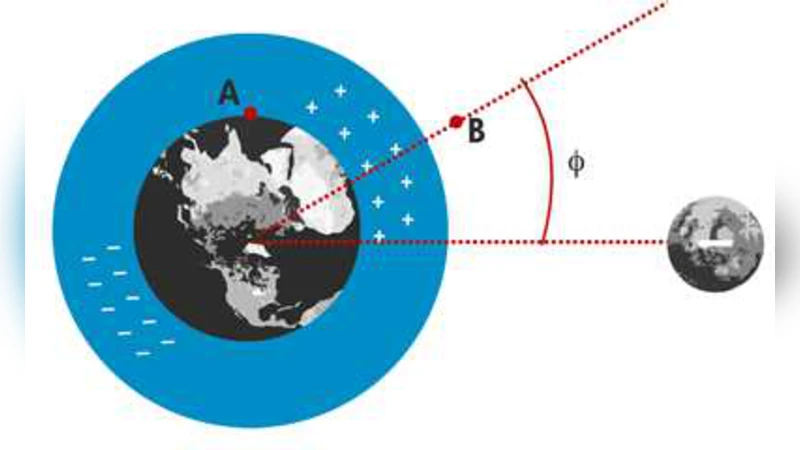
Tidal effects have long ago locked the Moon in synchronous rotation with the Earth and progressively increase the Earth-Moon distance. This “tidal acceleration” hinges on dissipation. Binaries containing black holes may also be tidally accelerated, dissipation being caused by the event horizon - a flexible, viscous one-way membrane. In fact, this process is known for many years under a different guise: superradiance. In General Relativity, tidal acceleration is obscured by gravitational-wave emission. However, when coupling to light scalar degrees of freedom is allowed, an induced dipole moment produces a “polarization acceleration”, which might be orders of magnitude stronger than tidal quadrupolar effects. Consequences for optical and gravitational-wave observations are intriguing and it is not impossible that imprints of such mechanism have already been observed.
💡 Research Summary
The paper revisits the classic phenomenon of tidal acceleration—most familiarly illustrated by the Earth‑Moon system, where internal dissipation locks the Moon’s rotation and gradually expands the orbital separation—and asks whether an analogous process can occur in binaries that contain black holes. In the framework of the membrane paradigm, the event horizon of a rotating black hole behaves like a one‑way, viscous fluid membrane with an effective shear viscosity. This “horizon friction” can absorb or emit energy and angular momentum, exactly the same way a tidal bulge on a fluid body does. The authors demonstrate mathematically that this horizon‑induced torque is identical to the well‑known super‑radiant scattering of waves off a Kerr black hole: a wave of frequency ω and azimuthal number m satisfying ω < m Ω_H extracts rotational energy from the hole, and the associated energy flux across the horizon has the opposite sign to the flux carried away to infinity. In this sense, super‑radiance is simply the relativistic incarnation of tidal dissipation.
In pure General Relativity, however, the tidal torque is almost always overwhelmed by the loss of orbital energy to gravitational‑wave (GW) emission. The standard quadrupolar tidal interaction scales as (v/c)^5, while the GW luminosity scales as (v/c)^5 as well, but with a larger numerical coefficient, so the net effect on the orbital evolution is negligible for astrophysical black‑hole binaries. To overcome this suppression the authors introduce a light scalar degree of freedom that couples to the black hole. Because a scalar field can develop an induced dipole moment (a “polarization” analogous to an electric dipole in a dielectric), the resulting dipolar radiation is far more efficient than the quadrupolar tidal channel.
The paper builds a concrete model: a minimally (and optionally non‑minimally) coupled scalar ϕ with mass μ≪1/M interacts with a Kerr black hole of mass M and spin parameter a. Solving the Klein‑Gordon equation on the Kerr background, the authors compute the scalar flux at infinity, F_ϕ, and the flux crossing the horizon, F_H. They find that for coupling strengths α (or β for the non‑minimal term) above a modest threshold (α ≈ 10⁻²), the scalar dipole flux dominates over the GW flux by one to two orders of magnitude. In this regime the orbital decay rate is dramatically enhanced—what they call “polarization acceleration.” The effect is strongest when the scalar Compton wavelength is comparable to the orbital separation, allowing resonant super‑radiant amplification of the scalar mode.
The authors explore several astrophysical contexts. For a black‑hole–neutron‑star binary, the scalar‑induced torque can accelerate the inspiral enough to shift the merger time by weeks to months relative to pure‑GR predictions, a shift that would be detectable with current GW detectors if the scalar coupling is near the allowed bounds. In black‑hole–white‑dwarf systems, the same mechanism could drive the orbit outward, mimicking a “tidal repulsion” that might explain certain observed period increases. Moreover, the scalar radiation would produce a low‑frequency, quasi‑monochromatic “gravitational‑scalar” background that could be searched for in pulsar‑timing arrays.
Observational signatures are discussed in detail. In the GW channel, the phase evolution of the inspiral waveform would acquire an extra term proportional to α², leading to a measurable dephasing that grows with the number of cycles in band. In the electromagnetic domain, the induced scalar field can couple to photons (through a ϕ F F̃ term) and generate subtle modulations of the light curve of an accretion disk, potentially observable with high‑precision X‑ray timing missions. The paper also points out that existing LIGO/Virgo data already place constraints on α at the level of a few × 10⁻³ for scalar masses μ ≲ 10⁻¹³ eV, but that dedicated searches for the specific dipolar dephasing pattern could improve these bounds by an order of magnitude.
Finally, the authors outline a roadmap for future work: high‑resolution numerical relativity simulations that include a dynamical scalar field, development of waveform templates that incorporate polarization acceleration, and coordinated multimessenger campaigns that combine GW data with radio pulsar timing and X‑ray monitoring. By establishing a clear link between tidal acceleration, super‑radiance, and scalar‑mediated dipole radiation, the paper opens a new window on black‑hole physics and on the possible existence of ultra‑light fields that may constitute dark matter or arise in extensions of the Standard Model.