Multiwavelength Astronomy and CTA: X-rays
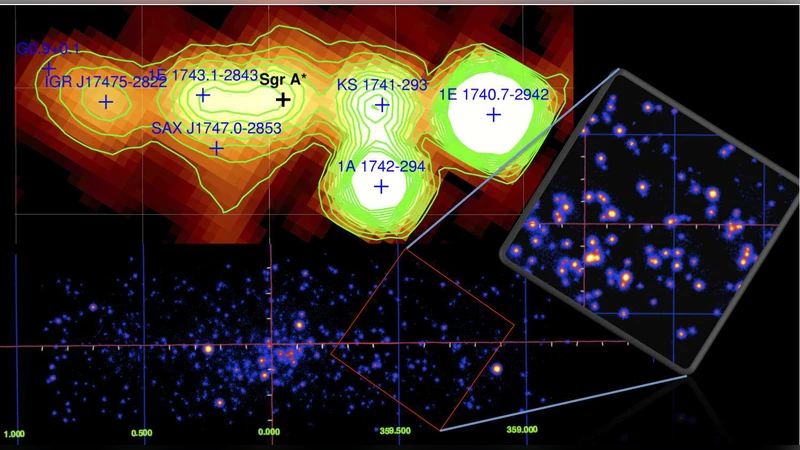
We discuss how future X-ray instruments which are under development can contribute to our understanding of the non-thermal Universe. Much progress has been made in the field of X-ray Astronomy recently, thanks to the operation of modern X-ray telescopes such as Chandra, XMM-Newton, Suzaku, and Swift, but more in-depth investigation awaits future missions. These future missions include ASTROSAT, NuStar, e-ROSITA, ASTRO-H and GEMS, which will be realized in the next decade, and also much larger projects such as Athena and LOFT, which have been proposed for the 2020’s. All of those are expected to bring a variety of novel observational results regarding astrophysical sources of high-energy particles and radiation, i.e. supernova remnants, neutron stars, stellar-mass black holes, active galaxies, and clusters of galaxies among others. The operation of the future X-ray instruments will proceed in parallel with the operation of Fermi-LAT and the Cherenkov Telescope Array. We emphasize that the synergy between the X-ray and gamma-ray observations is particularly important, and that the planned X-ray missions, when in conjunction with the modern gamma-ray observatories, will indeed provide a qualitatively better insight into the high-energy Universe.
💡 Research Summary
The paper provides a forward‑looking review of how upcoming X‑ray observatories will deepen our understanding of the non‑thermal Universe, especially when their capabilities are combined with contemporary and next‑generation gamma‑ray facilities such as Fermi‑LAT and the Cherenkov Telescope Array (CTA). It begins by acknowledging the transformative impact of current X‑ray missions—Chandra, XMM‑Newton, Suzaku, and Swift—which have delivered sub‑arcsecond imaging, high‑resolution spectroscopy, and time‑domain studies of supernova remnants (SNRs), neutron stars, stellar‑mass black holes, active galactic nuclei (AGN), and galaxy clusters. Despite these achievements, the authors argue that fully disentangling particle‑acceleration processes, magnetic‑field geometries, and high‑energy emission mechanisms requires broader energy coverage, higher sensitivity, and new diagnostic tools that only the next generation can provide.
The review then surveys the suite of missions slated for launch within the next decade and beyond. ASTROSAT will enable simultaneous UV‑optical‑X‑ray monitoring, crucial for correlating rapid variability across bands. NuSTAR’s focusing optics in the 3–79 keV range will resolve hard‑X‑ray continua and isolate non‑thermal synchrotron components in SNR shocks and jet bases. e‑ROSITA’s all‑sky survey will generate a catalog of millions of X‑ray sources, offering statistical leverage for population studies and the discovery of rare, extreme objects. ASTRO‑H (now XRISM) will deliver micro‑calorimeter spectroscopy with eV‑scale resolution, allowing precise measurements of line broadening, ionization states, and elemental abundances in shock‑heated plasma. GEMS, though not realized, exemplifies the promise of X‑ray polarimetry for probing ordered magnetic fields in pulsar wind nebulae and jet interiors. In the longer term, Athena’s 2 m² collecting area and the X‑IFU spectrometer will map the thermodynamic and chemical structure of galaxy clusters and the immediate environments of supermassive black holes with unprecedented detail, while LOFT’s large‑area detectors will push timing resolution into the microsecond regime, opening a new window on quasi‑periodic oscillations and burst phenomena.
Crucially, each of these capabilities dovetails with the energy range and sensitivity of gamma‑ray observatories. The authors illustrate this synergy with concrete astrophysical cases. In SNRs, hard X‑ray imaging isolates the synchrotron‑emitting electron population, whereas GeV–TeV gamma‑rays measured by Fermi‑LAT and CTA trace either inverse‑Compton scattering (electrons) or neutral‑pion decay (accelerated protons). Joint spectral modeling therefore constrains the relative electron‑to‑proton acceleration efficiency and the maximum particle energy. For rotation‑powered pulsars, X‑ray timing defines the spin period and pulse morphology, while gamma‑ray pulsations reveal the high‑altitude acceleration zones; adding X‑ray polarimetry (GEMS) and gamma‑ray polarimetry (CTA) would map the magnetic field topology across the magnetosphere. In black‑hole binaries and AGN, X‑ray spectroscopy distinguishes thermal disc emission from coronal Comptonization, and Fe Kα line reverberation maps the inner accretion flow. Simultaneous TeV observations with CTA capture jet‑related emission, enabling tests of lepto‑hadronic models and the role of magnetic reconnection in powering flares. For galaxy clusters, Athena’s high‑resolution spectra will detect non‑thermal line broadening and turbulence, while CTA can detect diffuse TeV emission from large‑scale shocks, together revealing how kinetic energy is transferred to relativistic particles on megaparsec scales.
The paper proposes an observational strategy built on three pillars. First, co‑ordinated multi‑band campaigns that trigger simultaneous X‑ray (especially hard X‑ray) and gamma‑ray observations during state transitions, flares, or outbursts, thereby capturing causality between spectral components. Second, survey‑follow‑up synergy, where all‑sky catalogs from e‑ROSITA and CTA guide targeted deep observations with Athena and CTA, maximizing the discovery space for extreme accelerators. Third, integrated diagnostics, combining polarization (GEMS), high‑resolution spectroscopy (XRISM/Athena), and ultra‑fast timing (LOFT) with CTA’s angular resolution and energy coverage to build self‑consistent, multi‑parameter models of particle acceleration.
In conclusion, the authors argue that the forthcoming X‑ray missions will not merely add data points but will fundamentally transform the way we diagnose non‑thermal processes. By providing direct measurements of electron spectra, magnetic‑field geometry, and plasma conditions, they will allow gamma‑ray observations to be interpreted with far greater physical fidelity. This synergy promises quantitative constraints on key parameters—particle spectral indices, magnetic field strengths, acceleration efficiencies, and energy transfer rates—thereby testing and refining theoretical frameworks such as diffusive shock acceleration, magnetic reconnection, and jet shear acceleration. The combined X‑ray/CTA era is thus poised to deliver a qualitatively new, holistic picture of the high‑energy Universe.