Macroscopic Electromagnetic Response of Arbitrarily Shaped Spatially Dispersive Bodies formed by Metallic Wires
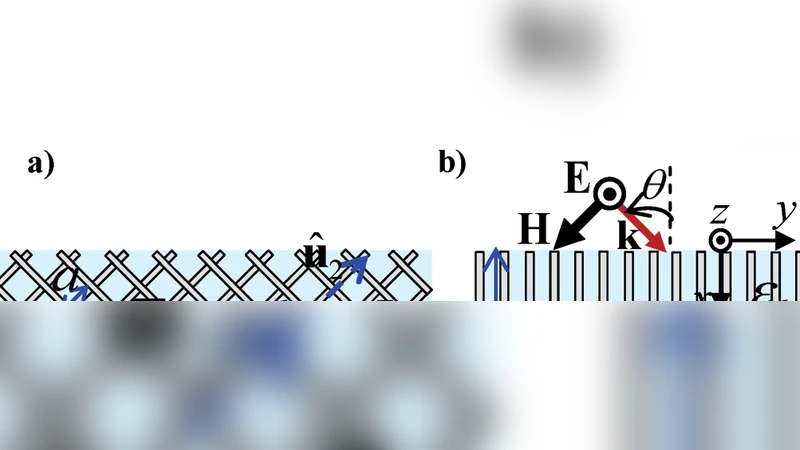
In media with strong spatial dispersion the electric displacement vector and the electric field are typically linked by a partial differential equation in the bulk region. The objective of this work is to highlight that in the vicinity of an interface the relation between the macroscopic fields cannot be univocally determined from the bulk response of the involved materials, but requires instead the knowledge of internal degrees of freedom of the materials. We derive such relation for the particular case of “wire media”, and describe a numerical formalism that enables characterizing the electromagnetic response of arbitrarily shaped spatially dispersive bodies formed by arrays of crossed wires. The possibility of concentrating the electromagnetic field in a narrow spot by tapering a metamaterial waveguide is discussed.
💡 Research Summary
The paper tackles a fundamental problem in the electrodynamics of strongly spatially‑dispersive media: the macroscopic relation between the electric displacement D and the electric field E cannot be uniquely inferred from bulk material parameters when an interface is present. In conventional, weakly‑dispersive dielectrics the constitutive law D = ε E suffices everywhere, but in wire‑media metamaterials the bulk response is described by a partial‑differential equation that couples D and E through spatial derivatives. The authors demonstrate that this bulk equation alone does not determine the correct boundary conditions; instead, one must account for internal degrees of freedom that reside within the material microstructure—specifically, the currents flowing along the metallic wires and the associated scalar potentials.
To make this idea concrete, the authors develop a rigorous homogenization framework for crossed‑wire media. Each wire is treated as a one‑dimensional conductor supporting a current I(s) and a line potential φ(s). By enforcing charge continuity (∇·I = 0) and Ohm’s law along the wire ( I = σ ∇φ ), and by inserting the wire current density as a source term into Maxwell’s equations, they obtain a set of coupled macroscopic equations. The displacement field now reads
D = ε₀ E + P_nonlocal(φ, I)
where the non‑local polarization P_nonlocal is an explicit functional of the internal variables. For a lattice of orthogonal wire arrays the authors derive closed‑form expressions for the effective permittivity tensor, showing that it depends on the wire geometry, the operating frequency, and the internal current‑potential dynamics. This approach replaces the usual k‑dependent permittivity ε(k) with a physically transparent model that retains the microscopic degrees of freedom.
On the computational side, the paper introduces a finite‑element implementation that augments a standard electromagnetic solver with two additional scalar fields: the line potential φ and the longitudinal current density I. The resulting system of equations is solved simultaneously, guaranteeing that the correct interface conditions emerge naturally from the variational formulation. The authors validate the method against full‑wave simulations of canonical problems (e.g., scattering from a spherical wire‑medium inclusion) and demonstrate that the internal‑degree‑of‑freedom model reproduces scattering cross‑sections and near‑field patterns with far higher fidelity than traditional non‑local models that ignore the interface physics.
A particularly striking application is the analysis of a tapered metamaterial waveguide formed by a wire‑medium slab whose cross‑section shrinks gradually. Because the effective medium exhibits extreme anisotropy and can possess a negative effective permittivity in certain frequency bands, the guided mode experiences a progressive reduction of phase velocity as the waveguide narrows. Energy conservation then forces the electric field amplitude to increase, leading to a strong concentration of the field in the tip region. Numerical results show that a taper reducing the width from 1 mm to 0.1 mm can amplify the local field by more than an order of magnitude. This “super‑focusing” effect is unattainable with conventional metallic waveguides and opens avenues for sub‑wavelength imaging, enhanced nonlinear interactions, and ultra‑compact antenna designs.
In summary, the paper makes three major contributions: (1) it clarifies that the macroscopic constitutive relation at an interface of a spatially‑dispersive medium must incorporate internal microscopic variables; (2) it provides a practical homogenization and numerical scheme that can handle arbitrarily shaped wire‑media bodies, including complex three‑dimensional geometries; and (3) it demonstrates a novel application—field concentration via a tapered wire‑medium waveguide—highlighting the functional potential of spatial dispersion when properly accounted for. The work sets a solid foundation for future extensions to nonlinear, multi‑frequency, and other classes of spatially‑dispersive metamaterials.