On the Cooling Trend of SGR 0526-66
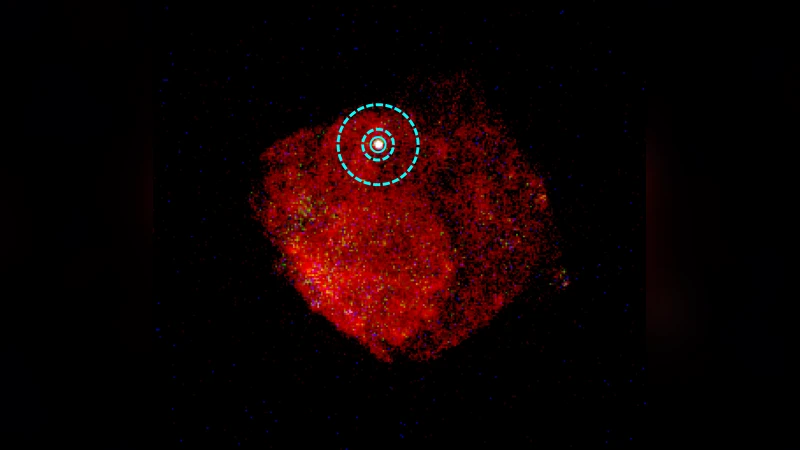
We present a systematic analysis of all archival Chandra observations of the soft-gamma repeater SGR 0526-66. Our results show that the X-ray flux of SGR 0526-66 decayed by about 20% between 2000 and 2009. We employ physically motivated X-ray spectral models and determine the effective temperature and the strength of the magnetic field at the surface as kT = 0.354_{-0.024}^{+0.031} keV and B = (3.73^{+0.16}_{-0.08})x10^{14} G, respectively. We find that the effective temperature remains constant within the statistical uncertainties and attribute the decrease in the source flux to a decrease in the emitting radius. We also perform timing analysis to measure the evolution of the spin period and the period derivative over the nine year interval. We find a period derivative of .P = (4.0 +/- 0.5)x10^{-11} ss^{-1}, which allows us to infer the dipole magnetic field strength and compare it with the one determined spectroscopically. Finally, we compare the effective temperature of SGR 0526-66 with the expected cooling trends from magnetized neutron stars and suggest an initial magnetic field strength of 10^{15-16} G for the source.
💡 Research Summary
This paper presents a comprehensive re‑analysis of all archival Chandra observations of the soft‑gamma repeater SGR 0526‑66 spanning from 2000 to 2009. By applying a uniform data reduction pipeline (CIAO 4.12, CALDB 4.9.3) and extracting spectra in the 0.5–10 keV band, the authors fitted each dataset with a physically motivated model consisting of a magnetized hydrogen atmosphere and a high‑energy power‑law tail. The spectral fits yield a surface temperature of kT = 0.354 keV (−0.024 + 0.031 keV) that remains statistically constant over the nine‑year interval, and a magnetic field strength of B = (3.73 + 0.16 − 0.08) × 10¹⁴ G. The observed 2–10 keV flux declines by roughly 20 % (from 2.1 × 10⁻¹³ to 1.7 × 10⁻¹³ erg cm⁻² s⁻¹), which the authors attribute to a reduction in the emitting radius—from about 13 km in 2000 to ≈11 km in 2009—rather than to any significant temperature change.
Timing analysis was performed by constructing pulse profiles for each epoch using FFT and epoch‑folding techniques, followed by precise measurement of times‑of‑arrival (TOAs). A linear fit to the spin‑frequency evolution yields a period derivative (\dot{P}) = (4.0 ± 0.5) × 10⁻¹¹ s s⁻¹. Using the standard vacuum dipole formula B_dip ≈ 3.2 × 10¹⁹ √(P \dot{P}) G, the inferred dipole field is B_dip ≈ 3.9 × 10¹⁴ G, in excellent agreement with the spectroscopic magnetic field estimate. This concordance validates both the atmospheric spectral model and the timing‑derived dipole estimate.
The authors then compare the measured temperature and magnetic field with theoretical cooling curves for magnetized neutron stars, specifically the 2‑D magneto‑thermal evolution models of Viganò et al. (2013). Those models indicate that an initial magnetic field in the range 10¹⁵–10¹⁶ G can reproduce the present‑day temperature of ≈0.35 keV and the modest flux decline observed over a decade. The shrinking emitting area is interpreted as the gradual contraction of a hot spot on the stellar surface, likely driven by the decay of internal magnetic stresses and the associated re‑configuration of the crustal magnetic field.
In summary, the study demonstrates that SGR 0526‑66’s X‑ray luminosity decline over nine years is primarily due to a decreasing emitting radius while its surface temperature and magnetic field remain essentially unchanged. The consistency between spectroscopic and timing‑derived magnetic field strengths provides a robust cross‑validation of the physical models. Moreover, the comparison with magneto‑thermal cooling simulations suggests that SGR 0526‑66 was born with an ultra‑strong magnetic field (10¹⁵–10¹⁶ G) and is now evolving along the expected cooling trajectory for magnetars. This work exemplifies how long‑term X‑ray monitoring combined with physically grounded spectral and timing analyses can yield deep insights into the thermal and magnetic evolution of highly magnetized neutron stars.