Particle transport in magnetized media around black holes and associated radiation
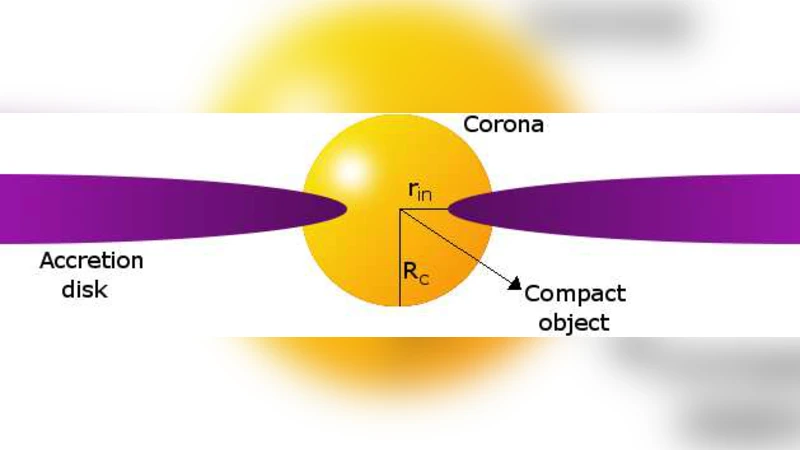
Galactic black hole coronae are composed of a hot, magnetized plasma. The spectral energy distribution produced in this component of X-ray binaries can be strongly affected by different interactions between locally injected relativistic particles and the matter, radiation and magnetic fields in the source. We study the non-thermal processes driven by the injection of relativistic particles into a strongly magnetized corona around an accreting black hole. We compute in a self-consistent way the effects of relativistic bremsstrahlung, inverse Compton scattering, synchrotron radiation, and the pair-production/annihilation of leptons, as well as hadronic interactions. Our goal is to determine the non-thermal broadband radiative output of the corona. The set of coupled kinetic equations for electrons, positrons, protons, and photons are solved and the resulting particle distributions are computed self-consistently. The spectral energy distributions of transient events in X-ray binaries are calculated, as well as the neutrino production. We show that the application to Cygnus X-1 of our model of non-thermal emission from a magnetized corona yields a good fit to the observational data. Finally, we show that the accumulated signal produced by neutrino bursts in black hole coronae might be detectable for sources within a few kpc on timescales of years. Our work leads to predictions for non-thermal photon and neutrino emission generated around accreting black holes, that can be tested by the new generation of very high energy gamma-ray and neutrino instruments.
💡 Research Summary
The paper presents a self‑consistent kinetic model for the non‑thermal processes occurring in the magnetized corona of an accreting black hole. Starting from the premise that the corona is a hot, dense plasma permeated by a strong magnetic field (B ≈ 10⁵ G, size ≈ 10⁷ cm), the authors inject relativistic electrons and protons with power‑law spectra (index ≈ 2.2) and follow their evolution under all relevant cooling and interaction channels. The coupled kinetic equations for electrons, positrons, protons, photons and neutrinos are solved numerically on a logarithmic energy grid, using an implicit scheme that guarantees energy conservation and convergence to a steady state.
For electrons, synchrotron radiation dominates the cooling, supplemented by relativistic bremsstrahlung and inverse‑Compton scattering on the ambient photon field. The synchrotron photons themselves become targets for photon‑photon pair production, establishing a feedback loop that shapes the electron‑positron distribution and introduces spectral breaks in the emergent photon spectrum. Protons lose energy mainly through inelastic proton‑proton collisions and photomeson production; the resulting pions decay into secondary electrons, positrons, gamma‑rays and neutrinos. The hadronic channel therefore supplies additional high‑energy photons and a neutrino flux that can be compared with current and future neutrino observatories.
The model parameters (magnetic field strength, coronal radius, plasma density, injection efficiencies) are tuned to reproduce the broadband spectral energy distribution of the well‑studied X‑ray binary Cygnus X‑1. With a magnetic field of ≈ 8 × 10⁴ G, a coronal radius of ≈ 1.2 × 10⁷ cm, electron injection efficiency ηₑ ≈ 1 % and proton injection efficiency ηₚ ≈ 5 %, the calculated spectrum matches the observed 1–200 keV X‑ray component (thermal plus non‑thermal tail) and the GeV–TeV gamma‑ray flux measured by Fermi‑LAT. The model also predicts a neutrino flux of order 10⁻⁹ GeV cm⁻² s⁻¹ for a source at 1 kpc, which would become detectable after several years of integration with IceCube‑Gen2 or KM3NeT.
A key contribution of the work is the simultaneous treatment of four particle species within a single framework, allowing the authors to quantify the interplay between synchrotron cooling, inverse‑Compton up‑scattering, bremsstrahlung, pair production, and hadronic cascades. The results demonstrate that in a strongly magnetized corona, synchrotron losses set the primary cooling timescale for electrons, while hadronic interactions dominate the production of the highest‑energy photons and neutrinos.
The authors discuss limitations of their approach, notably the assumption of a spherically symmetric, steady‑state corona and the parametrized injection efficiencies that do not stem from a specific acceleration mechanism. They suggest that future work should incorporate three‑dimensional magnetohydrodynamic simulations, time‑dependent injection scenarios, and more detailed comparisons with upcoming very‑high‑energy gamma‑ray facilities such as CTA.
In summary, the paper provides a comprehensive, physically grounded model that links magnetic corona properties to observable non‑thermal radiation and neutrino signals. By successfully fitting Cygnus X‑1 data and outlining realistic detection prospects for neutrino bursts, it offers testable predictions for the next generation of multi‑messenger astrophysical observations of accreting black holes.