Microinstabilities at perpendicular collisionless shocks: A comparison of full particle simulations with different ion to electron mass ratio
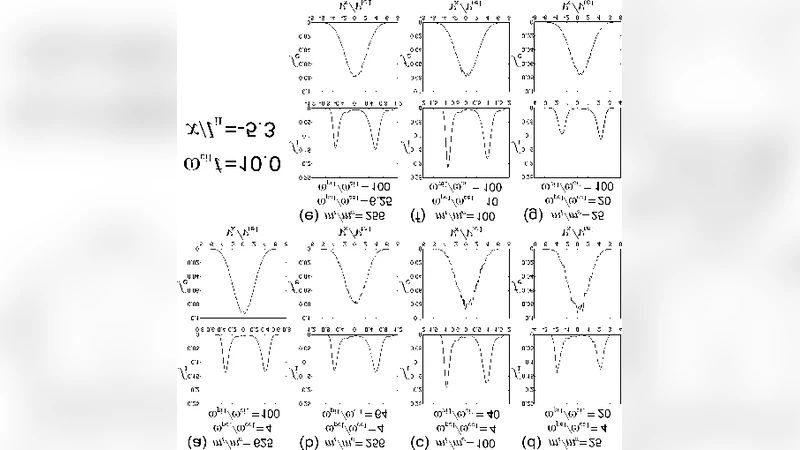
A full particle simulation study is carried out for studying microinstabilities generated at the shock front of perpendicular collisionless shocks. The structure and dynamics of shock waves are determined by Alfven Mach number and plasma beta, while microinstabilities are controlled by the ratio of the upstream bulk velocity to the electron thermal velocity and the plasma-to-cyclotron frequency. Thus, growth rates of microinstabilities are changed by the ion-to-electron mass ratio, even with the same Mach number and plasma beta. The present two-dimensional simulations show that the electron cyclotron drift instability is dominant for a lower mass ratio, and electrostatic electron cyclotron harmonic waves are excited. For a higher mass ratio, the modified two-stream instability is dominant and oblique electromagnetic whistler waves are excited, which can affect the structure and dynamics of collisionless shocks by modifying shock magnetic fields.
💡 Research Summary
The paper presents a systematic two‑dimensional full‑particle (Particle‑in‑Cell) investigation of microinstabilities that develop at the front of perpendicular collisionless shocks, focusing on how the ion‑to‑electron mass ratio (m_i/m_e) influences which instability dominates and how it modifies the shock structure. The authors emphasize that while the macroscopic shock properties—such as the Alfvén Mach number (M_A) and plasma beta (β)—determine the overall shock profile, the micro‑scale dynamics are governed by two dimensionless parameters: the ratio of the upstream bulk flow speed to the electron thermal speed (V_0/v_te) and the ratio of the electron plasma frequency to the electron cyclotron frequency (ω_pe/Ω_ce). Changing the mass ratio alters both Ω_ce (through the electron mass) and the effective V_0/v_te, thereby modifying the growth rates of the various instabilities even when M_A and β are held constant.
Three representative mass ratios were examined: a low value (≈25), an intermediate value (≈100), and a high value (≈400). For each case the shock forms a current sheet where ions and electrons drift in opposite directions, generating temperature anisotropies that provide free energy for wave growth. The simulations reveal a clear transition in the dominant microinstability as the mass ratio increases:
-
Low mass ratio (m_i/m_e ≈ 25) – The electron cyclotron drift instability (ECDI) is the primary mode. ECDI is driven by the relative drift of electrons across the magnetic field and resonates near the electron cyclotron frequency. It produces strong electrostatic fields and excites electron cyclotron harmonic (ECH) waves whose wavevectors are nearly perpendicular to the background magnetic field. These waves efficiently heat electrons, amplify electron temperature anisotropy, and dominate the electrostatic turbulence spectrum.
-
Intermediate mass ratio (m_i/m_e ≈ 100) – The modified two‑stream instability (MTSI) begins to compete with ECDI. MTSI operates at frequencies below the electron cyclotron frequency and couples the ion‑electron drift to electromagnetic modes. It preferentially generates oblique whistler‑mode waves that have both electric and magnetic components. The whistler waves perturb the magnetic field within the shock ramp, broaden the current sheet, and start to influence ion dynamics as well as electron heating.
-
High mass ratio (m_i/m_e ≈ 400) – MTSI becomes the unequivocal dominant instability. Strong, oblique electromagnetic whistler waves are excited, leading to substantial magnetic field fluctuations in the shock front. These fluctuations modify the shock’s magnetic profile, affect the formation and thickness of the current sheet, and provide a channel for cross‑field energy transfer that can reduce electron temperature anisotropy while still maintaining significant electron heating through wave‑particle interactions.
The authors discuss the implications of these findings for both laboratory plasma experiments and space‑physics observations. In many numerical studies the realistic mass ratio (≈1836) cannot be used because of computational cost, so reduced mass ratios are employed. The present results demonstrate that such reductions are not neutral: a low mass ratio over‑emphasizes electrostatic ECDI‑type activity, whereas a relatively high but still reduced ratio emphasizes electromagnetic whistler activity. Consequently, care must be taken when extrapolating reduced‑mass‑ratio simulation results to real astrophysical shocks; appropriate scaling or validation against observations is essential.
In summary, the paper establishes that the ion‑to‑electron mass ratio is a decisive control parameter for microinstability selection at perpendicular collisionless shocks. By altering the V_0/v_te and ω_pe/Ω_ce ratios, the mass ratio changes the linear growth rates of ECDI, MTSI, and associated wave modes, which in turn feed back on the shock’s magnetic structure, current‑sheet thickness, and particle heating. These insights provide a valuable guide for future high‑fidelity PIC simulations and for interpreting in‑situ spacecraft measurements of shock‑driven turbulence in the heliosphere and beyond.