The gamma-ray emission region in the FRII Radio Galaxy 3C 111
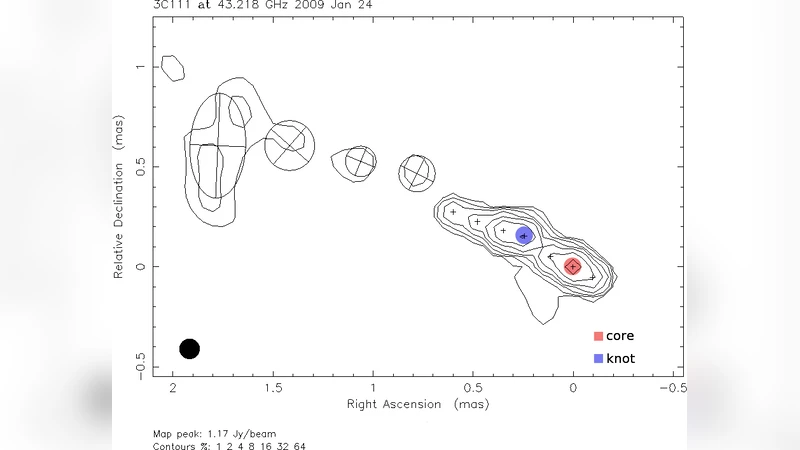
The Broad Line Radio Galaxy 3C 111, characterized by a Fanaroff-Riley II (FRII) radio morphology, is one of the sources of the Misaligned Active Galactic Nuclei sample, consisting of Radio Galaxies and Steep Spectrum Radio Quasars, recently detected by the Fermi-Large Area Telescope. Our analysis of the 24-month gamma-ray light curve shows that 3C 111 was only occasionally detected at high energies. It was bright at the end of 2008 and faint, below the Fermi-Large Area Telescope sensitivity threshold, for the rest of the time. A multifrequency campaign of 3C~111, ongoing in the same period, revealed an increase of the mm, optical and X-ray fluxes in 2008 September-November, interpreted by Chatterjee et al. (2011) as due to the passage of a superluminal knot through the jet core. The temporal coincidence of the mm-optical-X-ray outburst with the GeV activity suggests a co-spatiality of the events, allowing, for the first time, the localization of the gamma-ray dissipative zone in a FRII jet. We argue that the GeV photons of 3C 111 are produced in a compact region confined within 0.1 pc and at a distance of about 0.3 pc from the black hole.
💡 Research Summary
The paper presents a comprehensive multi‑wavelength investigation of the γ‑ray emission site in the FR II radio galaxy 3C 111, a member of the Misaligned Active Galactic Nuclei (MAGN) class. Using 24 months of Fermi‑LAT data, the authors find that 3C 111 was only significantly detected at high energies during a brief interval at the end of 2008; for the remainder of the monitoring period the source remained below the LAT sensitivity threshold. Simultaneously, a coordinated campaign covering millimetre (230 GHz), optical (V‑band) and X‑ray (2–10 keV) bands recorded a pronounced flare from September to November 2008. This flare coincides with the passage of a super‑luminal radio knot through the VLBI core, as reported by Chatterjee et al. (2011).
By combining the apparent knot speed (β_app ≈ 4 c) with the observed time lag (≈30 days) between the knot’s core crossing and the γ‑ray flare, the authors infer that the γ‑ray emitting region lies at a projected distance of roughly 0.3 pc (∼10⁵ Schwarzschild radii) downstream from the central black hole. The variability timescale, together with an estimated Doppler factor of 3–5, constrains the size of the emitting zone to R ≲ c Δt / δ ≈ 0.1 pc, indicating a compact region embedded within the inner jet.
Because this location is well outside the broad‑line region, the external photon field is weak, favoring synchrotron self‑Compton (SSC) as the dominant γ‑ray production mechanism rather than external Compton scattering. The coincident flares across mm, optical, X‑ray, and γ‑ray bands suggest that the same population of relativistic electrons is responsible for the broadband emission, with synchrotron radiation accounting for the lower‑energy bands and SSC up‑scattering producing the GeV photons.
The study demonstrates that, despite the modest Doppler boosting expected for misaligned jets, FR II sources can generate detectable γ‑ray emission from regions very close to the jet base. This challenges the prevailing view that high‑energy emission in radio galaxies is confined to large‑scale jet structures and aligns FR II behaviour with that observed in FR I MAGN, albeit with different environmental conditions.
Finally, the authors argue that future high‑resolution VLBI monitoring combined with continuous γ‑ray observations (e.g., with Fermi‑LAT and the forthcoming Cherenkov Telescope Array) will be crucial to map the evolution of such compact emission zones, to test shock‑in‑jet and magnetic reconnection models, and to refine our understanding of particle acceleration and radiative processes in powerful extragalactic jets.