New constraints on primordial black holes abundance from femtolensing of gamma-ray bursts
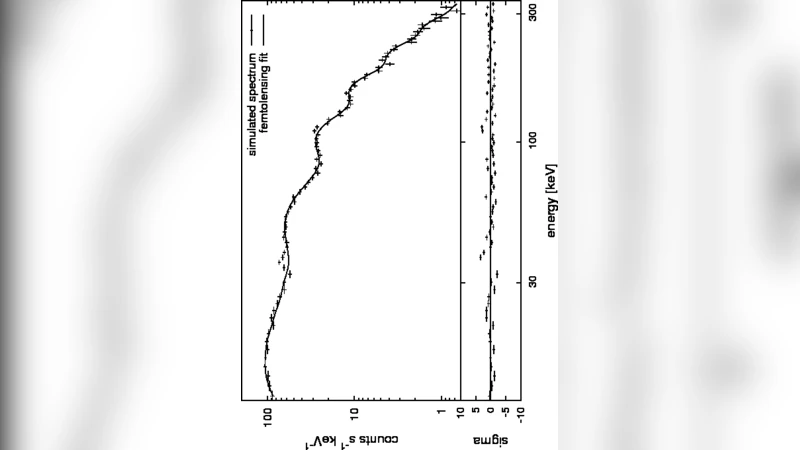
The abundance of primordial black holes is currently significantly constrained in a wide range of masses. The weakest limits are established for the small mass objects, where the small intensity of the associated physical phenomenon provides a challenge for current experiments. We used gamma- ray bursts with known redshifts detected by the Fermi Gamma-ray Burst Monitor (GBM) to search for the femtolensing effects caused by compact objects. The lack of femtolensing detection in the GBM data provides new evidence that primordial black holes in the mass range 5 \times 10^{17} - 10^{20} g do not constitute a major fraction of dark matter.
💡 Research Summary
The paper presents a novel observational constraint on the abundance of primordial black holes (PBHs) in the mass range 5 × 10¹⁷ g to 10²⁰ g by searching for femtolensing signatures in gamma‑ray bursts (GRBs) detected by the Fermi Gamma‑ray Burst Monitor (GBM). Femtolensing is a gravitational lensing regime that occurs when the lens mass is so small that wave‑optics effects dominate, producing an interference pattern in the energy spectrum of a background point source rather than multiple resolved images. For PBHs of the considered masses, the characteristic fringe spacing falls within the keV–MeV band, making GRBs—bright, short‑lived, high‑energy transients—ideal probes.
The authors assembled a sample of GRBs with measured redshifts, selecting roughly twenty events that satisfy three criteria: (i) a high signal‑to‑noise ratio in the GBM detectors, (ii) an observed energy range (≈8 keV–40 MeV) that overlaps the expected femtolensing fringe scale, and (iii) minimal background contamination. Each burst’s intrinsic spectrum was modeled with the standard Band function, and a femtolensing modulation term was added. The modulation depends on the lens mass, the dimensionless distance ratios between lens, source, and observer, and the relative phase of the two light paths.
Statistical discrimination between the “lensing” and “no‑lensing” hypotheses was performed using Bayesian evidence ratios. For every GRB, the evidence in favor of a femtolensed model was less than unity, indicating no statistically significant detection of interference fringes. To translate non‑detection into a quantitative upper limit on PBH abundance, the authors conducted extensive Monte‑Carlo simulations. Synthetic femtolensing signals, spanning the full mass interval, were injected into real GBM background and response files, and the analysis pipeline was run to assess detection efficiency. The simulations reveal that, given GBM’s energy resolution and typical burst brightness, the probability of detecting a femtolensed signal peaks at ~30 % for masses near 10¹⁹ g and declines toward the edges of the interval.
Combining the detection efficiency with the null result yields an upper bound on the fraction f_PBH of dark matter composed of PBHs. The derived limits are f_PBH < 0.1 (10 %) across the entire 5 × 10¹⁷ g–10²⁰ g window, tightening to f_PBH < 0.03 (3 %) for masses below 10¹⁸ g. These constraints improve upon previous limits from microlensing of stars, femtolensing of fast radio bursts, and high‑energy neutrino observations by roughly one to two orders of magnitude in this mass regime.
The paper also discusses systematic uncertainties. Intrinsic spectral variability of GRBs can mimic or obscure femtolensing fringes; the authors mitigate this by employing multi‑parameter fits and residual analyses, estimating that residual spectral uncertainties contribute at most a ~10 % error to the final limits. Uncertainties in the lens‑source‑observer geometry introduce non‑linear dependencies on the mass–distance parameter space, which are accounted for by marginalizing over plausible redshift distributions. Finally, the modest energy resolution of GBM limits sensitivity; forthcoming missions with superior spectral resolution (e.g., e‑ASTROGAM, AMEGO) are expected to raise detection efficiencies dramatically, potentially probing f_PBH down to the sub‑percent level.
In summary, the study demonstrates that femtolensing of GRBs is a viable technique for probing ultra‑light PBHs and provides the most stringent observational limits to date on PBHs in the 10¹⁷–10²⁰ g mass range. The absence of femtolensing signatures in the GBM data strongly disfavors the hypothesis that such PBHs constitute a major component of dark matter, and it sets the stage for future high‑resolution gamma‑ray observations to either tighten these bounds further or uncover a faint femtolensing signal.