Epidemic Variability in Hierarchical Geographical Networks with Human Activity Patterns
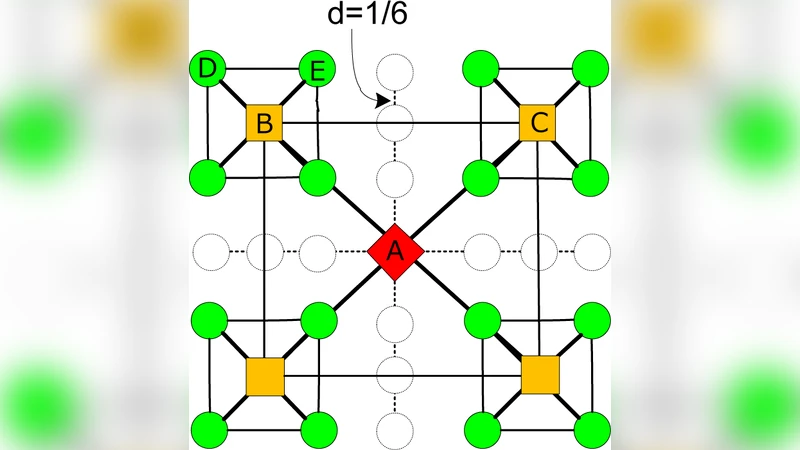
Recently, some studies have revealed that non-Poissonian statistics of human behaviors stem from the hierarchical geographical network structure. On this view, we focus on epidemic spreading in the hierarchical geographical networks, and study how two distinct contact patterns (i. e., homogeneous time delay (HOTD) and heterogeneous time delay (HETD) associated with geographical distance) influence the spreading speed and the variability of outbreaks. We find that, compared with HOTD and null model, correlations between time delay and network hierarchy in HETD remarkably slow down epidemic spreading, and result in a upward cascading multi-modal phenomenon. Proportionately, the variability of outbreaks in HETD has the lower value, but several comparable peaks for a long time, which makes the long-term prediction of epidemic spreading hard. When a seed (i. e., the initial infected node) is from the high layers of networks, epidemic spreading is remarkably promoted. Interestingly, distinct trends of variabilities in two contact patterns emerge: high-layer seeds in HOTD result in the lower variabilities, the case of HETD is opposite. More importantly, the variabilities of high-layer seeds in HETD are much greater than that in HOTD, which implies the unpredictability of epidemic spreading in hierarchical geographical networks.
💡 Research Summary
The paper investigates epidemic spreading on hierarchical geographical networks, focusing on how two distinct contact patterns—homogeneous time delay (HOTD) and heterogeneous time delay (HETD) that scales with geographical distance—affect propagation speed and outbreak variability. The authors model the network as a multi‑level tree where nodes at higher layers represent larger spatial regions and are linked to many lower‑layer nodes. In the HOTD scenario every edge carries the same transmission delay, reproducing the classic SI dynamics where infection spreads uniformly across the network. In contrast, HETD assigns a delay proportional to the physical distance of each edge, thereby slowing long‑range transmissions.
Through extensive Monte‑Carlo simulations the authors find that HETD dramatically slows epidemic spread. The infection propagates in a “upward cascading” manner: it first saturates the top layer, then sequentially activates each lower layer, producing a multi‑modal prevalence curve with several comparable peaks. Although the overall variability (standard deviation of prevalence) is lower for HETD than for HOTD, the presence of multiple peaks over an extended period creates long‑term prediction challenges because the system repeatedly revisits high‑infection states.
The location of the initial infected node (seed) also plays a crucial role. Seeds placed in high‑layer nodes dramatically accelerate the outbreak, as these nodes have many downstream connections and can quickly seed all sub‑regions. Interestingly, the effect on variability differs between the two contact patterns: in HOTD, high‑layer seeds reduce variability, making the epidemic trajectory more predictable; in HETD, the opposite occurs—high‑layer seeds increase variability, sometimes by several folds compared with HOTD. This divergence stems from the interaction between hierarchical structure and distance‑dependent delays: when long‑range links are delayed, the timing of when each sub‑region becomes infected becomes highly sensitive to the seed’s position.
The authors argue that these findings have practical implications for real‑world disease control. Policies that limit long‑distance travel or impose targeted interventions on high‑layer (i.e., highly connected) regions can significantly alter epidemic outcomes. Moreover, the multi‑modal nature of HETD outbreaks suggests that health‑care resource allocation must anticipate several successive waves rather than a single peak.
In summary, the study demonstrates that incorporating both hierarchical geography and non‑Poissonian human activity (through distance‑dependent time delays) yields epidemic dynamics markedly different from traditional homogeneous models. The results highlight the importance of considering network hierarchy and spatially heterogeneous contact timings when designing predictive models and intervention strategies for emerging infectious diseases.
Comments & Academic Discussion
Loading comments...
Leave a Comment