Von-Neumanns and related scaling laws in Rock-Paper-Scissors type models
We introduce a family of Rock-Paper-Scissors type models with $Z_N$ symmetry ($N$ is the number of species) and we show that it has a very rich structure with many completely different phases. We study realizations which lead to the formation of domains, where individuals of one or more species coexist, separated by interfaces whose (average) dynamics is curvature driven. This type of behavior, which might be relevant for the development of biological complexity, leads to an interface network evolution and pattern formation similar to the ones of several other nonlinear systems in condensed matter and cosmology.
💡 Research Summary
The paper introduces a broad class of cyclic competition models that generalize the classic Rock‑Paper‑Scissors (RPS) game to an arbitrary number $N$ of species, each linked by a $Z_N$ symmetry: species $i$ predates on species $i+1$ (mod $N$). The authors implement the dynamics on a regular lattice where each site hosts a single individual. Interactions are limited to four elementary processes—predation, reproduction, mobility (diffusion), and mutation—each occurring with a prescribed probability. By varying these probabilities the authors explore a rich phase diagram that includes coexistence, extinction, and oscillatory regimes.
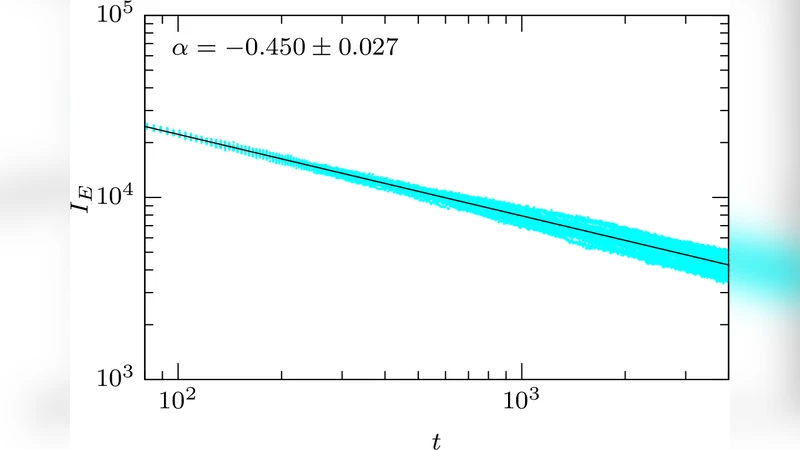
A central focus is the emergence of spatial domains—clusters of sites where one or several species coexist—separated by sharp interfaces. In parameter regimes where mobility is low and predation/reproduction are balanced, the system self‑organizes into a mosaic of domains. The interfaces evolve according to curvature‑driven motion: the normal velocity $v$ of an interface is proportional to its local curvature $\kappa$, $v = -M\kappa$, where $M$ is an effective mobility coefficient. This is the same law that underlies the Allen‑Cahn equation for phase‑ordering kinetics. Numerical simulations confirm that the characteristic domain size $L(t)$ grows as $L(t)\sim t^{1/2}$, a hallmark of the Von‑Neumann scaling law originally derived for grain growth in polycrystalline materials. The authors therefore demonstrate that cyclic competition models can reproduce the same universal scaling behavior observed in a wide variety of non‑biological systems.
The study systematically investigates how the number of species $N$ influences the geometry of the domain network. For $N=3$, domains are typically single‑species and the junctions where three interfaces meet form 120° angles, reproducing the classic three‑phase grain structure. As $N$ increases, multi‑species coexistence within a single domain becomes possible, and the junction angles adjust to $2\pi/N$, reflecting the underlying $Z_N$ symmetry. For $N\ge5$, the interface network becomes highly intricate: junctions can involve more than three interfaces, curvature can change sign locally, and the topology of the network evolves through the creation and annihilation of defect lines. These findings illustrate how increasing the internal symmetry of the competition rules enriches the morphological complexity of the emergent patterns.
Parameter sweeps reveal distinct macroscopic phases. High predation probability accelerates interface shrinkage, leading to rapid domain coarsening and eventual fixation of a single species (global extinction of the others). High reproduction probability stabilizes multi‑species domains, allowing long‑lived coexistence. Introducing a non‑zero mutation rate injects new species randomly, preventing complete coarsening and maintaining a dynamic steady state where domains continuously appear, merge, and disappear. The authors map these regimes onto a phase diagram that highlights the competition between curvature‑driven coarsening and stochastic creation of new interfaces.
Beyond ecological relevance, the authors emphasize the broader significance of their results. The curvature‑driven dynamics and $t^{1/2}$ scaling are shared by a host of nonlinear systems: phase‑separating alloys, liquid crystals, cosmological defect networks (e.g., domain walls and cosmic strings), and even certain models of early‑universe inflation. By establishing a direct correspondence between cyclic competition models and these physical systems, the paper provides a unifying framework for studying pattern formation and scaling laws across disciplines. It suggests that the mechanisms driving biological complexity—local competitive interactions, limited mobility, and stochastic mutation—can give rise to universal geometric laws that are independent of the microscopic details of the system.
In summary, the work offers a comprehensive theoretical and computational analysis of $Z_N$‑symmetric RPS‑type models, uncovering how curvature‑driven interface motion, Von‑Neumann scaling, and symmetry‑determined junction geometry emerge from simple local rules. The findings have implications for understanding biodiversity maintenance, the evolution of spatial ecosystems, and the universal aspects of pattern formation in complex, multi‑component systems.