The High Time Resolution Universe Survey - V: Single-pulse energetics and modulation properties of 315 pulsars
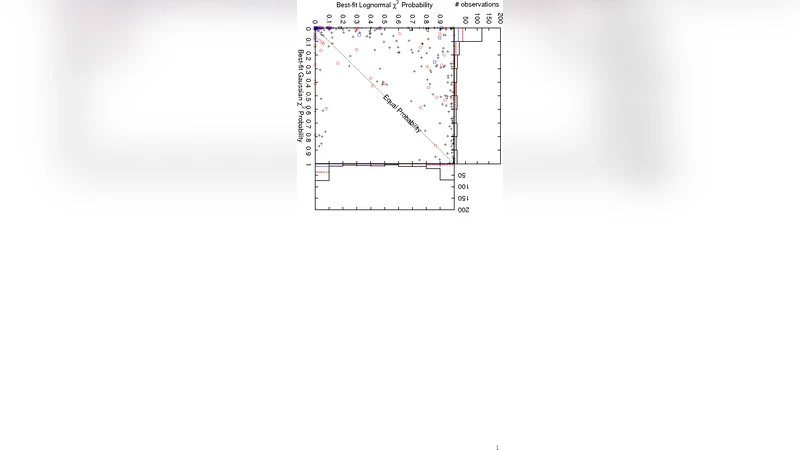
We report on the pulse-to-pulse energy distributions and phase-resolved modulation properties for catalogued pulsars in the southern High Time Resolution Universe intermediate-latitude survey. We selected the 315 pulsars detected in a single-pulse search of this survey, allowing a large sample unbiased regarding any rotational parameters of neutron stars. We found that the energy distribution of many pulsars is well-described by a log-normal distribution, with few deviating from a small range in log-normal scale and location parameters. Some pulsars exhibited multiple energy states corresponding to mode changes, and implying that some observed “nulling” may actually be a mode-change effect. PSRJ1900-2600 was found to emit weakly in its previously-identified “null” state. We found evidence for another state-change effect in two pulsars, which show bimodality in their nulling time scales; that is, they switch between a continuous-emission state and a single-pulse-emitting state. Large modulation occurs in many pulsars across the full integrated profile, with increased sporadic bursts at leading and trailing sub-beam edges. Some of these high-energy outbursts may indicate the presence of “giant pulse” phenomena. We found no correlation with modulation and pulsar period, age, or other parameters. Finally, the deviation of integrated pulse energy from its average value was generally quite small, despite the significant phase-resolved modulation in some pulsars; we interpret this as tenuous evidence of energy regulation between distinct pulsar sub-beams.
💡 Research Summary
The paper presents a comprehensive statistical study of single‑pulse energetics and phase‑resolved modulation for 315 pulsars detected in the single‑pulse search of the southern High Time Resolution Universe (HTRU) intermediate‑latitude survey. By selecting all pulsars found in a blind single‑pulse search, the authors assembled a large, rotation‑parameter‑unbiased sample that allows population‑wide inferences about pulse‑to‑pulse variability.
The authors first extracted individual pulses from high‑time‑resolution (≤ 1 ms) filterbank data, calibrated the flux density, and measured the energy of each pulse by integrating the on‑pulse region. Energy histograms were fitted with several statistical models; the log‑normal distribution provided the best description for the overwhelming majority of objects, as judged by Akaike and Bayesian information criteria. The log‑normal scale (σ) and location (μ) parameters occupy a narrow range across the sample, indicating that the stochastic processes governing pulse emission are remarkably uniform among different neutron stars.
A minority of pulsars (≈ 10 %) display multi‑modal energy distributions, revealing distinct emission states. In several cases the apparent “nulls” are better interpreted as a low‑energy mode rather than a true cessation of emission. The most striking example is PSR J1900‑2600, previously classified as nulling, which the authors show continues to emit weak pulses during its “null” intervals. Two pulsars exhibit bimodal null‑duration histograms, switching between a long, continuous‑emission state and a short, single‑pulse‑only state. This dual‑timescale nulling suggests a more complex magnetospheric switching behaviour than the classic on/off nulling model.
Phase‑resolved modulation was quantified using the modulation index and fluctuation spectra for each pulse phase bin. Large modulation is observed across the full integrated profile, but it is especially pronounced at the leading and trailing edges of the sub‑beam structure. These edge‑enhanced bursts often reach energies far above the mean, reminiscent of giant‑pulse phenomena observed in a few young, high‑magnetic‑field pulsars. However, statistical tests reveal no significant correlation between the modulation index and fundamental pulsar parameters such as spin period, characteristic age, or surface magnetic field strength. This lack of correlation implies that modulation is driven primarily by local plasma or magnetic field irregularities rather than global rotational properties.
Despite strong phase‑dependent fluctuations, the total pulse energy (the integral of the entire profile) varies only modestly from pulse to pulse. The authors interpret this as evidence for an energy‑regulation mechanism that redistributes excess energy from highly active sub‑beams to quieter ones, preserving the overall energy budget. This “energy balancing” across sub‑beams provides a plausible explanation for why integrated profiles remain stable even when individual components are highly variable.
In summary, the study confirms that log‑normal statistics dominate pulsar single‑pulse energetics, identifies mode‑changing as a frequent source of apparent nulling, discovers a new class of bimodal nulling behaviour, and demonstrates that strong, localized modulation does not necessarily translate into large variations of the total emitted energy. These findings advance our understanding of the microphysics of pulsar magnetospheres and set the stage for future high‑time‑resolution, broadband observations aimed at probing the origin of giant pulses and the internal regulation of pulsar emission.