Can A Higgs Portal Dark Matter be Compatible with the Anti-proton Cosmic-ray?
Recent direct detection experiments of Dark Matter (DM), CoGeNT and DAMA implicate a light DM of a few GeV. Such a light DM would generate a large amount of anti-proton since suppression for anti-proton flux from DM annihilation is ineffective. We discuss whether a light dark matter with mass of 5-15 GeV, which is especially in favor of the recent experiments reported by CoGeNT, is compatible with the anti-proton no excess in the cosmic-ray. In view of the direct detection of DM and no anti-proton excess in the cosmic-ray both, we show that a Dirac DM is favored than a scalar one since there is no s-wave of the annihilation cross section for the Dirac DM. A large elastic cross section for direct detection can be obtained through the additional light Higgs exchange. We show an allowed region that simultaneously satisfies the DM relic density, the elastic cross section favored by CoGeNT and also the constraint of H_L Z Z coupling of the light Higgs boson by LEP.
💡 Research Summary
The paper addresses a tension that has emerged in recent dark‑matter (DM) phenomenology: direct‑detection experiments such as CoGeNT and DAMA/LIBRA have reported signals consistent with a light DM particle in the 5–15 GeV mass range, while measurements of the cosmic‑ray antiproton flux (e.g., by PAMELA and AMS‑02) show no excess that would be expected from the annihilation of such light particles into hadronic final states. The authors explore whether a Higgs‑portal framework can accommodate both sets of observations.
In the Higgs‑portal scenario the DM field couples to the Standard Model (SM) through the operator ( \lambda_{h\chi} H^\dagger H \chi^\dagger \chi ) (scalar DM) or ( \lambda_{h\psi} H^\dagger H \bar\psi\psi ) (Dirac fermion DM). The key difference lies in the velocity dependence of the annihilation cross section. For a scalar DM particle the dominant annihilation proceeds via an s‑wave (velocity‑independent) channel, so even today’s low‑velocity DM ((v\sim10^{-3}c)) would still annihilate efficiently into quarks, producing antiprotons at a level already excluded by the data. By contrast, a Dirac fermion DM particle cannot annihilate via an s‑wave into SM fermions because of CP and angular‑momentum constraints; the leading contribution is p‑wave, scaling as (v^{2}). Consequently, the present‑day annihilation rate is strongly suppressed, naturally evading the antiproton bound while still allowing a sizable annihilation cross section in the early universe (when (v\sim0.3c)) to obtain the observed relic density (\Omega_{\rm DM}h^{2}\simeq0.12).
To achieve the large spin‑independent scattering cross section required by CoGeNT ((\sigma_{\rm SI}\sim10^{-40}) cm(^2)), the authors introduce an additional light Higgs boson (H_{L}) with a mass in the 10–30 GeV range. This state mixes slightly with the SM‑like Higgs, giving rise to a suppressed coupling to the Z boson ((g_{H_{L}ZZ})). LEP searches for Higgsstrahlung constrain this coupling to be less than about 10 % of the SM value. By choosing a small mixing angle ((\sin\theta\lesssim0.1)) the model respects the LEP bound, while a relatively large portal coupling (\lambda_{L\psi}) (or (\lambda_{L\chi}) for the scalar case) enhances the t‑channel Higgs exchange that mediates DM–nucleon scattering. The resulting (\sigma_{\rm SI}) can comfortably sit in the CoGeNT‑favored region.
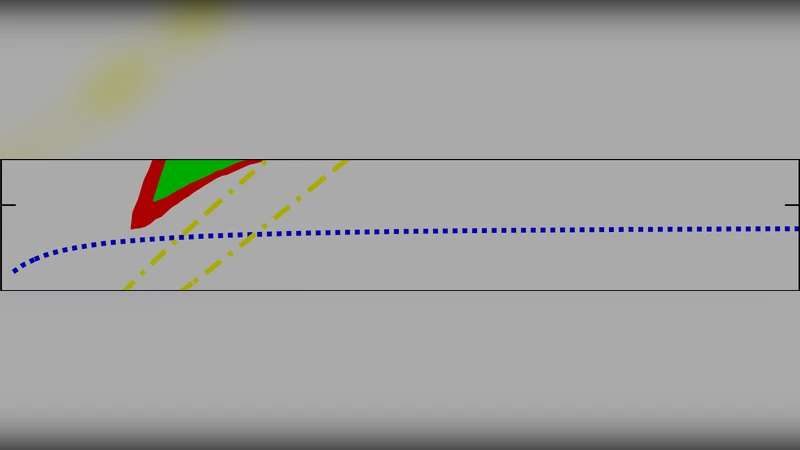
The authors perform a systematic scan over the relevant parameter space: DM mass (m_{\rm DM}), light‑Higgs mass (m_{H_{L}}), portal coupling (\lambda_{L\psi}), and mixing angle (\theta). They impose four constraints simultaneously: (i) the relic abundance from thermal freeze‑out, (ii) the CoGeNT‑preferred direct‑detection cross section, (iii) the LEP limit on the (H_{L}ZZ) coupling, and (iv) the antiproton flux bound. The scan reveals an allowed band where all conditions are satisfied: roughly (5\lesssim m_{\rm DM}/{\rm GeV}\lesssim15), (12\lesssim m_{H_{L}}/{\rm GeV}\lesssim25), (\lambda_{L\psi}\sim0.3!-!0.8), and (\sin\theta\lesssim0.1). Within this region the Dirac DM annihilation is p‑wave dominated, so the present‑day antiproton production is negligible, while the light‑Higgs exchange yields the required large elastic scattering cross section.
In contrast, the scalar‑DM case fails to meet the antiproton constraint unless the portal coupling is tuned to unnaturally small values, which then cannot reproduce the CoGeNT signal. Therefore, the paper concludes that a Dirac fermion DM interacting through a Higgs portal with an additional light Higgs boson is the most viable candidate for reconciling light‑DM direct‑detection hints with the lack of an antiproton excess. The authors suggest that forthcoming high‑precision antiproton measurements (e.g., from AMS‑02) and next‑generation low‑threshold direct‑detection experiments will be crucial for testing this narrow viable parameter space.