Collimated jets from the first core
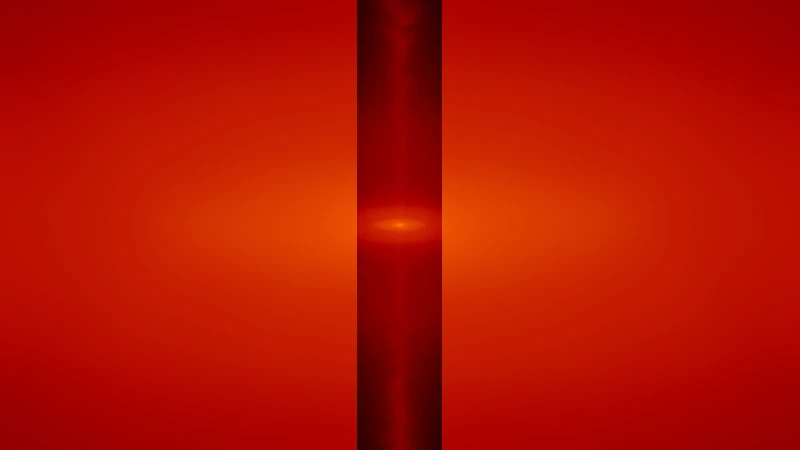
We have performed Smoothed Particle Magnetohydrodynamics (SPMHD) simulations demonstrating the production of collimated jets during collapse of 1 solar mass molecular cloud cores to form the `first hydrostatic core’ in low mass star formation. Recently a number of candidate first core objects have been observed, including L1448 IRS2E, L1451-mm and Per Bolo 58, although it is not yet clear that these are first hydrostatic cores. Recent observations of Per Bolo 58 in particular appear to show collimated, bipolar outflows which are inconsistent with previous theoretical expectations. We show that low mass first cores can indeed produce tightly collimated jets (opening angles <~ 10 degrees) with speeds of ~2-7 km/s, consistent with some of the observed candidates. We have also demonstrated, for the first time, that such phenomena can be successfully captured in SPMHD simulations.
💡 Research Summary
This paper presents the first Smoothed Particle Magnetohydrodynamics (SPMHD) simulations that demonstrate the formation of tightly collimated, bipolar jets during the collapse of a 1 M☉ molecular cloud core to the first hydrostatic core (FHSC) stage of low‑mass star formation. The authors initialize a rotating, magnetised cloud with a mass‑to‑flux ratio μ in the range 2–5 and a modest angular velocity (Ω≈10⁻¹³ s⁻¹). As the core collapses and the central temperature reaches ≈2000 K, a FHSC forms. The rotation winds up the magnetic field into a strong toroidal component, and magneto‑centrifugal (magneto‑syringe) forces launch a jet from the FHSC surface. The resulting outflows have speeds of 2–7 km s⁻¹ and opening angles smaller than ~10°, matching the properties reported for candidate FHSC objects such as Per Bolo 58.
A series of parameter studies shows that the jet appears only when the magnetic field is neither too weak (μ ≳ 5, no jet) nor too strong (μ ≲ 2, leading to rapid collapse to the second core). The jet efficiently extracts angular momentum, reducing the accretion rate onto the FHSC to ~10⁻⁵ M☉ yr⁻¹. The simulations employ modern current‑smoothing and divergence‑cleaning techniques to minimise artificial resistivity, demonstrating that SPMHD can resolve the delicate balance of forces required for jet launching at this early stage—something that grid‑based codes have struggled to achieve.
The work therefore revises the conventional view that only the later protostellar (second‑core) phase can drive highly collimated outflows. It provides a plausible theoretical framework for interpreting observed narrow, low‑velocity outflows from FHSC candidates and establishes SPMHD as a robust tool for future studies of early star formation, disc formation, and jet physics. Further work is suggested to incorporate non‑ideal MHD effects, radiative transfer, and chemical tracers to connect the simulated jets more directly with observations.
Comments & Academic Discussion
Loading comments...
Leave a Comment