The Nature of the UV/optical Emission of the Ultraluminous X-Ray Source in Holmberg II
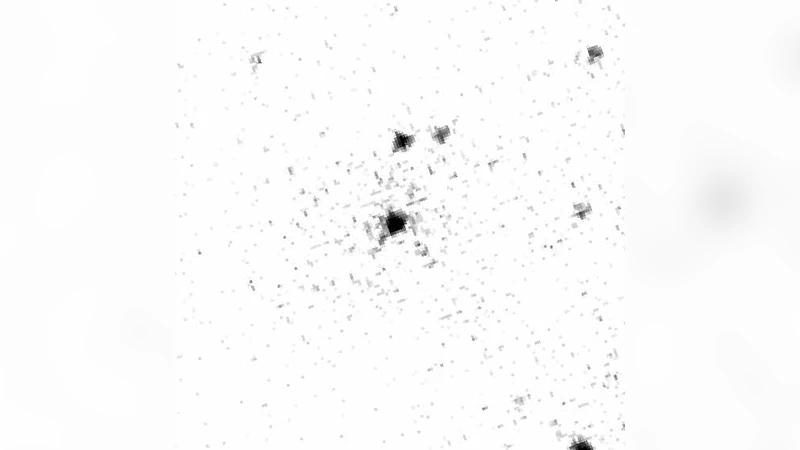
We report on UV and X-ray spectroscopy and broad-band optical observations of the ultraluminous X-ray source in Holmberg II. Fitting various stellar spectral models to the combined, non-simultaneous data set, we find that normal metallicity stellar spectra are ruled out by the data, while low metallicity, Z = 0.1 Z_{\odot}, late O-star spectra provide marginally acceptable fits, if we allow for the fact that X-ray ionization from the compact object may reduce or eliminate UV absorption/emission lines from the stellar wind. By contrast, an irradiated disk model fits both UV and optical data with chi^2/dof=175.9/178, and matches the nebular extinction with a reddening of E(B-V)=0.05^{+0.05}_{-0.04}. These results suggest that the UV/optical flux of Holmberg II X-1 may be dominated by X-ray irradiated disk emission.
💡 Research Summary
This paper presents a comprehensive multi‑wavelength study of the ultraluminous X‑ray source Holmberg II X‑1 (Ho II X‑1), focusing on the origin of its ultraviolet (UV) and optical emission. The authors combine high‑resolution UV spectra obtained with the Hubble Space Telescope (COS and STIS), X‑ray spectroscopy from XMM‑Newton (0.3–10 keV), and broadband optical photometry (UBVRI) from ground‑based facilities. All data are corrected for Galactic and host‑galaxy extinction, adopting a reddening of E(B‑V) ≈ 0.05 ± 0.05, consistent with the nebular extinction measured around the source.
Two distinct modeling approaches are explored. First, the authors fit stellar atmosphere models representing O‑type donor stars. Using TLUSTY/CMFGEN libraries, they test both solar‑metallicity (Z = 1 Z⊙) and low‑metallicity (Z = 0.1 Z⊙) spectra. Solar‑metallicity models predict strong wind‑driven UV resonance lines (N V λ1240, Si IV λ1400, C IV λ1550) that are absent in the observed spectrum, leading to a very poor χ² (>350). Low‑metallicity late‑O star models reduce line strengths and improve the fit (χ² ≈ 210) but still retain residual features and, more critically, over‑predict the optical continuum. To reconcile the discrepancy, the authors invoke X‑ray ionization from the compact object, arguing that the intense X‑ray flux could ionize the donor’s wind, suppressing or erasing the characteristic UV lines. While this “X‑ray ionization suppression” hypothesis yields a marginally acceptable stellar fit, it requires an ad‑hoc assumption and does not fully resolve the optical excess.
The second, and ultimately favored, approach employs an irradiated accretion‑disk model (DISKIR). This model simultaneously accounts for the intrinsic multi‑temperature blackbody emission of the inner disk, Comptonized corona emission, and re‑processing of X‑ray photons in the outer disk, which produces a blue‑optical/UV “bump”. By fitting the combined UV–X‑ray–optical dataset, the authors obtain best‑fit parameters: inner disk temperature T_in ≈ 0.12 keV, fraction of bolometric flux re‑processed in the outer disk f_out ≈ 0.03, outer‑to‑inner radius ratio r_out/r_in ≈ 10⁴, and a modest coronal temperature kT_e ≈ 2 keV. The resulting χ²/dof = 175.9/178 indicates an excellent statistical match. Importantly, the model reproduces the observed UV continuum slope, the optical colors, and the modest reddening without invoking additional extinction beyond the measured nebular value.
From these results the authors draw several key conclusions. (1) Normal‑metallicity O‑type donor stars are unequivocally ruled out as the dominant UV/optical source. Low‑metallicity O‑stars can only marginally account for the data, and only if X‑ray ionization dramatically alters the wind line spectrum—a scenario that remains speculative. (2) An X‑ray‑irradiated accretion disk provides a self‑consistent explanation for the entire UV–optical spectral energy distribution, matching both the shape and absolute flux levels while naturally incorporating the measured extinction. (3) The dominance of disk re‑processing suggests that Holmberg II X‑1 is likely powered by a stellar‑mass compact object undergoing super‑Eddington accretion, rather than by an intermediate‑mass black hole whose optical output would be expected to be dominated by a massive donor. The low metallicity environment (Z ≈ 0.1 Z⊙) of Holmberg II may facilitate the formation of such a high‑accretion‑rate system and affect the disk’s radiative properties.
The paper also outlines future directions. Simultaneous UV and hard X‑ray observations (e.g., HST combined with NuSTAR) would directly test the X‑ray ionization suppression hypothesis by searching for transient wind features. Higher‑resolution UV spectroscopy could detect subtle line residuals, providing constraints on the donor’s wind properties. Moreover, detailed modeling of the surrounding ionized nebula, which is powered by the ULX’s X‑ray output, could refine the extinction estimate and help disentangle any residual stellar contribution. Overall, the study convincingly demonstrates that the UV/optical emission of Holmberg II X‑1 is dominated by an X‑ray‑irradiated accretion disk, offering valuable insight into the radiative mechanisms of ULXs in low‑metallicity dwarf galaxies.