The colours of BL Lac objects: a new approach to their classification
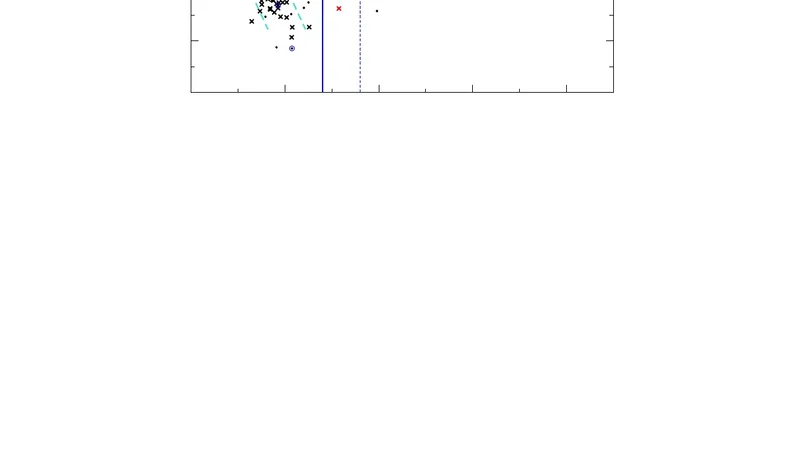
We selected a sample of 437 BL Lac objects, taken from the RomaBZCat catalogue, for which spectroscopic information and SDSS photometry is available. We propose a new classification of BL Lacs in which the sources’ type is not defined only on the basis of the peak frequency of the synchrotron component in their Spectral Energy Distribution (types L and H), but also on the relevance of this component with respect to the brightness of the host galaxy (types N and G, for nuclear or galaxy dominated sources). We found that the SDSS colour index u-r=1.4 is a good separator between these two types. We used multiband colour-colour plots to study the properties of the BL Lac classes and found that in the X-ray to radio flux ratio vs u-r plot most of the N (blue) sources are located in a rather narrow strip, while the G-sources (red) are spread in a large area, and most of them are located in galaxy clusters or interacting systems, suggesting that their X-ray emission is not from a genuine BL Lac nucleus but it is related to their environment. Of the about 135 sources detected in the gamma-rays by Fermi-GST, nearly all belong to the N-type, indicating that only this type of sources should be considered as genuine BL Lac nuclei. The J-H, H-K plot of sources detected in the 2MASS catalogue is consistent with that of the “bona fide” BL Lac objects, independently of their N or G classification from the optical indices, indicating the existence in G-type sources of a K-band excess possibly due to a steep, low frequency peaked emission which deserves further investigations. We propose to use these colour plots as a further tool for searching candidate counterparts of newly discovered high-energy sources.
💡 Research Summary
The authors present a novel dual‑parameter classification scheme for BL Lacertae objects that goes beyond the traditional synchrotron‑peak‑frequency (L/H) division. Using the Roma‑BZCat catalog, they assembled a sample of 437 BL Lacs with both spectroscopic data and SDSS photometry. By examining the optical colour index u‑r, they identified a clear threshold at u‑r = 1.4 that separates sources whose nuclear emission dominates the optical output (N‑type) from those where the host galaxy contributes the majority of the light (G‑type). This colour cut is physically motivated by the SDSS filter response and the typical non‑thermal continuum of BL Lac nuclei.
Multiband colour‑colour diagrams (e.g., u‑g vs. g‑r) show that N‑type objects occupy a compact, blue region, whereas G‑type objects spread over a redder, more heterogeneous area, reflecting a variety of host‑galaxy properties and environments. When the X‑ray‑to‑radio flux ratio (FX/FR) is plotted against u‑r, N‑type sources line up along a narrow strip, indicating a strong, intrinsic high‑energy component, while G‑type sources are scattered over a wide region, many of them residing in galaxy clusters or interacting systems. This suggests that the X‑ray emission of G‑type objects is often contaminated or even dominated by cluster‑scale thermal plasma rather than by the BL Lac nucleus itself.
Cross‑matching with the Fermi‑LAT catalog reveals that of the ~135 γ‑ray‑detected BL Lacs, virtually all belong to the N‑type class. Consequently, the authors argue that only N‑type objects should be regarded as genuine BL Lac nuclei capable of producing high‑energy γ‑rays. In contrast, the low γ‑ray detection rate among G‑type sources supports the view that many of them are mis‑identified or heavily influenced by their surroundings.
The study also incorporates 2MASS near‑infrared data. Both N‑ and G‑type objects display J‑H and H‑K colours consistent with the “bona‑fide” BL Lac population, but G‑type sources exhibit a modest K‑band excess. This excess could arise from a steep, low‑frequency synchrotron component or from stellar emission in massive, red host galaxies, and it warrants further investigation.
Overall, the paper demonstrates that the simple optical colour index u‑r, combined with multi‑wavelength flux ratios, provides a powerful, observationally inexpensive tool to discriminate between truly nuclear‑dominated BL Lacs and those whose apparent BL Lac characteristics are largely due to host‑galaxy or environmental effects. The authors propose employing these colour‑based diagnostics in future surveys to identify reliable counterparts of newly discovered high‑energy sources, especially in the era of large‑scale γ‑ray and X‑ray missions.