A Chandra Survey of Supermassive Black Holes with Dynamical Mass Measurements
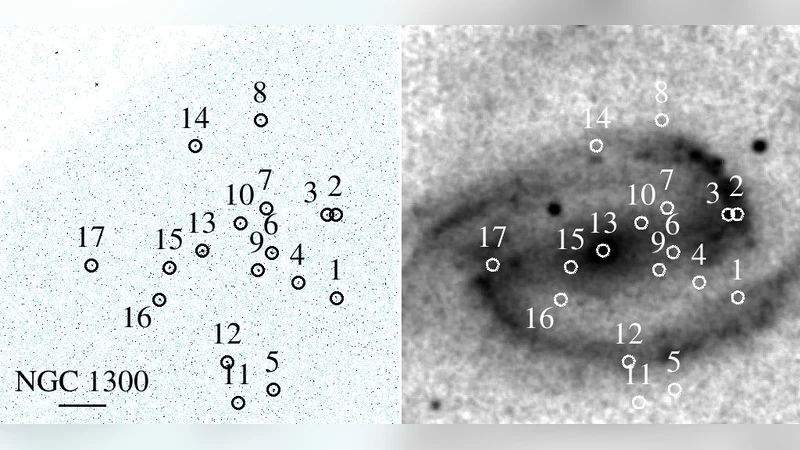
We present Chandra observations of 12 galaxies that contain supermassive black holes with dynamical mass measurements. Each galaxy was observed for 30 ksec and resulted in a total of 68 point source detections in the target galaxies including supermassive black hole sources, ultraluminous X-ray sources, and extragalactic X-ray binaries. Based on our fits of the X-ray spectra, we report fluxes, luminosities, Eddington ratios, and slope of the power-law spectrum. Normalized to the Eddington luminosity, the 2–10 keV band X-ray luminosities of the SMBH sources range from $10^{-8}$ to $10^{-6}$, and the power-law slopes are centered at $\sim2$ with a slight trend towards steeper (softer) slopes at smaller Eddington fractions, implying a change in the physical processes responsible for their emission at low accretion rates. We find 20 ULX candidates, of which six are likely ($>90%$ chance) to be true ULXs. The most promising ULX candidate has an isotropic luminosity in the 0.3–10 keV band of $1.0_{-0.3}^{+0.6} \times 10^{40}$ erg/s.
💡 Research Summary
This paper presents a systematic Chandra X‑ray survey of twelve nearby galaxies that host supermassive black holes (SMBHs) with dynamically measured masses. Each target was observed for a uniform exposure of 30 kiloseconds using the ACIS‑S3 detector, yielding a total of 68 point‑source detections across the sample. The authors performed standard data reduction with CIAO, employed wavdetect for source identification, and fitted the spectra of the nuclear SMBH sources with an absorbed power‑law model, using Cash statistics to handle the low‑count regime. The resulting 2–10 keV luminosities, when normalized to the Eddington luminosity derived from the dynamical black‑hole masses, span $L_{\rm X}/L_{\rm Edd}=10^{-8}$–$10^{-6}$. The photon indices cluster around $\Gamma\approx2$, but a clear trend emerges: sources with lower Eddington ratios exhibit steeper (softer) spectra, with $\Gamma$ increasing to 2.2–2.5 at the faintest end. This behavior is consistent with a transition from radiatively efficient thin‑disk accretion to radiatively inefficient flows (RIAFs) or jet‑dominated emission at low accretion rates.
In addition to the nuclear sources, the survey identified 20 ultraluminous X‑ray (ULX) candidates based on $L_{\rm X}>10^{39}\ \mathrm{erg\ s^{-1}}$. By cross‑matching with optical/infrared catalogs and assessing positional offsets, the authors reduced contamination from background active galactic nuclei. Six of the candidates have a >90 % probability of being genuine ULXs. The most luminous ULX exhibits an isotropic 0.3–10 keV luminosity of $1.0^{+0.6}_{-0.3}\times10^{40}\ \mathrm{erg\ s^{-1}}$, placing it among the brightest known off‑nuclear X‑ray sources.
The paper also discusses the spatial distribution of the ULX candidates relative to star‑forming regions, noting a tendency for the most secure ULXs to lie within kiloparsec‑scale distances from the galactic centers, where recent star formation is often present. The authors argue that the combination of high‑resolution Chandra imaging and a well‑characterized SMBH mass sample enables a robust examination of low‑luminosity AGN physics and provides a valuable catalog of ULX candidates for future multi‑wavelength follow‑up.
Overall, the study demonstrates that SMBHs accreting at $10^{-8}$–$10^{-6}$ of their Eddington limit emit X‑rays with photon indices that soften as the accretion rate declines, supporting theoretical models of radiatively inefficient accretion. Simultaneously, the survey uncovers a substantial population of ULXs, highlighting the diverse high‑energy phenomena that coexist within the same host galaxies. Future work involving variability studies, deeper spectral analysis, and complementary radio/optical observations will be essential to disentangle the emission mechanisms of both low‑luminosity AGN and ULXs.