Inverse Compton X-ray Emission from Supernovae with Compact Progenitors: Application to SN2011fe
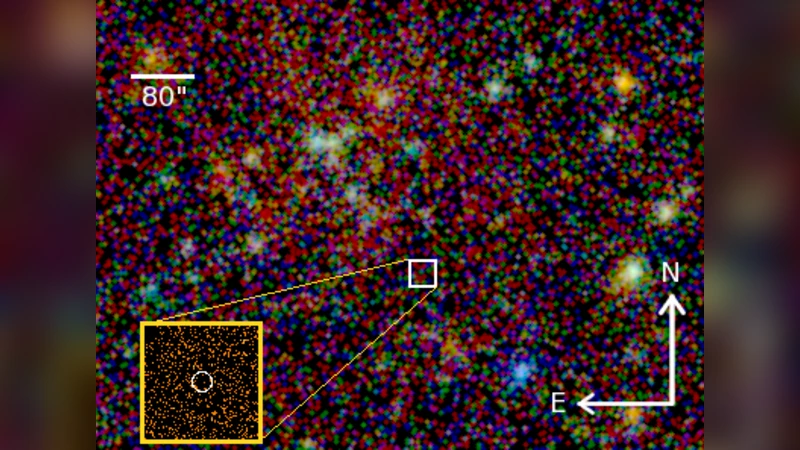
We present a generalized analytic formalism for the inverse Compton X-ray emission from hydrogen-poor supernovae and apply this framework to SN2011fe using Swift-XRT, UVOT and Chandra observations. We characterize the optical properties of SN2011fe in the Swift bands and find them to be broadly consistent with a “normal” SN Ia, however, no X-ray source is detected by either XRT or Chandra. We constrain the progenitor system mass loss rate to be lower than 2x10^-9 M_sun/yr (3sigma c.l.) for wind velocity v_w=100 km/s. Our result rules out symbiotic binary progenitors for SN2011fe and argues against Roche-lobe overflowing subgiants and main sequence secondary stars if >1% of the transferred mass is lost at the Lagrangian points. Regardless of the density profile, the X-ray non-detections are suggestive of a clean environment (particle density < 150 cm-3) for (2x10^15<R<5x10^16) cm around the progenitor site. This is either consistent with the bulk of material being confined within the binary system or with a significant delay between mass loss and supernova explosion. We furthermore combine X-ray and radio limits from Chomiuk et al. 2012 to constrain the post shock energy density in magnetic fields. Finally, we searched for the shock breakout pulse using gamma-ray observations from the Interplanetary Network and find no compelling evidence for a supernova-associated burst. Based on the compact radius of the progenitor star we estimate that the shock break out pulse was likely not detectable by current satellites.
💡 Research Summary
The paper develops a generalized analytic framework for predicting inverse‑Compton (IC) X‑ray emission from hydrogen‑poor supernovae, with a particular focus on Type Ia events. Starting from first principles, the authors assume that relativistic electrons accelerated at the forward shock follow a non‑thermal power‑law distribution (index p≈3) and that the ambient circumstellar medium (CSM) can be described either by a wind density profile (ρ∝r⁻²) characterized by a mass‑loss rate Ṁ and wind velocity v_w, or by a uniform density medium (ρ=const). By coupling the electron distribution to the observed optical/UV photon field of the supernova, they derive a closed‑form expression for the IC X‑ray luminosity as a function of the supernova’s bolometric luminosity, the minimum electron Lorentz factor γ_min, and the CSM density parameters. This formulation allows one to translate an observed X‑ray flux (or upper limit) directly into constraints on the progenitor’s mass‑loss history without resorting to full hydrodynamic simulations.
The authors then apply this formalism to SN 2011fe, a nearby (6.4 Mpc) normal Type Ia supernova discovered shortly after explosion. Using Swift‑UVOT data they construct detailed UV/optical light curves, from which they infer the photospheric radius and temperature evolution, and thus the seed photon field for IC scattering. Simultaneous Swift‑XRT observations and a deep Chandra ACIS‑S exposure provide stringent upper limits on the 0.3–10 keV X‑ray flux (≈10³⁶ erg s⁻¹ at 3σ). Inserting the measured optical luminosities into the IC model and assuming a wind velocity v_w = 100 km s⁻¹, they find that the mass‑loss rate must satisfy Ṁ < 2 × 10⁻⁹ M_⊙ yr⁻¹ (3σ). This limit is more than two orders of magnitude below the rates expected for symbiotic binaries (Ṁ ~ 10⁻⁶ M_⊙ yr⁻¹) and also excludes Roche‑lobe overflow from a subgiant or main‑sequence companion if more than ~1 % of the transferred mass is lost through the Lagrange points. The corresponding particle density in the region 2 × 10¹⁵ cm < r < 5 × 10¹⁶ cm is constrained to n < 150 cm⁻³, indicating a remarkably clean environment around the progenitor.
By combining the X‑ray limits with radio non‑detections reported by Chomiuk et al. (2012), the authors further constrain the post‑shock magnetic energy fraction ε_B to be ≤10⁻⁴, implying that magnetic fields in the shocked CSM are weak. This joint X‑ray/radio analysis strengthens the conclusion that the immediate surroundings of SN 2011fe lack dense material.
The paper also investigates the possibility of detecting the shock‑breakout flash, a brief burst of high‑energy photons expected when the supernova shock emerges from the stellar surface. Using the Interplanetary Network (IPN) gamma‑ray data, the authors search for any temporally coincident burst but find no compelling evidence. Given the inferred compact radius of the progenitor (R ≲ 0.02 R_⊙), the breakout pulse would have been short (∼0.1 s) and relatively low in energy (∼10⁴⁴ erg), below the sensitivity thresholds of current gamma‑ray monitors such as Swift‑BAT and Fermi‑GBM.
Overall, the study demonstrates that inverse‑Compton X‑ray emission provides a powerful, model‑independent probe of the circumstellar environment of Type Ia supernovae. The stringent limits derived for SN 2011fe effectively rule out symbiotic progenitor systems and place strong constraints on any mass‑loss mechanisms operating in the centuries before explosion. The results favor scenarios in which the white dwarf accretes from a relatively compact, low‑mass companion (e.g., a main‑sequence star with minimal mass loss) or where the bulk of the transferred material remains bound to the binary. The methodology outlined here can be readily applied to future nearby Type Ia events, especially when combined with deep X‑ray, radio, and gamma‑ray observations, to further narrow down the long‑standing question of Type Ia progenitor channels.